

U.S. Secretary of the Interior Doug Burgum says the students learning about natural gas, petroleum and robotics at Lackawanna College will help drive important industries in the country.
"They're at this point in their life where these industries are going to explode. The opportunities are going to be incredible for them in their careers," he said.
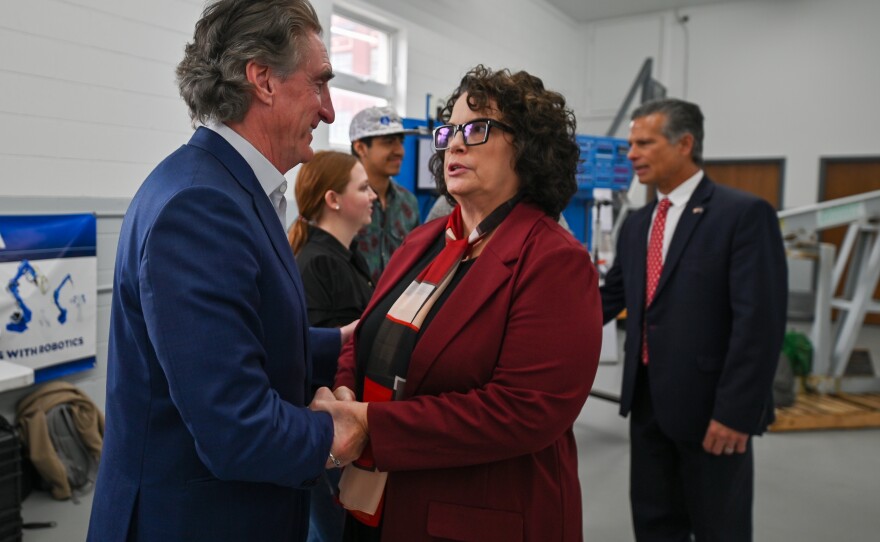
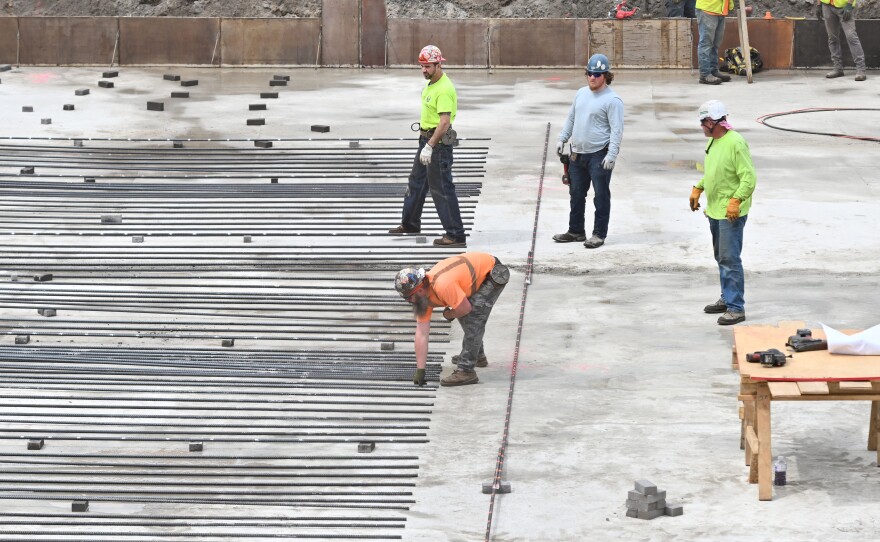
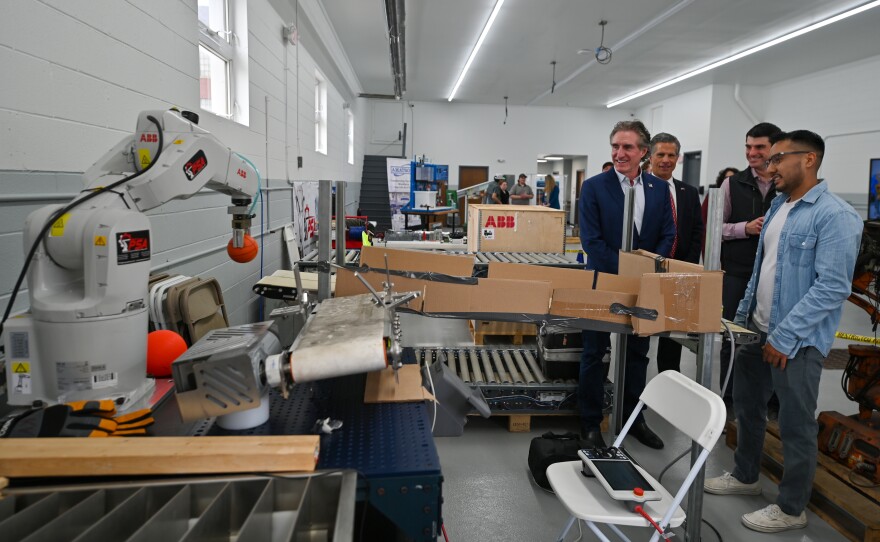
Burgum, the former governor of North Dakota, met with Lackawanna College students inside the institution’s new property on Wyoming Avenue. In the lot next door, crews worked on the college’s new Center for Technology Innovation, which is set to open this fall.
Burgum was joined by U.S. Rep. Rob Bresnahan, R-8, and U.S. Rep. Dan Meuser, R-9.
"These guys, supporting this kind of education, what they're doing in Washington, D.C., to support the policies that support energy, that support innovation, that support growth, that support manufacturing jobs coming back to America. I can't thank both of them enough, because they're helping. They're on the cutting edge of helping drive a true renaissance in America,” Burgum said of the congressmen.
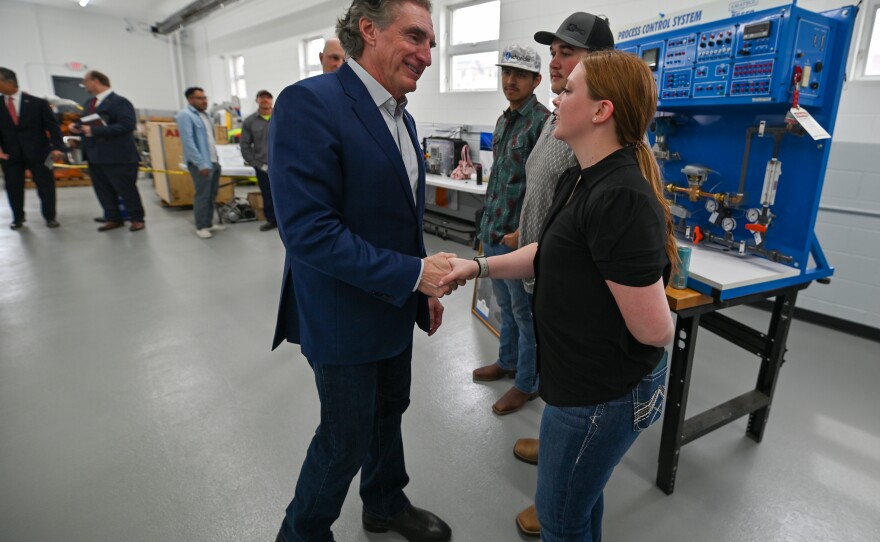
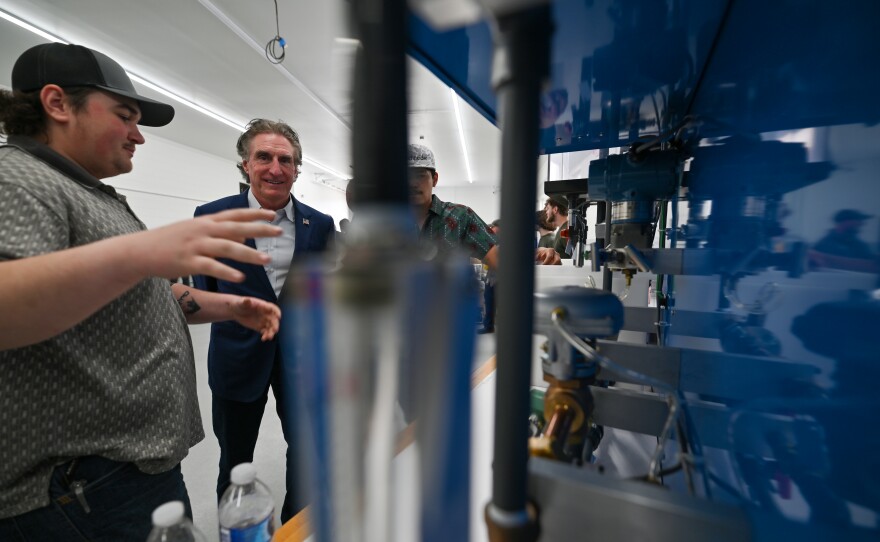
The Lackawanna students showed Burgum how they programed a robot to shoot a basketball with accuracy into a net, and walked him through some of the donated equipment that they learn on and will eventually use in the field.
Lackawanna College President Jill Murray said Burgum was thoughtful and intentional during his visit to the college.
"He really was focused on energy. And, you know, he comes from with a tech background, and he understands the need for skilled trades and overall education and business focus and entrepreneurship,” she said.
Burgum was senior vice president of Microsoft Business Solutions Group.
"He was so impressed, I think, by our students, by the programs, by the equipment that's all industry-fed,” she said.
Burgum also stopped at the Steamtown National Historic Site.

The department's purpose
The Department of Interior oversees 500 million acres of federal land, 700 million acres of subsurface and 3 billion acres offshore.
"Whether it's developing energy from our oceans, whether it's developing energy, you know, onshore, whether that's oil, gas, coal, etc., all that energy development, all the permitting for oil and gas on federal land, all comes out of Interior,” he said.
Burgum also chairs the National Energy Dominance Council.
"The whole point of that is to have enough energy to sell to our friends and allies so they don't have to buy from adversaries that are either waging war against us or waging terrorism against the whole world. So with us producing more energy, great for the environment, because the U.S .does it cleaner, better, safer, but it's also great for prosperity at home. Makes things affordable,” he said.
Burgum said the department has had a multi-purpose mission since its inception under President Theodore Roosevelt, whose namesake national park is in Burgum’s home state.
"We can take all of these last best places and preserve them and then on top of that, we've got massive amounts of public lands that can be used as they're intended in the law for the benefit, the use of the American people," he said. "Outdoor recreation is a massive business, but energy development is well, and those two things are completely compatible."
Burgum said an example of that is the Bakken Formation, an oil-producing region in North Dakota.
He said because of the formation the state had a huge economic boom and put money back into parks and lowered taxes.
"You can fight for energy and fight for recreation. It goes hand-in-hand, and energy helps pay for the recreation opportunities,” he said.
Burgum, Meuser weigh in on data centers
Communities in Northeast Pennsylvania are dealing with numerous data center campus proposals.
Gov. Josh Shapiro was part of an agreement with Burgum and the National Energy Dominance Council to keep energy costs down for residents in the PJM Grid, which generates and distributes electricity across a large section of the country including Pennsylvania.
That led to the topic of data centers. Burgum said having one of what he calls an “AI manufacturing” facility in a state, or congressional district, comes with opportunities.
"In North Dakota, we added AI manufacturing, and lowered electric prices. We added AI manufacturing and didn't touch anything related to water or water usage or water quality. And we helped lower the property taxes for everybody in the area," he said.
Pennsylvania is home to the Marcellus Shale formation, and Burgum said the state's natural gas can be turned into electricity.
"Turning that electricity into intelligence. I mean, that's like a never before opportunity, and people should be clamoring for them,” he said.
He said communities should ask data center developers for what they need.
"The next wave of capital investment that will supercharge the economy is going to go where the AI manufacturing is,” Burgum said.
Meuser said the long-term benefits of “AI manufacturing” are extraordinary.
"We really need to embrace this renaissance in intelligence manufacturing, as the secretary put it, I think we need to do it in the safest manner that it should be done in the most responsible way,” he said.
When asked if data centers should be near homes, Meuser said the industry’s development needs to be done in a safe and responsible way.
"We have many acres of rural areas throughout our district, some are zoned for agriculture, some are zoned for industry. We have to look at that. There's been a couple of cases already where an industrial or agricultural area was way out in the fields, so not really near homes,” he said.
Meuser said safety comes first.
"The benefits of the community come second, and the long-term opportunity to our economy fits right in there, and that's what we need to find,” he said.
