

Up steep Rocky Run Road on the side of a mountain in Shickshinny sits a man-made cave.
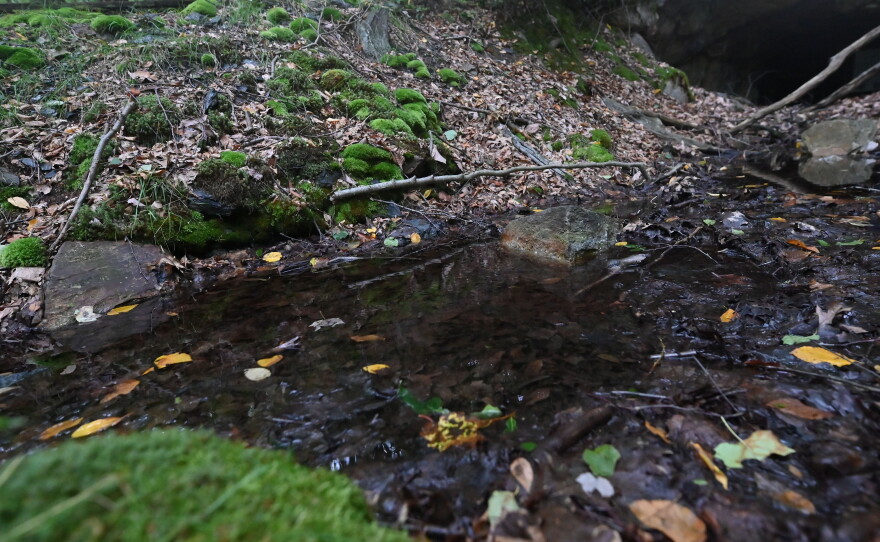
Cool air from the hollow and abandoned coal mines inside blows out like an air conditioner. Water polluted with aluminum trickles into Rocky Run on State Game Lands 260 in Luzerne County.
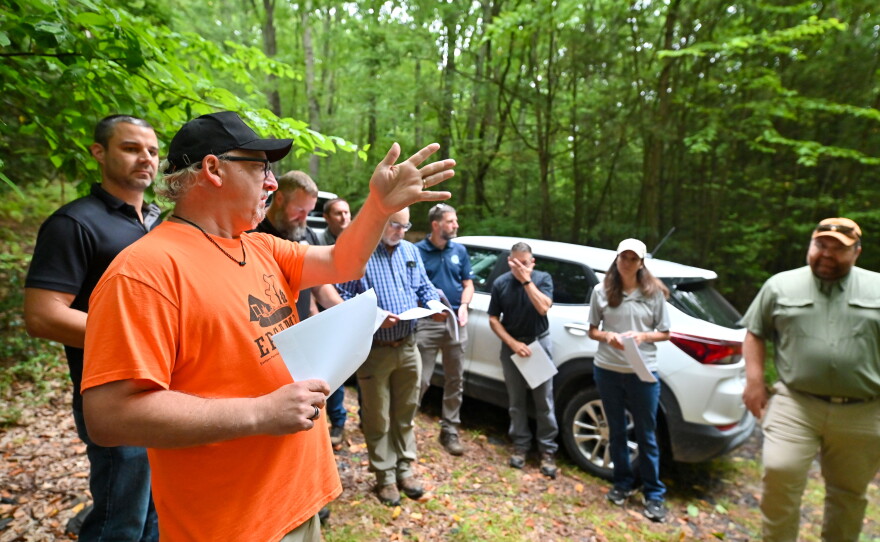
"Water falls on top of the mountain … you can see all the cracks and the rock and everything. It percolates down through, ends up hitting the coal mine underneath all the voids, and that's where it comes in contact with the metals and the acidity," said Mike Hewitt, program manager for the Eastern Pennsylvania Coalition for Abandoned Mine Reclamation (EPCAMR). "Then it comes out at the lowest point, which happens to be here.”
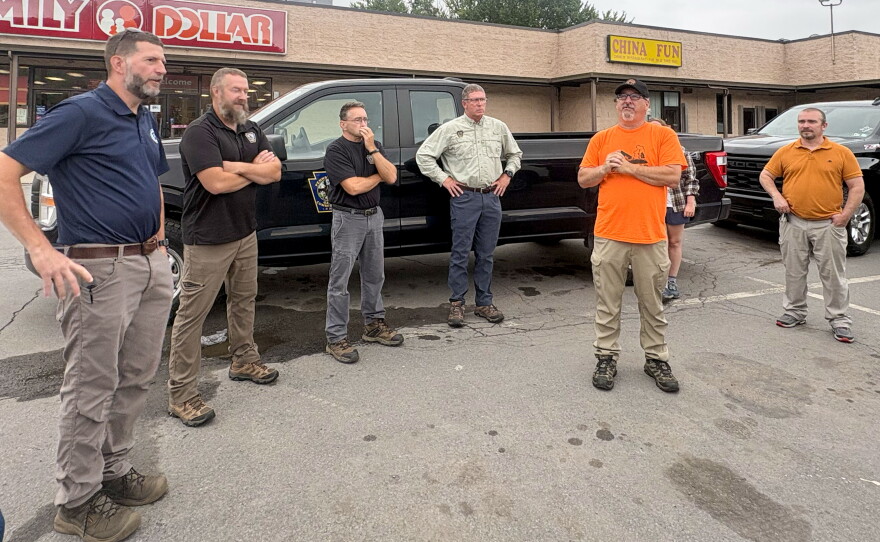
Hewitt was part of a tour for Nathan Houtz, Pennsylvania Department of Environmental Protection’s deputy secretary for acting and abandoned mine operations. Houtz joined representatives from EPCAMR, the Pennsylvania Game Commission, Luzerne County, Earth Conservancy and Larson Design Group to visit spots around the county where abandoned mine work has been completed or is underway.
Houtz said Pennsylvania has $10 billion worth of abandoned mine land features that need to be reclaimed.
"It's very important to restore these lands. You know, fill in these pits … some of them are safety hazards, you know, get the streams back on the surface so that we don't have water going down into mines, creating acid mine drainage,” he said.



'Geological coffee grounds'
State Game Lands 260 is wooded and serene. The entrance is through a neighborhood off Route 11.
Coal mining began in the mid 1800s on parts of the mountain. Stackhouse, Paxton and the Salem coal companies all worked the mines. A railroad took coal down the mountain to a breaker along the Susquehanna River.
Now, hunters track white-tailed deer, black bear, eastern wild turkey and gray squirrels.
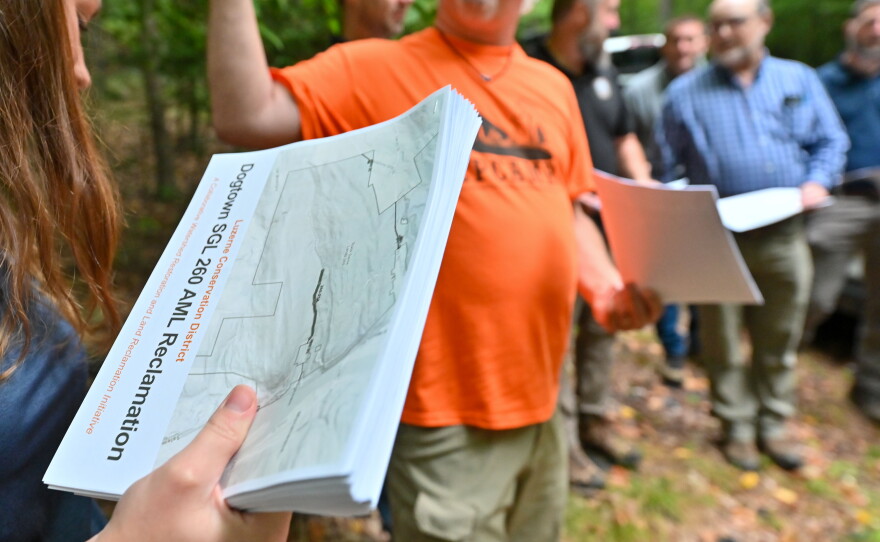
The Luzerne Conservation District received funding from the Pennsylvania Department of Environmental Protection (DEP) to reclaim three piles and embankments of coal waste, remove a historic mining structure and sample the water coming out of the cave, according to Larson Design Group, which is working on the project.
Keith George, deputy director of the conservation district, thinks of the mine spoils left all over the region as contaminated coffee grounds that water drips through then discharges bad-quality water.
"It's like a geological coffee ground holding aluminum, manganese, iron, acidic components that will drop the pH, and then as the pH drops, it leaches the metals out much more readily,” he said.
Treatment plan
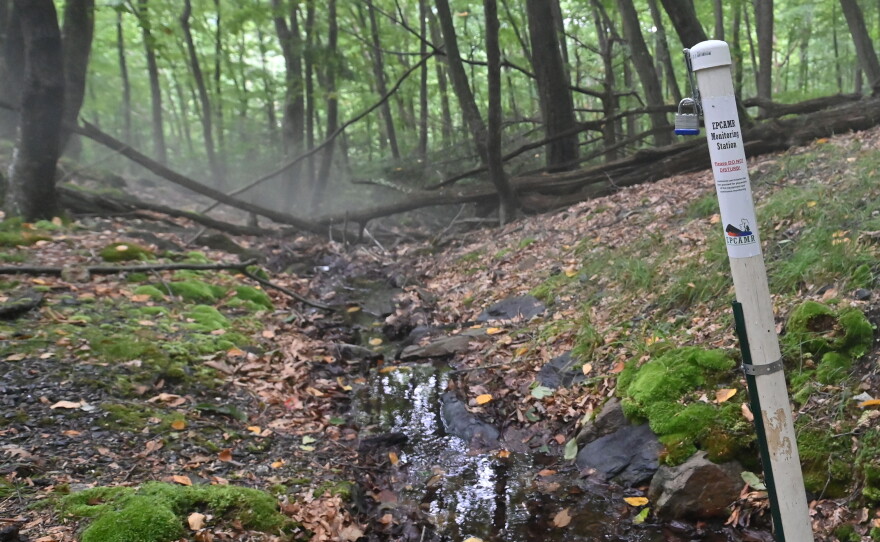
A white tube sticks up from the stream trickling out of the cave. The transducer is collecting real time data.
"We need to do this for at least a year. That's part of the development plan because you want to get high flow, low flow, anything in between,” said Bobby Hughes, executive director of EPCAMR.
The water is crystal clear. Hughes pointed out that it looks drinkable and fishable.
"But it's not. It's deceiving. That's got the low pH in it, so that's what happens with aluminum,” he said.
The high concentration of aluminum has devastating impacts on the native brook trout in Rocky Run, and even impacts the Chesapeake Bay. The stream eventually flows into the Susquehanna River, which ends at the bay.
"Every project that's done is not only reclaiming wildlife habitat for terrestrial wildlife on the side of the mountain, you're creating better water qualities for all the aquatic life down slope,” said George.
At certain levels, aluminum will get into the trouts’ gills, Hughes said.
"We've done surveys in Schuylkill County where I could take a pencil behind their gill slits and pull out the aluminum precipitate, which at a certain pH will occur,” he said.
Hughes said acid aluminum discharges are treated much differently than iron discharges, which turn the rocks and water orange. The treatment is more passive and is usually a limestone-based system.
Hughes said iron discharges need aeration, big ponds and often electricity.
“This wouldn't need that much, we don't think, and so it's very doable,” he said.
The current state grant includes the water testing, not the treatment, said Josh Glace, from Larson Design Group.
He said a treatment facility that uses limestone could be placed somewhere between the cave entrance and Rocky Run.
“Everybody wants cleaner water, healthier streams, better habitat, but they also want to protect some things that are legacy,” Glace said.

A blessing for bats
After more than 100 years of mining, a new species has found a home in the leftover caverns — bats.
“They're huge, you know, federally endangered species,” said Glace. “We want to make sure that as we do this project, reclaim these areas to get better water for not only the Wyoming Valley, but also we're cognizant of our federally endangered species as well.”
The cavern is one of a few gated off on the mountain to keep humans out and allow the winged mammals to come and go and hibernate.
"Even though this is our legacy of coal mining, there's now an endangered species that has created habitat from that legacy,” Glace said.
The caves that Houtz visited maintain temperatures around 40 to 50 degrees over the winter, which is ideal for hibernating bats, said Kevin Wenner, wildlife resource manager for the Northeast Region with the Pennsylvania Game Commission.
He said between 2009 and 2010 the local bat population was devastated by white nose syndrome.
George said the eventual treatment for the mine discharge water has to be both beneficial to brook trout but also aquatic insects, since the bats feed on the bugs.
"The mine openings are a blessing to the bats, and a curse because of the impacted water quality,” he said.

Black wasteland to great habitat
To an untrained eye, State Game Lands 260 looks like an average Pennsylvania forest. But the experts on the tour pointed out the leftover shale and coal on the trail.
Wenner said hemlocks now grow along Rocky Run. The game commission put up bat boxes to help restore bat populations.
"That's just great habitat for a variety of game and non-game species. As far as winter thermal cover and the seed production from the cones on the hemlock for a lot of our overwintering birds is a critical food source," he said.
Mine spoils have become part of the fabric of the area. And partnerships across the region funded by state and federal grants are continuing to transform the landscape.
"I've seen these areas 15, 20 years ago being permitted, you know, black wastelands. So to see the streams back on the surface to see revegetation, all that you know, wildflowers and pollinators that we saw. It's great. It's definitely an improvement," Houtz said.
