

Dennis "Pap" Knauss bets from the sky that Tuscarora State Park looks like a green oasis surrounded by land regrowing its roots after years of coal mining.
"The fact that that little valley escaped all the ravages of the coal mining surrounding it just made it so unique and special to me," he said.

It's so special that Knauss, a longtime volunteer and caretaker of the park in Schuylkill County, advocated to have the park added to the Old Growth Forest Network (OGFN).
Because of Knauss’ efforts, in July the 1,618-acre park became the 45th Pennsylvania forest to be inducted into the OGFN and the first in Schuylkill County, according to the state Department of Conservation and Natural Resources (DCNR).
"It was nice to get that designation. There is no doubt about it. Makes that park even more special,” Knauss said.
Old-growth forests retain more carbon and nitrogen than younger forests and improve water and air quality, according to the state.
The OGFN includes 367 forests across 41 states. Pine Creek Gorge in Tioga County and the Glens Natural Area at Ricketts Glen State Park are also old growth forests.
"Once you hear that we're part of the Old Growth Forest Network, it just gives us one more thing to get people to come and check it out,” said Robin Tracey, Environmental Education Specialist at Tuscarora.
Young vs. old
Tuscarora became a state park in 1971. It was named for a visiting tribe of indigenous people who hunted where the park is located in the Locust Valley.
Until the mid-1800s, the area was covered by a forest containing a variety of mature oak and chestnut trees, according to DCNR. The dense forest was cleared by early settlers for agriculture and lumber.
Now, over 80% of the park area is forested, and second- and third-growth hardwoods grow in the park today.
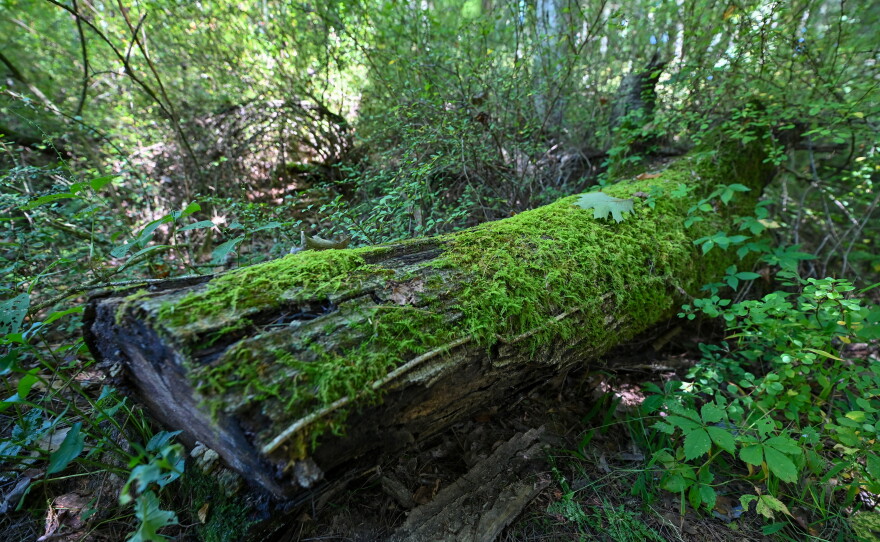
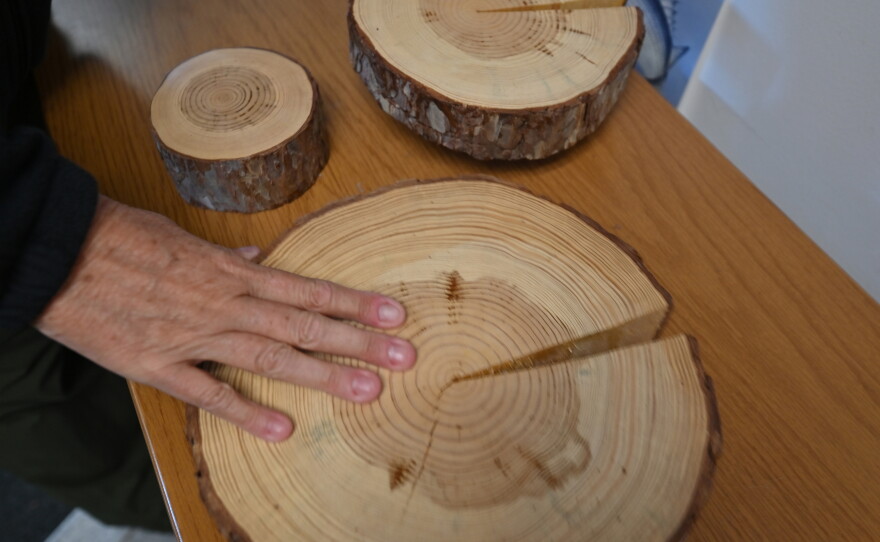
Tracey, who helped measure trees for the designation, said mature or old-growth forests are home to different types of habitats.
Older trees begin to break down and get cavities. The holes become homes for animals.
"You get trees that fall to the forest floor. A lot of those trees break down, and old mature trees make for new topsoil, which doesn't happen all the time with younger trees,” she said.
Spirit of Tuscarora
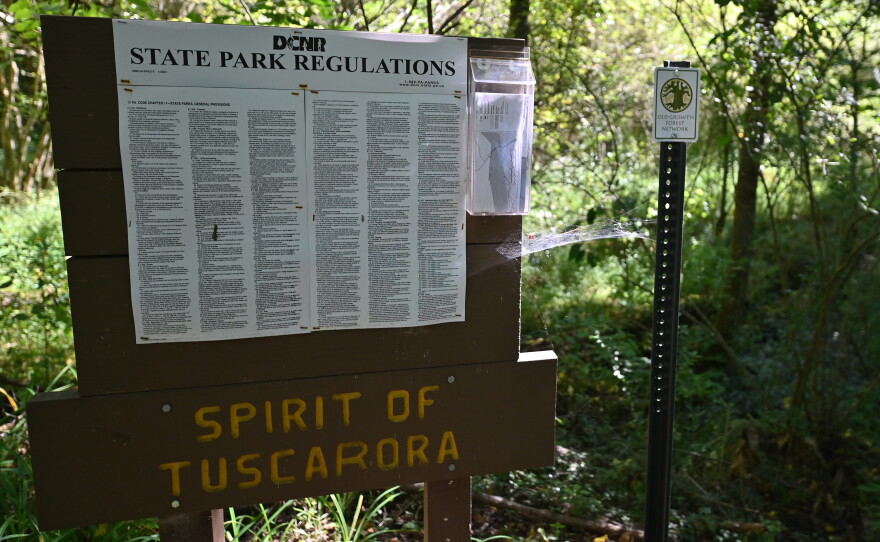
Many of the trees that qualified the park to be part of the Old-Growth Forest Network are on the 4.5-mile Spirit of Tuscarora Trail.
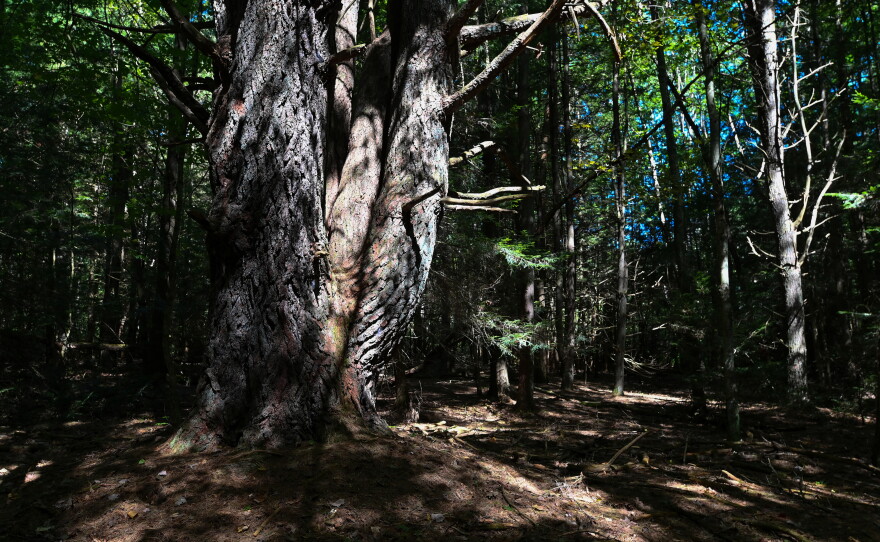
That includes a massive white pine that Knauss estimates to be around 250 years old. It’s so old that other trees sprout from one trunk.
There would be no Spirit of Tuscarora Trail without Knauss.

In the late '80s, he visited the park for the first time. Knauss went out on his canoe and floated where the Locust Creek flows into the park’s lake.
"And once I went around the corner and saw that beautiful cove where the stream enters into the lake, it was just such a beautiful sight," he said. "And then I looked down in the water, and I couldn't believe how clear the water was.”
He stepped off his canoe and walked up the creek. There were no trails there at the time.
He stumbled upon what he called an “amazing-looking tree.” It has a huge burl growing out the side that looked human to him.
"And that was something that made me go ‘wow’.” he said.
The tree was damaged in a storm and is now a stump of its former self.
“Then I continued on and started walking around, well, bushwhacking around, I should say,” he said.
As he continued exploring, Knauss said he was amazed at the variety of habitats in the park.
He started making a trail that, at first, was accessible only by canoe. He eventually bumped into a park ranger and feared he would be fined for creating the path.
"He now said ‘wait, I'm wondering who's been doing this. We love what you're doing’ … so that alone, that endorsement encouraged me to even give more effort into it," he said.
The trail today
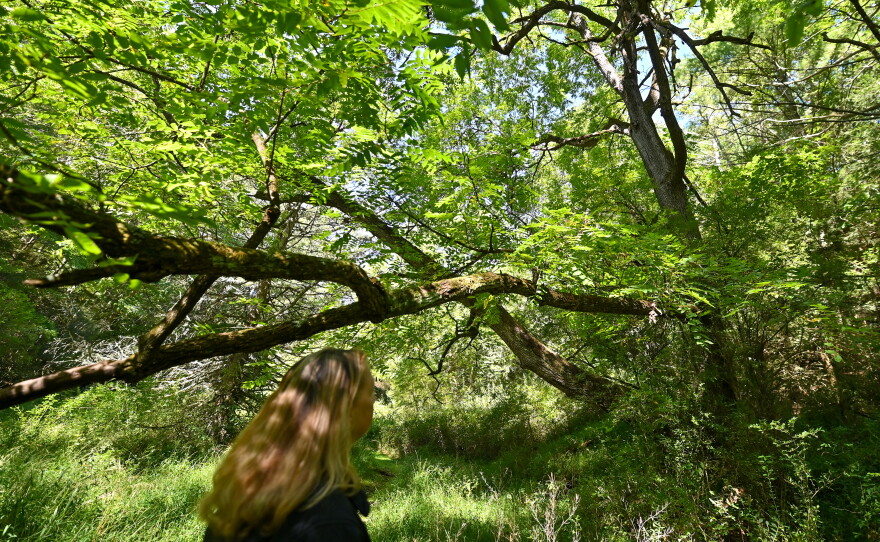
Today the trail is blazed in three different colors — red, white and yellow. It’s accessible from different areas in the park and runs along Locust Creek, the waterway Knauss first hiked.
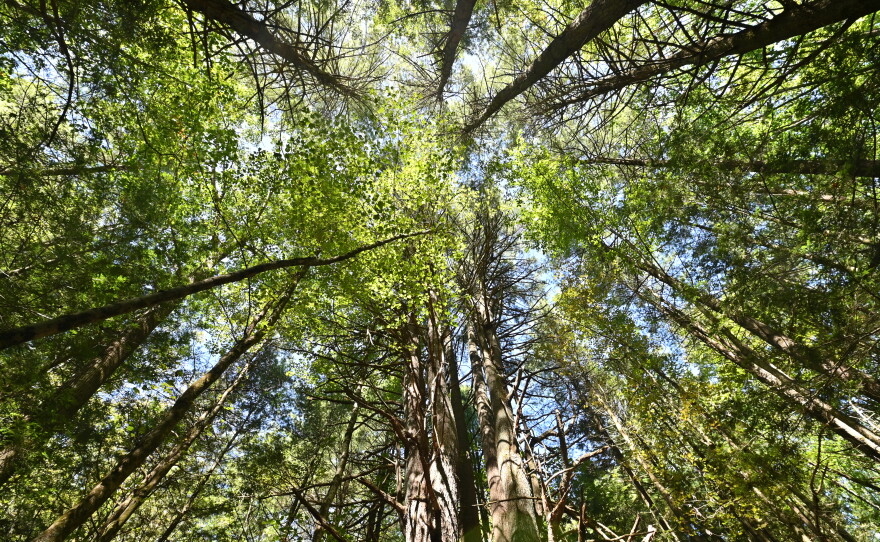
He said the white-blazed part of the trail is a deep forest. That’s where hikers will find the massive white pine.
"There's some huge hemlock trees there that, oh, I'd say they're by a diameter of about four or five feet thick, and some red oaks as well,” he said. “So there were several other trees besides that white pine that made me think, yeah, there's a lot of old growth forest here," he said.
Knauss calls the red-blazed section the wildflower garden because of the area’s golden rod and asters.
Knauss said he designed the trail for adventure. The Old-Growth Forest Designation just adds to what the park already has to offer.
"Around every turn there's something different to look at, and that's what's great about it because the variety is so amazing,” he said. “And that's what makes it so unique.”
