

There are more than 200 contaminated sites around Pennsylvania, like the Lower Broadway Recreational Complex in Nanticoke.
They are areas where heavy industry left behind dangerous chemicals in the soil that poison the ground and surface water — and where environmental officials say state funding is needed to remediate land for future generations to enjoy.
"Sites like the one behind me remind us that environmental challenges often have lasting impacts on neighborhoods, local governments and residents,” said Kris Shiffer, Director of the Bureau of Environmental Cleanup in Brownfields, with the Pennsylvania Department of Environmental Protection (DEP).
Shiffer was joined by other DEP officials and local and state elected officials on the outskirts of the typically fenced off recreational complex in the city.
They say in order for sites, like in Nanticoke, to have a future the DEP’s Hazardous Sites Cleanup Program (HSCA) needs to be fully funded.
"While every contaminated site has its own unique history and challenges, they all share a common objective: protecting communities, reducing risk and creating opportunities for a stronger future,” Shiffer said.
HSCA was formed in 1989 to address environmental hazards, protect public health and prepares properties for future use.
The program once received $40 million annually through the state, Shiffer said. The general assembly cut off that funding in December 2015.
The program now receives between $15 and $20 million from natural gas impact fees. Gov. Josh Shapiro has proposed a one-time transfer of $20 million to help sustain the hazardous sites cleanup fund for another year.
"No one else is going to come in on these types of properties with millions of dollars and try to remediate it on their own. So that's where HSCA comes in," he said. "We look obviously to try to get these properties repurposed, reused back into the community, and that's really the important part for everyone who's local in any community that you're in.”


Junkyard, then a flood, then soccer
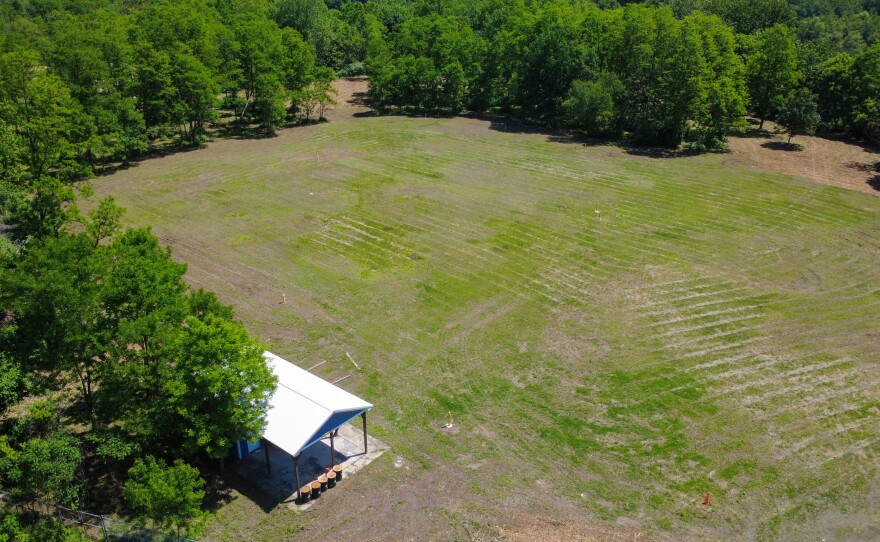
The Lower Broadway Recreation Complex was once a former dump and junkyard that flooded during Hurricane Agnes in 1972. The property is in the river’s flood plane and adjacent to a former manufactured gas plant.
The city bought the land after the flood and redeveloped it into soccer fields in the 1990s. Around 2011, Nanticoke applied for a grant for the complex and testing was done, said Scott Bene, DEP's solid water supervisor and Northeast HASCA manager.
Soil, groundwater and surface water show high levels of polychlorinated biphenyls or PCBs, which are manmade chemicals found in electrical equipment, hydraulic fluids and caulking. The contamination also includes metals, pesticides, semi-volatile organic compounds, and volatile organic compounds, Jennifer O’Reilly said. She’s from Groundwater & Environmental Services Inc.
The fields were abandoned around 2011 after the contamination was discovered.
The complex was a pilot project in Pennsylvania's Brownfields to Playfields program, and additional site investigation was done in 2018 and 2019, O’Reilly said. They sampled 330 locations, installed eight monitoring wells to collect groundwater samples and seven surface water gages.
Today, yellow pipes to those wells still poke up from the ground.
O’Reilly said that research found that the highest concentration of PCBs on the property was 1,980 parts per million.
Standards for PCBs are 9.3 parts per million, according to Pennsylvania’s Land Recycling Program, also known as Act 2, O’Reilly said. Concentrations of metals, semi-volatiles and pesticides are also above acceptable Act 2 standards.
DEP is trying to find the source of the contamination, Bene said, responding to a question from state Rep. Alec Ryncavage, R-119.
Bene said over 650 samples have been collected from the area since 2018.
O’Reilly said that it could cost between $5 and $7.5 million to fully remediate the 7.2-acre site.
'Closer' to transformation
Thursday’s event was a call for funding to remediate the Lower Broadway complex.

"Every sample collected, every risk evaluated, and every piece of data analyzed brings us closer to transforming a former scrap yard and dump site into a community asset,” Nanticoke City Manager Donna Wall said. “We can continue investing in projects like this and create opportunities for our future generations, for our children, for our grandchildren, or we can continue to allow contaminated sites to remain unresolved.”
They also called for fully funding HSCA.
The program allows DEP “to step in when contamination threatens public health and the environment, and when no viable responsible party exists or entities lack the resources necessary to investigate and remediate the contamination,” said DEP Northeast Regional Director Joseph Buczynski.
He said the projects often require years, sometimes decades, of work.
"Lower Broadway also highlights another important reality, communities often want to revitalize these properties, but the environmental liability and the cleanup costs are simply too great without state support,” he said.

