

Miki Shergalis’ father worked for Catholic Social Services of the Diocese of Scranton.
The Mountain Top resident was reminded of his stories while touring the People of Hope Museum, which parked outside the Everhart Museum in Scranton today.
"I could see people that my father had talked about when he would come home from work," she said. "And it was just very moving.”
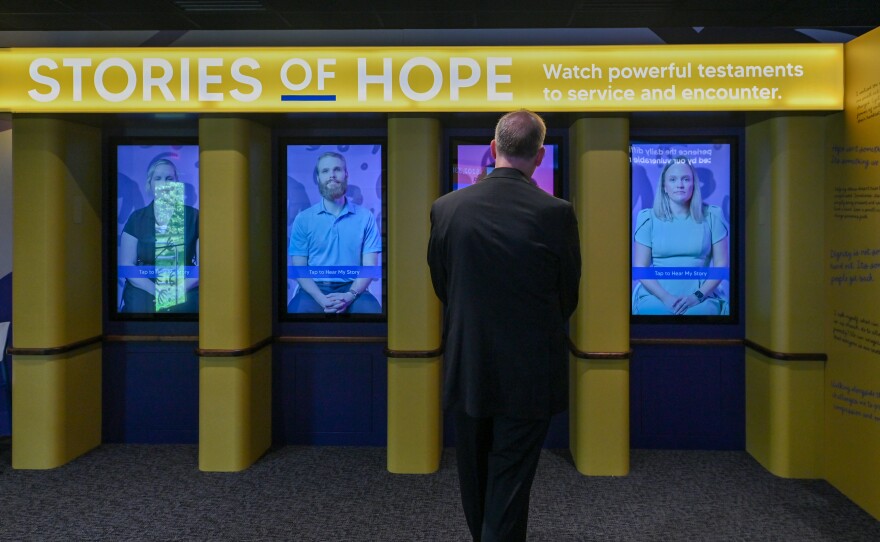
The traveling museum is housed inside a 53-foot trailer. A project of Catholic Charities USA, it hit the road in March to make 21 stops along the eastern United States this year.
The People of Hope highlights how Catholic charities around the country, like Catholic Social Services, provide services to those in need.


'We want to help'
Joe Mahoney is CEO of Catholic Social Services. He hopes that the people who toured the museum realize that poverty isn’t just an issue in big cities.
"We fight poverty right here every day, we have services, so I'd like them to say ‘oh, you know, I've got time, got some resources, maybe I'll help Catholic Social Services out’ or ‘I have a need,’’ he said. “Catholic Social Services, we want to help.”
Mahoney said the number of people who need their food pantry services and food kitchen is steadily rising.
"That scares me a little bit," he said.
He said food prices are up 4% this year, but 18% over the last three or four years. Gas costs are skyrocketing and so are rents.
"So all these things are squeezing the middle class, and life is just getting harder every day … so they're coming to us,” he said.
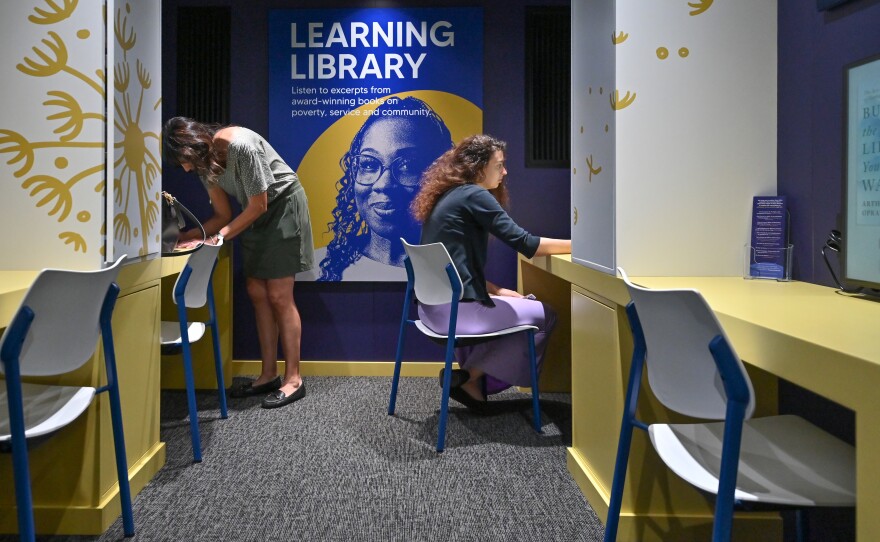
Inside the museum, is an audio booth where people can record their own stories.
"They didn't just come up to Scranton and say 'look what we're doing around the country', they came up to Scranton to say 'what are you doing there, tell us your story',” Mahoney said.
Poverty is not isolated
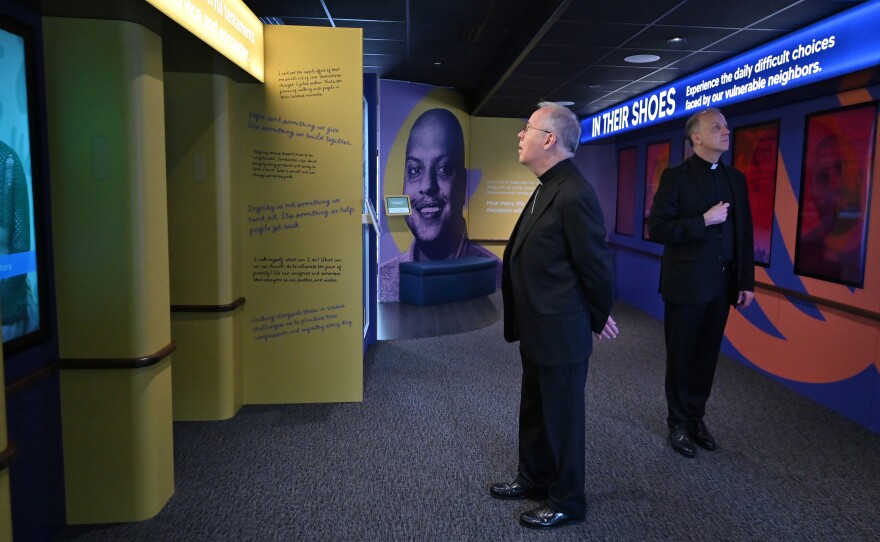
There also are large vertical screens that act as a poverty simulators. One prompts viewers to answer questions as if they were an elderly widow on a fixed income who had to move out of her home after her husband died. They have to make choices about paying rent and buying groceries.
“It's just really eye-opening to experience what people go through,” Scranton Bishop Joseph Bambera said. “Everything that you see in this exhibit speaks to somebody in our area.”
Bambera hopes people took three things away from the exhibit.
First, that there is a need in Northeast Pennsylvania, he said.
“It is not isolated, it is not in a different part of this country or a different part of the commonwealth,” Bambera said. “The struggle of people's lives is pervasive, wherever you are.”
He hopes they recognize that good things are happening at organizations like Catholic Social Services and that they can play a role in lifting up people in their community.
“That they can make a difference in somebody's life,” he said.
Near the exit is a table of white cards and a pen. A reflection wall is the last exhibit in the museum. Those who tour the exhibits are asked share how they will respond to the needs that they see in their community. Those sentiments are shared at the museum’s next stop.

