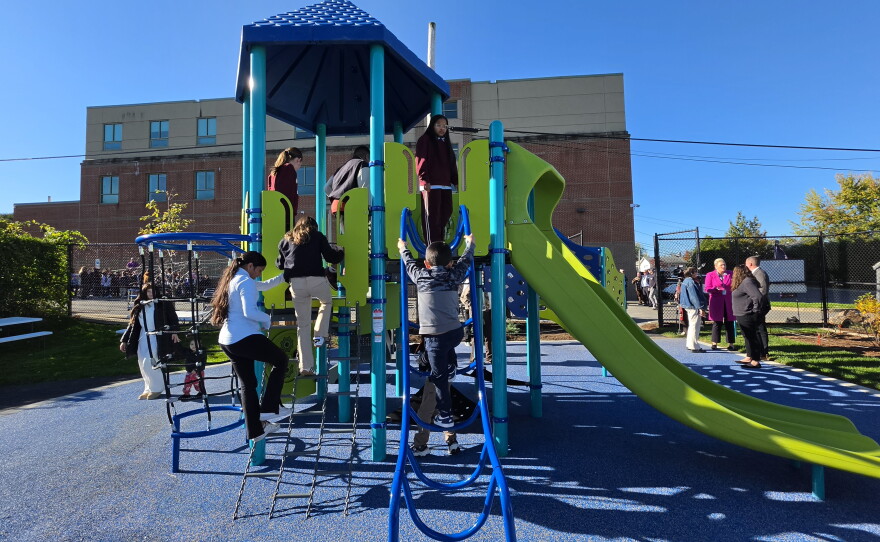
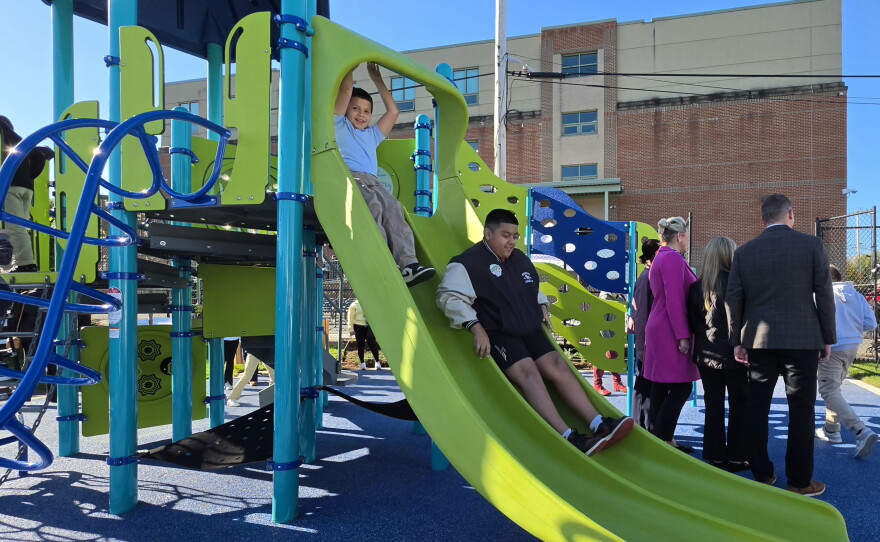
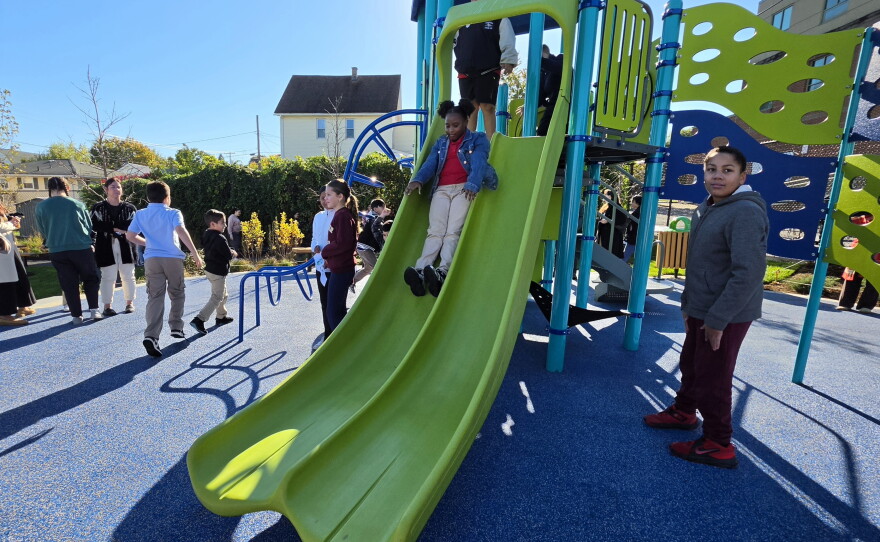
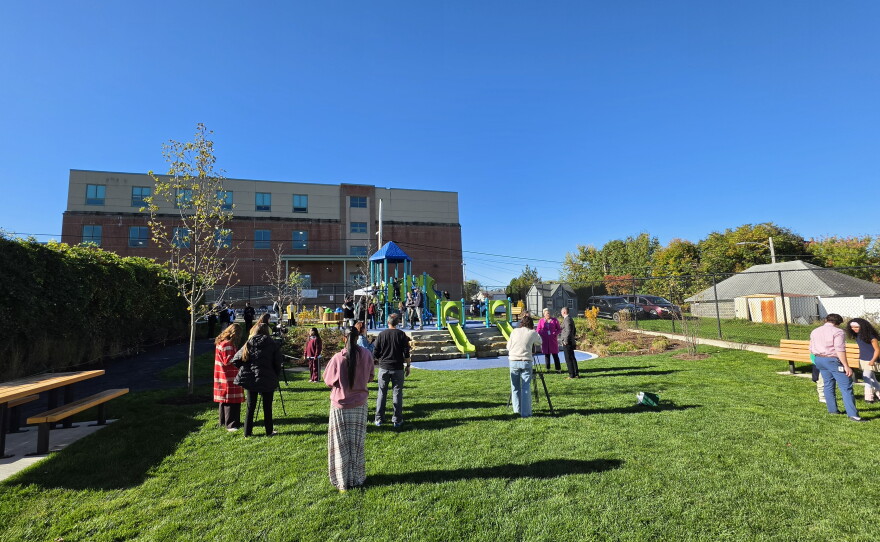
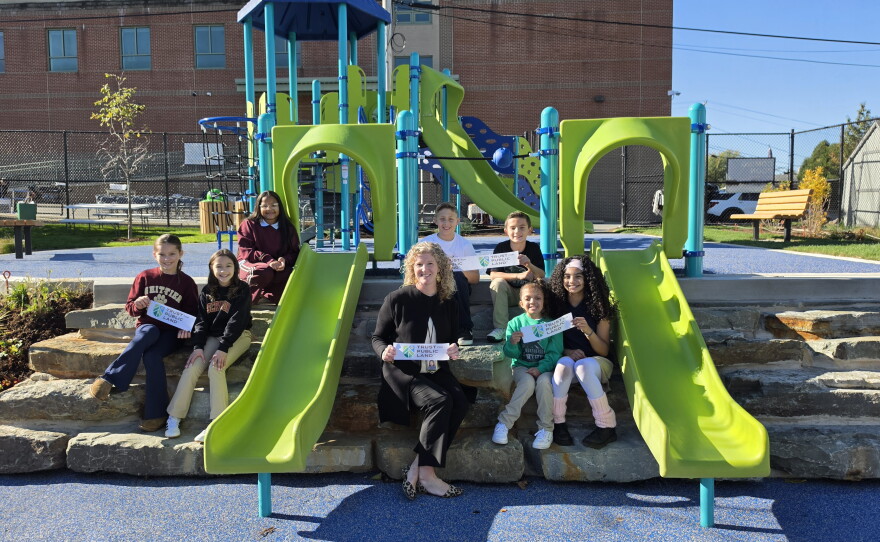
Ivianna Carranza raced down the slide on the new playground at John G. Whittier Elementary School in Scranton.
Three years ago, she and her classmates designed what they hoped the playground would include — slides, lush grass and places to sit with friends.
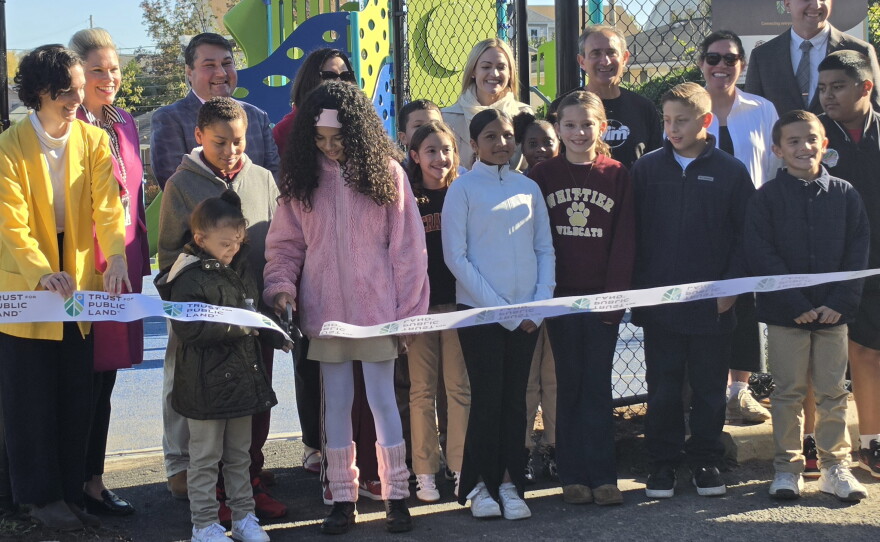
The students, now in fifth grade at the intermediate school, helped cut the ribbon to the space Tuesday. The park, made possible through community partnerships, will be open to the neighborhood when school isn’t in session.
Ivianna paused and looked at the rock walls and outdoor classroom — the dreams of her classmates three years ago.
“Wow! Look at where they brought this playground to be,” the 10-year-old said. “They have space to run around. They have benches. They have tables, and there's just a bunch of fun things.”

Second of three transformations
Whittier, on Orchard Street in South Scranton, is the second city schoolyard to be transformed by Trust for Public Land, a national organization whose goal is creating more green space in urban areas, and local partner Valley In Motion.
The schoolyard at Kennedy, also designed by students, opened last year. The city allocated $500,000 in federal COVID funds for schoolyard transformations, which allowed Trust for Public Land to leverage other grants. Many foundations and organizations also contributed to the projects. Organizers hope to break ground on a third transformation, at Willard Elementary in West Scranton, in the next year.

“This is what our kids deserve: great play yards, places that they can learn, like the rain garden. We need to make sure that we keep doing this work here in Scranton,” Mayor Paige Cognetti said. “The school district, the city, everybody working together along with philanthropy and nonprofits. It's exactly what we should be doing, and we're proud of it.”

Stormwater managed
The new schoolyard includes a multi-purpose grassy field, running/walking path, picnic tables and benches, inclusive play equipment, new trees and native perennials, outdoor classroom and green stormwater infrastructure. About 4,100 residents live within a 10-minute walk of the school.
But below visible features is a stormwater management system that will limit run-off — a frequent complaint of neighbors. A retention area will do more than limit potential water problems.

“We wanted to tie it in with the outdoor classroom seating area for educational purposes, and it also just made sense drainage-wise with all the water coming down the hill,” said Ed Confair, a landscape architect and professional engineer, who is a vice president at AKRF, a firm that worked on the project.
As the students designed the playground, they learned about the Chesapeake Bay watershed and the impact that stormwater at the school has throughout the neighborhood, the city and the larger region.
“They were learning that this project is more than just a playground at a single site,” said Alyssa Kelley, project manager for Valley In Motion. “It is connected physically and socially to the community around it, to the people and the environment, to flora and fauna and friends alike. This connection is both a great gift and a great responsibility that the students acknowledged and accepted with joy and resolve.”
Time for recess
The playground at Whittier sits across an alley behind the school. Before the transformation, there was little to do on the empty lot, and students said they would return to class with mud caked on their shoes.
The transformation comes as educators pay more attention to recess. All Pennsylvania students in kindergarten through fifth grade must receive at least 30 minutes of recess each full school day beginning in the 2027-28 school year.

“As educators, we spend so much time talking about academic achievement and standards and benchmarks and all of these things that sometimes the concept of play gets pushed to the side,” Scranton Superintendent Erin Keating said. “But it's really important for kids to be kids. Play is not just a break from learning. It's the development of social skills and social interaction. It's learning how to navigate things on your own as a child, how to make compromises, and how to do so many other things that only happen in elements like the playground that exists behind us.”
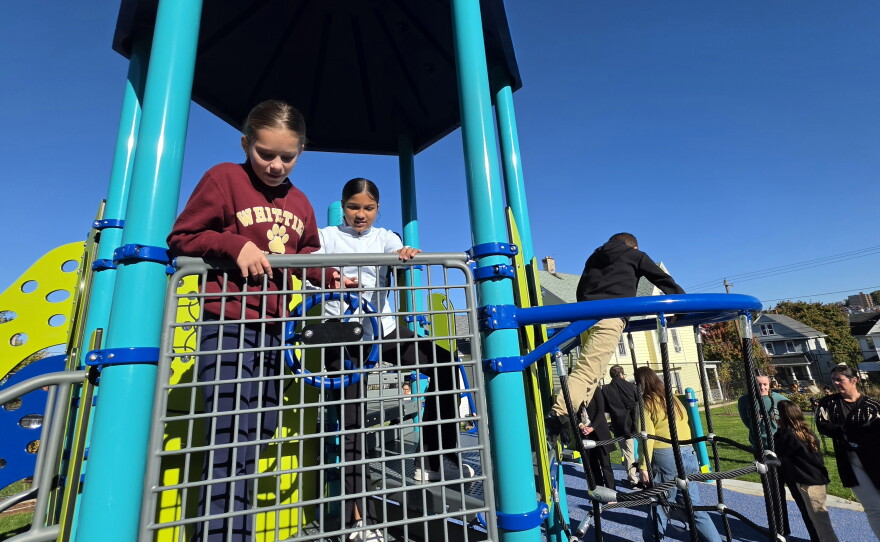
William Loftus, another fifth grader who helped design the playground in second grade, climbed and explored.
He noted a benefit of the space: “You can make more friends.”
Reflect on teamwork
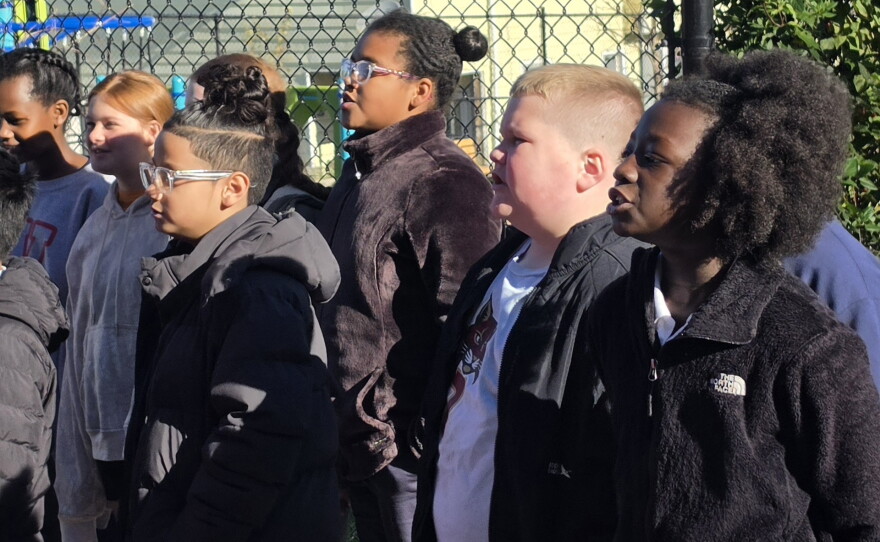
After fourth graders sang "The Star-Spangled Banner" and young designers cut the ribbon, the squeals and laughter began.
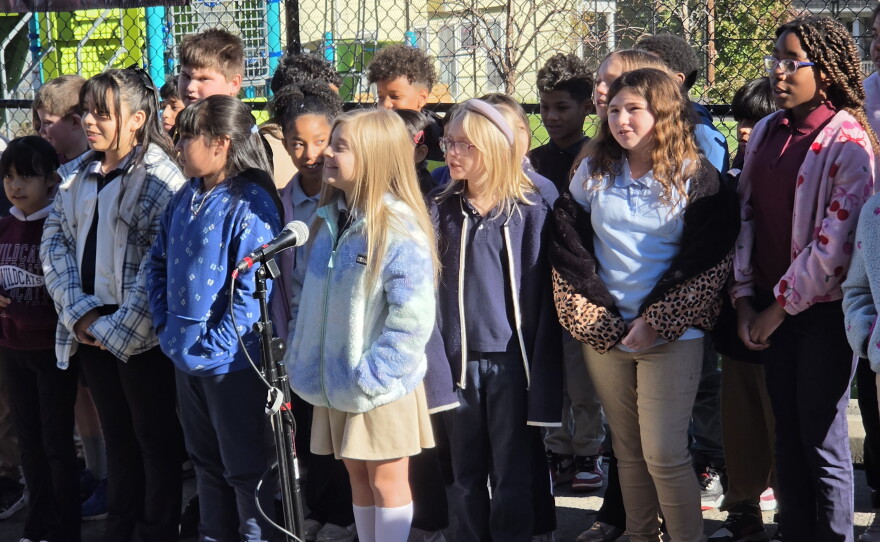
“For too long here at Whittier, our students did not have the type of playground that they deserved,” Keating said. “Every child should have access to a safe and a welcoming environment like the one that exists now behind me, where they can explore and they can laugh and they can share good times with their peers and their friends.”
Children ran from slide to slide, exploring the space they had once only dreamed about. Kelley hopes that as people use the space, they reflect on the teamwork that created it.
“Maybe it will be a hot summer day, but you will be shaded by the trees that were specially selected and placed in the schoolyard,” she said. “Maybe it will be after school during an unexpected rain shower, but you'll be able to watch the rain garden collect, absorb and redirect the stormwater. Maybe it will be during recess … when you watch a child navigate a new challenge as she decides to try the rock scramble for the first time.”