

Feb. 17 began the Year of the Horse, a time to gallop forward, not backward.
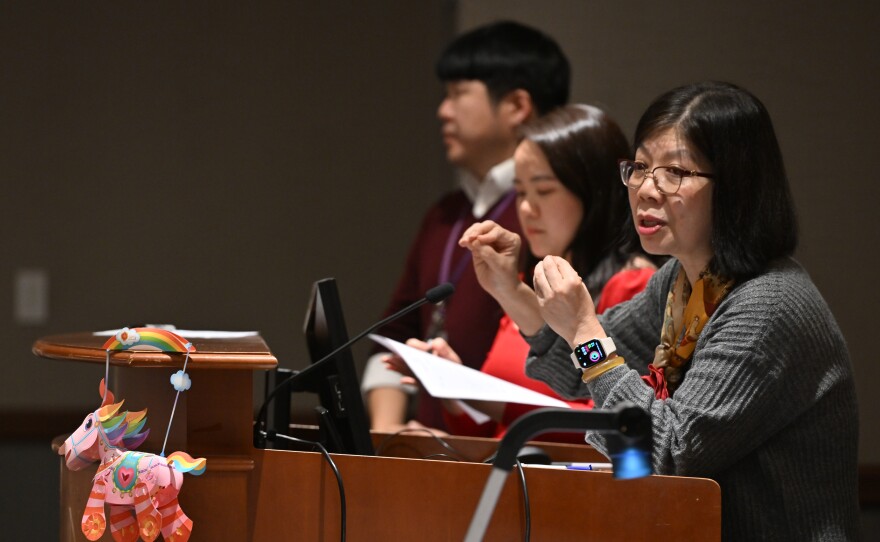
"This is the year symbolizing a lot of freedom, a lot of movement,” said Dr. Ann Pang-White, director of the Asian Studies program at the University of Scranton.
Pang-White, who is also a professor in the university's philosophy department, has helped host annual Lunar New Year celebrations at the university for more than a decade.
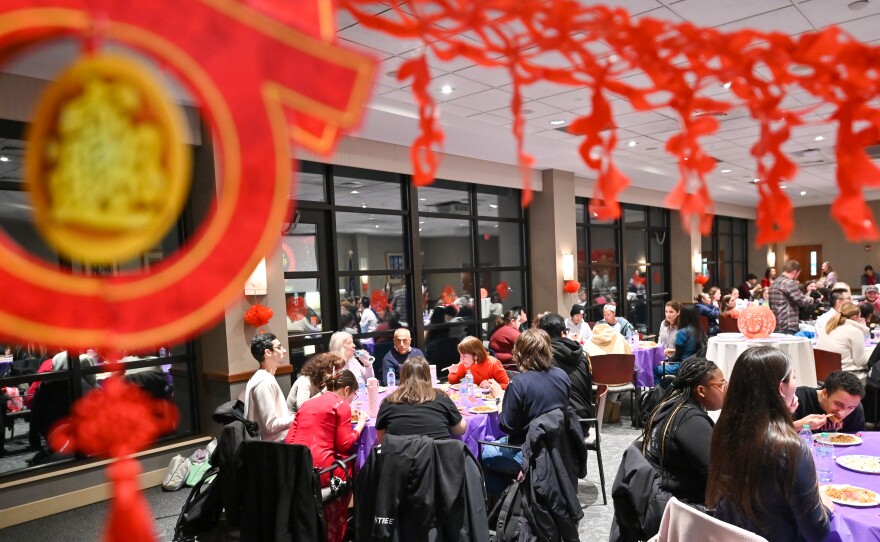
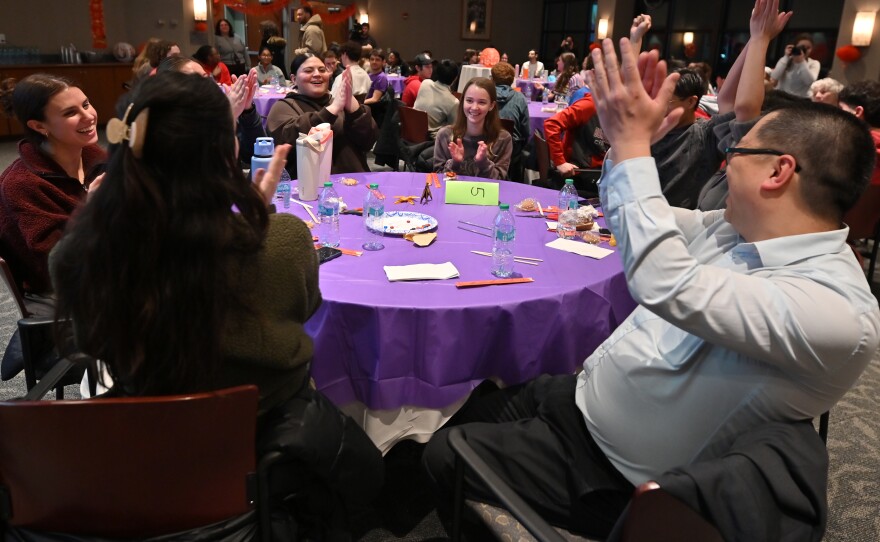
Lunar New Year celebrations last around 15 days. On Thursday, students and faculty members packed into a conference room on the fifth floor of Brennan Hall.
Pang-White opened the celebration by wishing everyone a "galloping year" with lots of prosperity, good health and forward looking progress and movement.
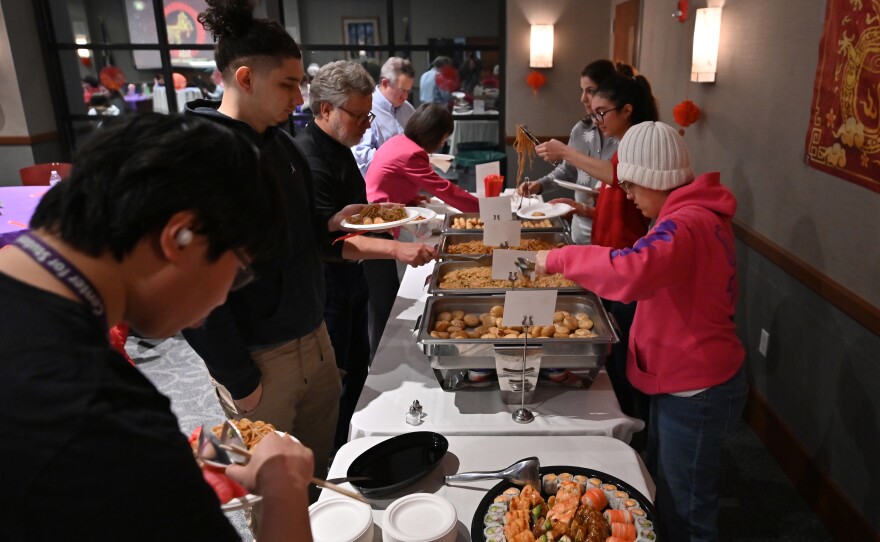
The celebration included a feast of spring rolls, noodles and dumplings.
The fire horse
Lunar New Year, which is celebrated throughout East Asia, is often called Chinese New Year. When it falls depends on the traditional Chinese calendar, which is based on 12 months. Each month is aligned with the phases of the moon.
The Chinese zodiac, which assigns an animal and its attributes to each year in a 12-year cycle, is paired with an element. The horse is paired with fire.
"So fire is going upward too. So it's supposed to be a year that bring lots of opportunities," Pang-White said.
But she said during the year of the horse is important to be careful about those opportunities.
"But take a bold attempt. Don't be too timid … but just be careful and cautious," she said.
A 'remembering culture'
In Chinese culture, there’s an ancient legend that a monster, called the Nian, would terrorize a small village on New Year’s Eve. To scare the beast away, villagers lit fires and made tons of noise.
Today, that tradition is celebrated with firecrackers and gongs.
On New Year’s Eve, Pang-White said it’s also tradition to make your home “sparkly clean.”
"Because that is to sweep out the bad luck and to welcome new year, the new luck coming in," she said.
On New Year's Day, tradition dictates that no one cooks, cleans or does laundry, she said.
"Because if you do that, it's the whole year will be full with labor,” Pang-White said.
Daughters are also expected to visit their families the day after New Year’s Day, she said.
"It's a remembering culture about the kind of gratitude that we receive from our parents,” she said.
A series of traditions
Across Asia, traditions depend on the country.
Japan’s new year follows the solar calendar. New Year's Eve is Dec. 31 and New Year's Day is Jan. 1.
On New Year’s Eve, people eat soba noodles, said Fujita Kazumasa, a visiting instructor from Japan.
"So because soba noodles symbolize a long life,” he said.
Communities in Japan will visit nearby temples or shrines to listen as bells are rung 108 times to mark the new year. It's called Joya no Kane.
Why that amount? Because "108 is said to be the number of worldly desires that humans have,” Kazumasa said.
On New Year's Day, people in Japan wake up to watch the sunrise. Then they eat meals in which each item has a different meaning, like shrimp. The seafood is curved, which resembles an elderly person, and symbolizes longevity.
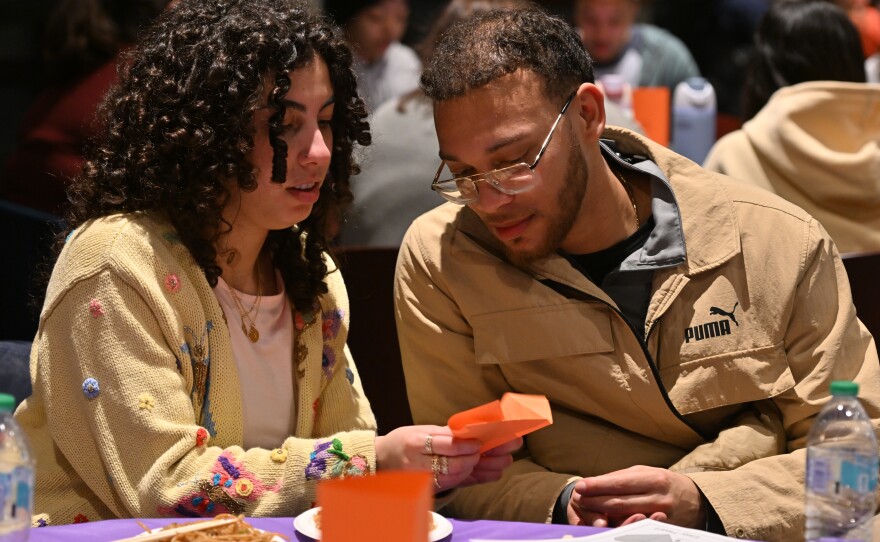
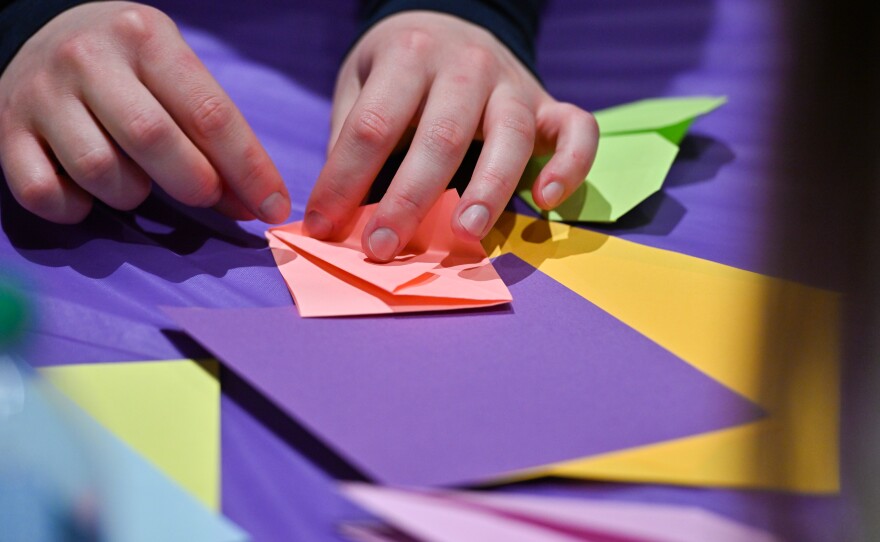
Kazumasa also guided the group through origami making.
Cutlery competition
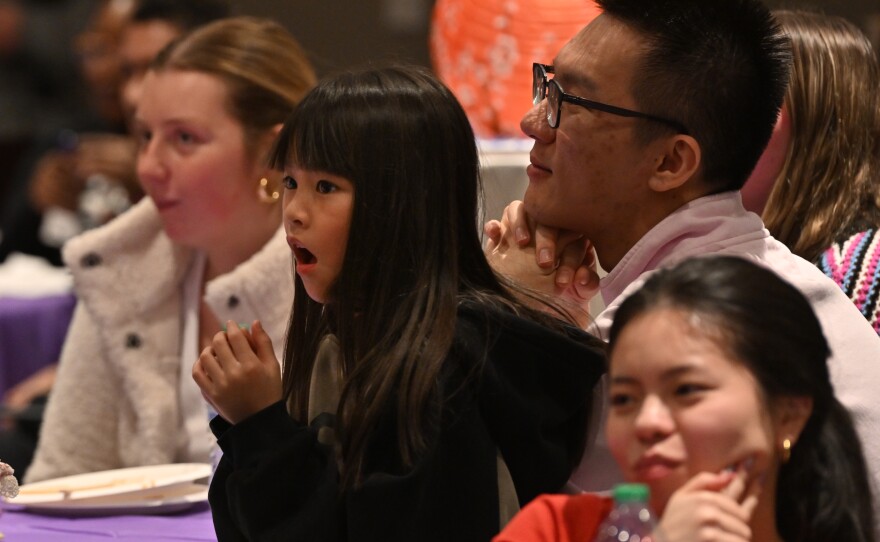
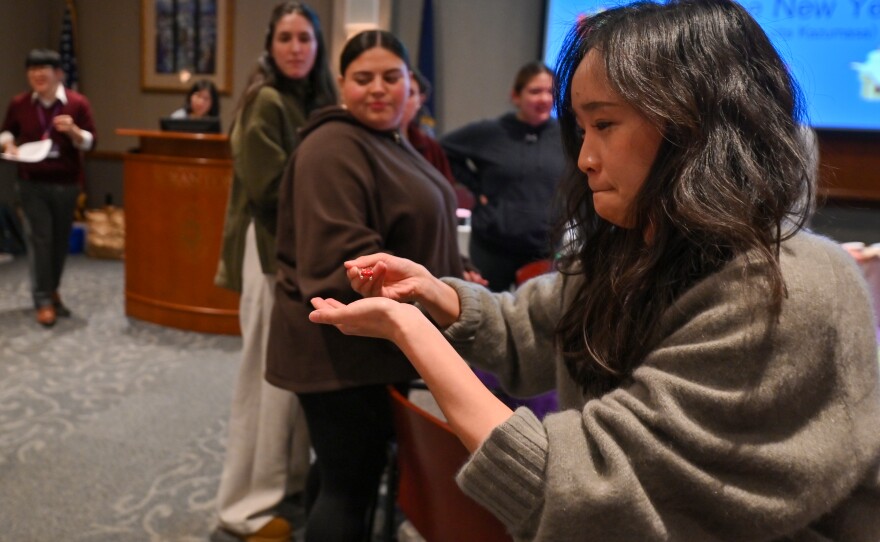
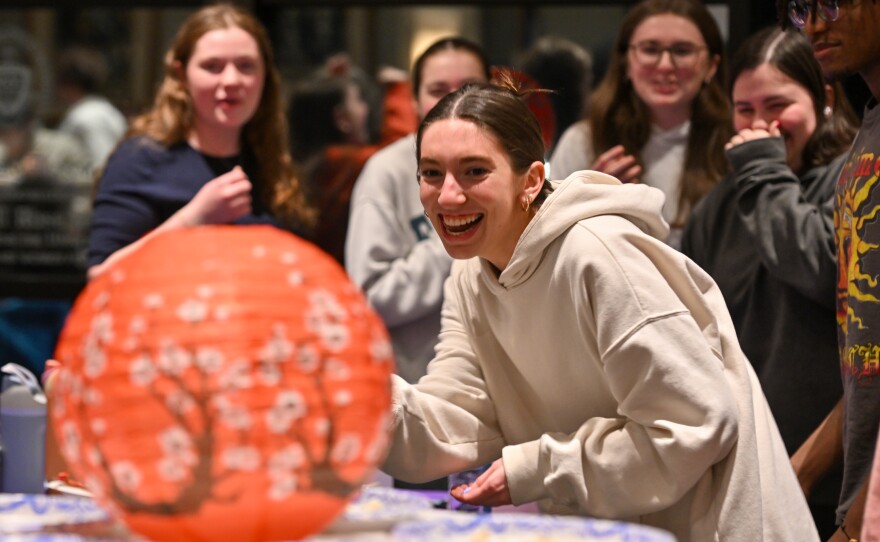
The Lunar New Year celebration also featured a chopstick competition.
"Chopstick is the symbol that unites a lot of Asian cultures,” Pang-White said.
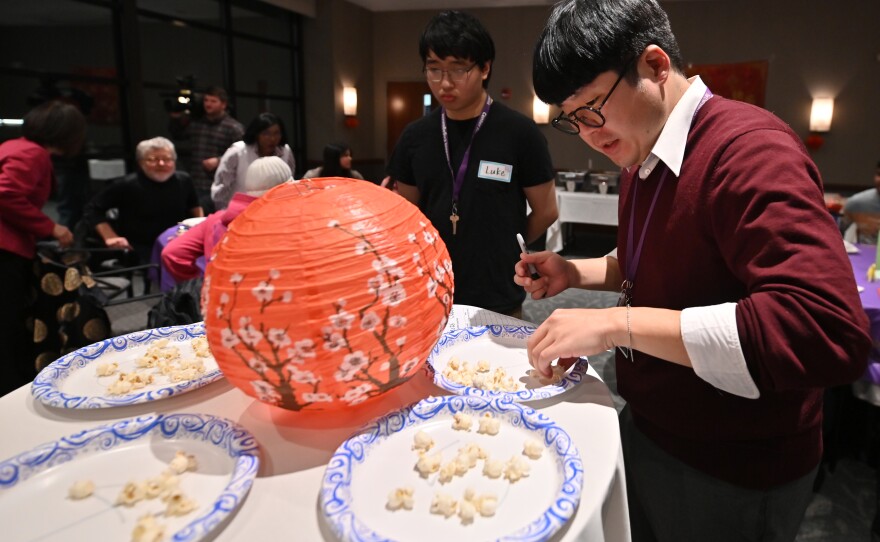
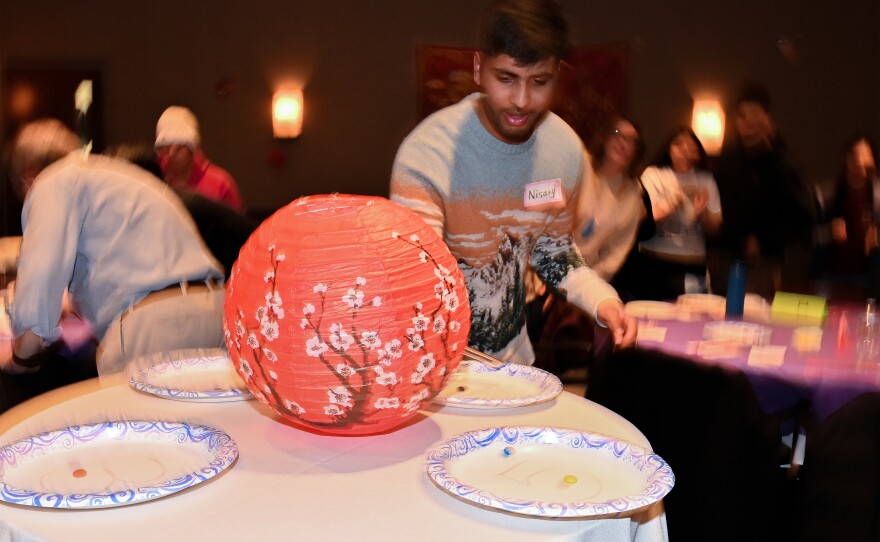
Participants sat at 10 tables. In the middle of each table was a paper plate with popcorn and stainless steel chopsticks. The teams had to pick up one popped kernel with the chopsticks and transport it to a plate on a closer table.
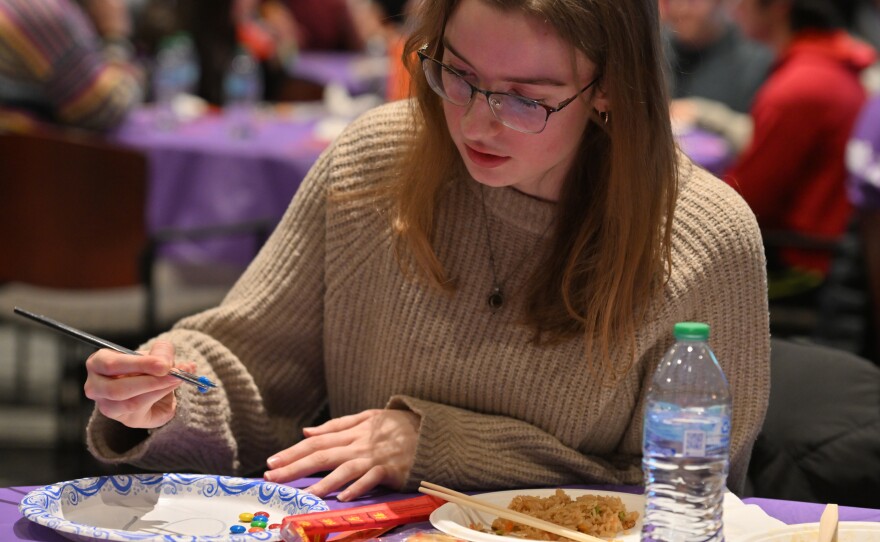
The top six teams moved to the championship. Instead of popcorn, during the second round they had to pick up a much more difficult item, M&M candies.

The red enevelope

Chihyi Wu is a visiting instructor from Taiwan. She guided the group through Chinese calligraphy.
Wu wore a long red dress. She said the color signifies fortune and also luck. People are given red envelopes on New Year's Day, often filled with money. Pang-White had a box of red envelopes ready to hand out to the participants.
She said there's an unspoken rule in Taiwan if you want to get a red envelope — a wish that must be offered.
She then spoke in Chinese.
"Which means a Happy New Year. I wish you have a good fortune," she said, translating.
"Yeah that's a very important thing," Wu said.
