

Wildflowers, daffodils and tulips have bloomed, showing the first signs of spring.
Soon, tomatoes, cucumbers and more will grow in backyard gardens.
Penn State Master Gardeners gathered at Penn State Wilkes-Barre Saturday for a Spring into Gardening event, sharing tips and inspiration for a bountiful gardening season.
Who are the master gardeners?
PLANT PEOPLE
An occasional feature highlighting gardening tips, projects and inspiration.
Master gardeners complete an extensive training program on several aspects of horticulture. They then maintain master gardener status with continuing education and volunteering each year.
Master gardeners provide educational programs for the public and other outreach activities like maintaining community gardens.
"We have the overarching mission of sharing research-based information," said Jill Baer, the Penn State Master Gardener coordinator for Lackawanna and Luzerne counties. "But a huge piece of our mission is also really to be an integrative, supportive, collaborative part of improving the quality of life in Luzerne County."
Where to start
Suzanne Beck shared tips for planning a vegetable garden.
“Where to place your garden is one of the most important decisions you can make,” Beck said as she began the presentation at Saturday’s event.

She says a south-facing garden is ideal. Most high-yielding crops need full sun, which is 6 to 8 hours of direct sunlight.
Beck also recommends soil testing every three to five years — something she says most gardeners skip.
“Before you add fertilizer, before you plant, before you try to fix a problem, you really need to know what’s going on in your soil,” she said. “Otherwise you’re just guessing.”
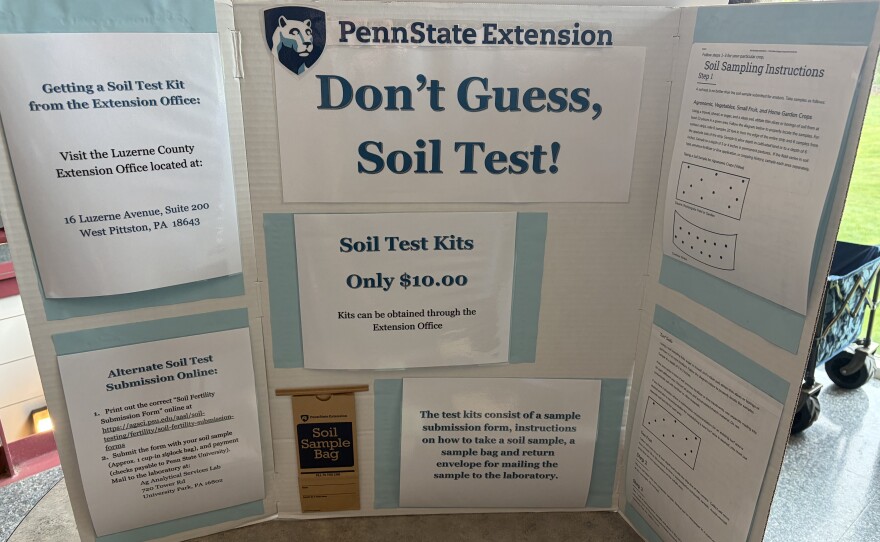
Penn State Extension provides soil testing kits that can be sent into a lab for $10. The test will determine what nutrients the soil is lacking and what needs to be added.

Jason Kilgore, who joined Beck for the presentation, recommends starting with a list.
He suggests thinking about plants that grow well in this area and how much space you have.
Then, research the plants and create a calendar based on when you plan to plant and harvest each of them. And draw a planting map.
“You’re going to want to put taller plants in the back because you don’t want them shading out your shorter plants,” he said. “Think about the mature size of your plant … you need to plan for that space.”
What to plant and when
Warm season crops, like peppers and tomatoes, should be planted after the last frost of the season, which is typically mid to late May.
“There are some cooler crops that you could put out right now,” Beck said. “I've just put out some onions right now. You could probably put out some snow peas right now.”
Now is a good time to plant seeds for those warm crops indoors to get a head start before planting them in the ground. Kilgore says you’ll need to do that if you want to grow tomatoes.
“If you try to start them in the ground from seeds … you're unlikely to get a very big or any harvest before the growing season ends,” he said. “Starting them now gives them a good six weeks to grow indoors before you're even at the beginning of wanting to plant them outside.”
No space? No problem
Even if you don’t have acres of land, or any outdoor space for gardening, it can still be done.

Pratibha Sharma hosted a workshop focusing on microgreens.
“My favorite is toast with an egg sunny side up, and then you can throw in some microgreens,” she said. “Or you can blend it in your smoothies if you want more nutrition.”
Microgreens are extremely nutritious and Sharma grows hers on top of her refrigerator.
“It takes like two to three weeks maximum to grow and it's ready to eat,” she said. “And you can use indirect sunlight. You shouldn't be putting it next to the window sill.”


Other options to save space include vertical gardening and staggering planting to maximize produce.
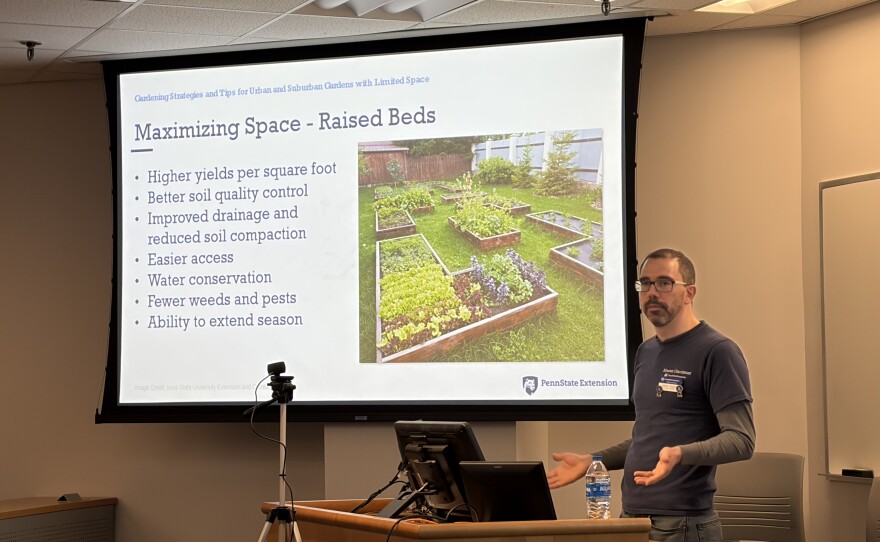
Raised beds provide for better soil quality control and improved drainage. They can also be covered to extend the season.
“We are always learning, every day is something new,” Sharma said. “That's what gardening is, experimenting and learning.”
Gaining and sharing knowledge
Penn State Extension has an insect ID lab and a plant disease clinic.
Those services and the master gardener's hotline, luzernemg@psu.edu, are free for Pennsylvania residents to use.
"Whether you're growing something in a container on a balcony or indoors even, or whether you have a lot of space ... we sort of want to be that conduit to information, that sort of support system and engagement system," Baer said.
"You can reach out, ask us questions," she said. "We'll work with you on a one-on-one level and try to help you mitigate a problem."
Beck has been a gardener for about 30 years but joined the master gardener program five years ago. One tip she learned from Kilgore was to plant celery.
“I grow celery every year because Jason recommended it to me … When you grow it yourself from seed, it tastes amazing,” she said. “I always learn something new and I love the friendships that you build as a master gardener, too.”
“I enjoy the knowledge that we gain,” Kilgore said. “But then also being able to share that knowledge with other garden enthusiasts.”
Every county in Pennsylvania has a Penn State Master Gardener program. The next basic training course begins in October 2027.


