

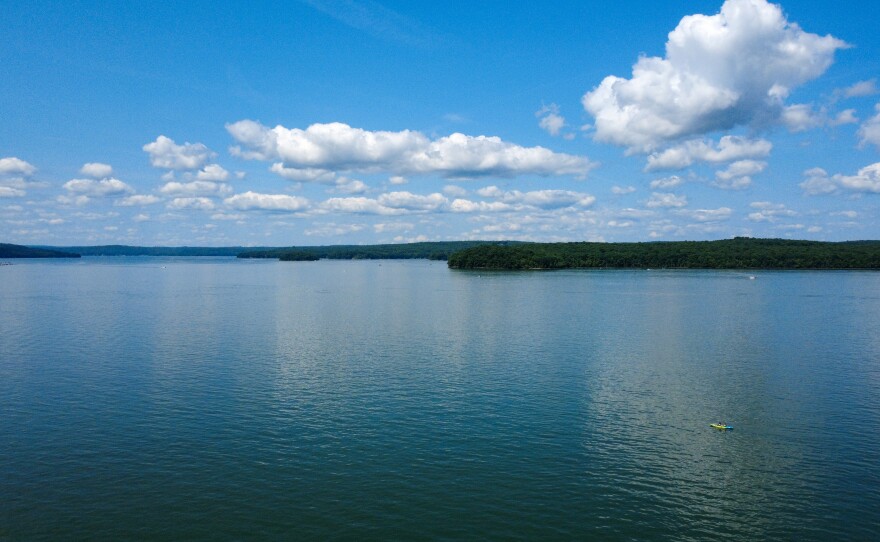
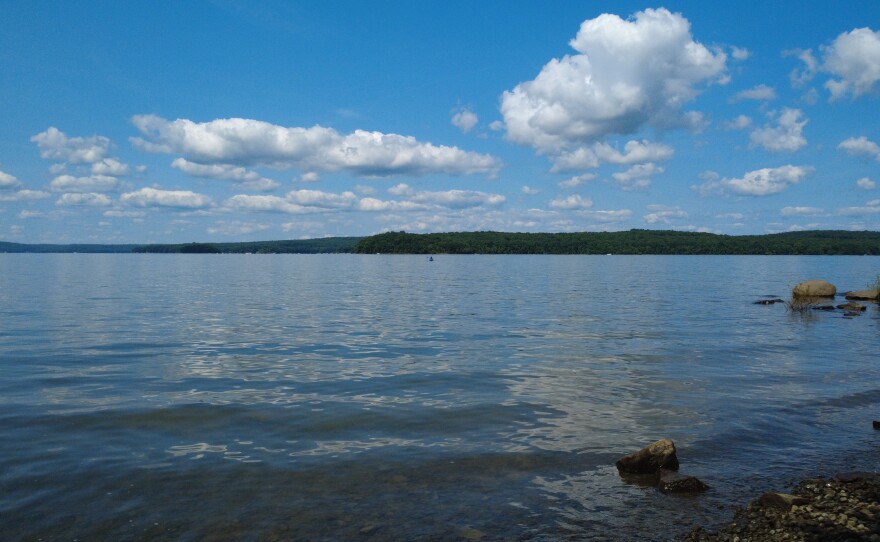
Kayakers paddle, people swim and anglers cast for fish at Lake Wallenpaupack.
What’s underneath is just as important to the lake’s history.
"Beneath its surface is a remarkable story of history, innovation and community,” said Debbie Gillette, executive director of The Chamber of the Northern Poconos.
On Friday, a group of elected officials and business and tourism representatives celebrated the 100th anniversary of Lake Wallenpaupack, Pennsylvania’s second-largest lake.
"In the early 1920s, the valley was a rural landscape of farms, forests, and small communities. Then, in 1924, construction began on a massive hydroelectric project that would forever change this area,” Gillette said.
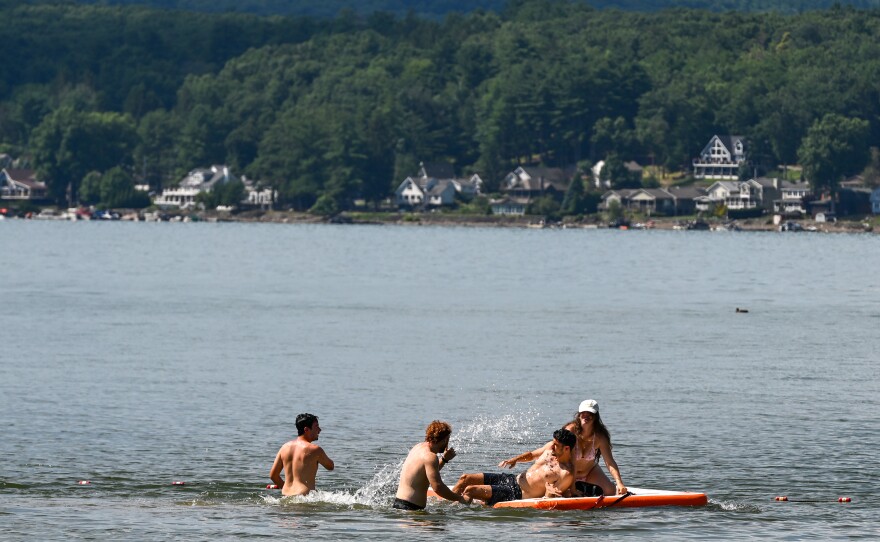
A group of people splashed in the water at the Palmyra Public Beach, while ducks swam and flew into the water.
Elaine Herzog of the Downtown Hawley Partnership learned to swim and ice skate on the lake.
"The big lake is a big deal for this area, and it has been since its construction,” she said. “One hundred years is without a doubt a significant milestone.”



Stream of swift and slow waters
The Lenape people, now part of the Delaware Tribe of Indians, were the original inhabitants of the Wallenpaupack River Valley. The word “Wallenpaupack” is from the Lenape language and is interpreted to mean “stream of swift and slow waters,” Gillette said.
During Revolutionary times, Pennsylvania and Connecticut settlers fought over land in present-day Northeast Pennsylvania. Connecticut settlers moved in along the Wallenpaupack Creek. But abandoned their homes after the Battle of Wyoming.
In 1923, Pennsylvania Power and Light Company of Allentown had an idea to generate power — dam the Wallenpaupack River, which separated Wayne and Pike counties, and create the lake as a reservoir to provide hydroelectric power for the region.
But to create the Big Lake, as it’s known, the company had to move the entire town of Wilsonville. Homes, businesses and the Purdy Town Cemetery were relocated to dam the Wallenpaupack River Valley.
Wilsonville was named for James Wilson, who signed the Declaration of Independence and was a U.S. Supreme Court judge. He owned the 12,500-acre Wallenpaupack Manor where the town was erected.

"Some people were upset about that, but other people saw the possibility for tourism,” said Laura Engles, president of the Wallenpaupack Historical Society.
Engles’ grandparents moved to the lake in 1926 to start a hot dog stand, which turned into White Beauty View Resort, which at one point was the biggest resort on the lake.
Engles said recreation was already happening in the area by the 1920s. There were boarding houses, fishing camps, hunting camps and tent camps along the river, which is the present-day Paupack Creek.
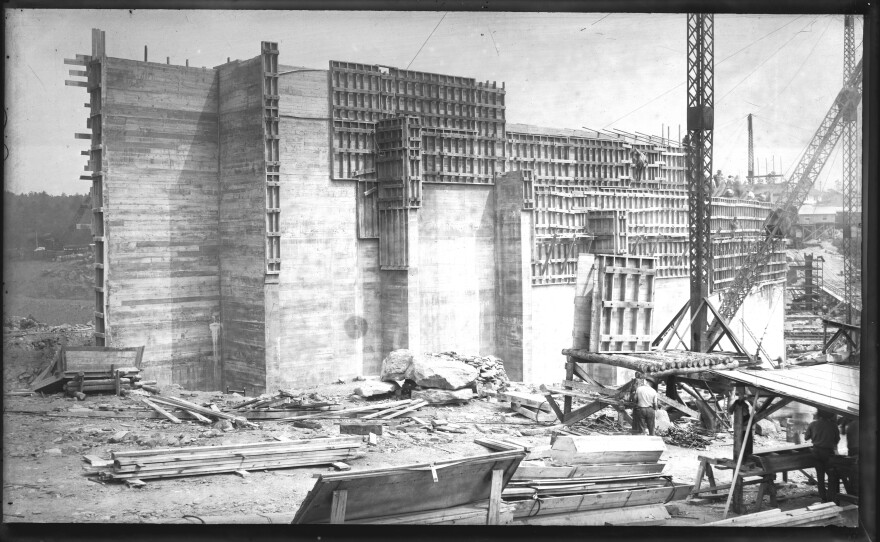
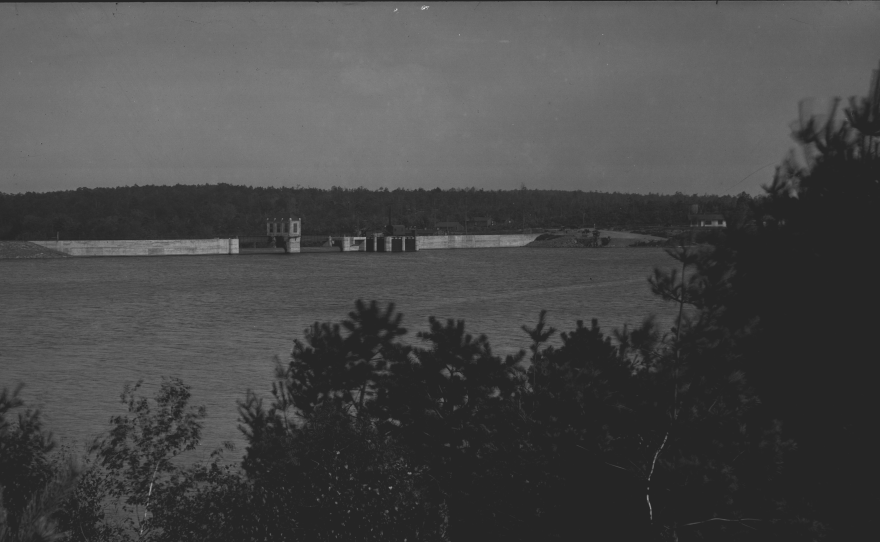
Work on what was then called the Wilsonville dam started in January 1924. A railroad had to be built, and 17 miles of road were rerouted. The project employed 2,000 men. Some even lost their lives during construction, according to newspaper archives from the time.
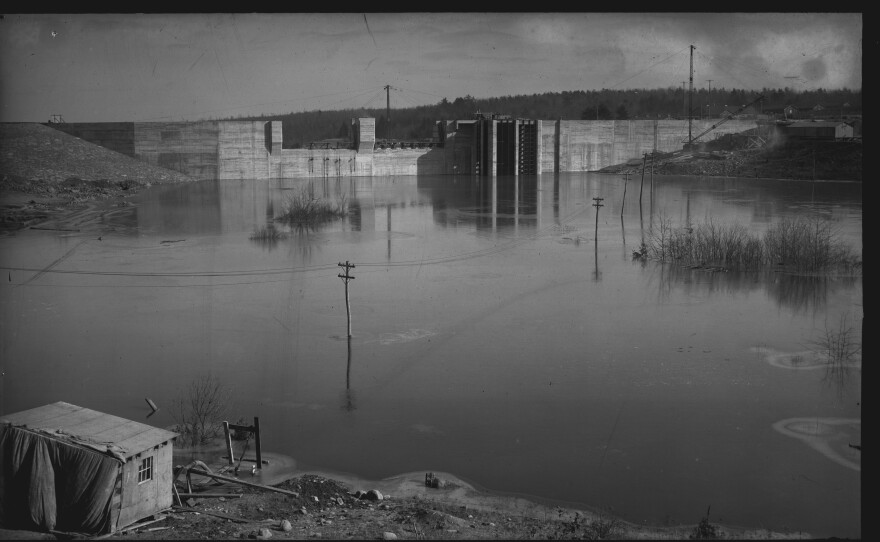
By November 1925, the dam was finished, and Lake Wallenpaupack started to fill up.
Many of the dignitaries who spoke Friday are descendants of original land owners and builders, including state Rep. Jeffrey Olsommer, R-139. His grandfather helped build the lake.
Pike County Sheriff Brian Vennie’s great-great-grandfather helped plan the dam and gave up some of his land for it.
Vennie said he and Wayne County Sheriff Christopher Rosler work together to ensure the safety of the community and open and free access to the lake.
"I look forward to my children, my grandchildren, and my great-grandchildren continuing to do the same thing," he said.

Power on the grid
The dam project cost $5 million in 1923, which is around $98 million today.
Lake Wallenpaupack is 5,700 acres, 13 miles long with 52 miles of shoreline. Today, there are six recreation areas that feature hundreds of acres of forest lands, wildlife, walking trails, campsites and boat slips, according to visitpa.com.
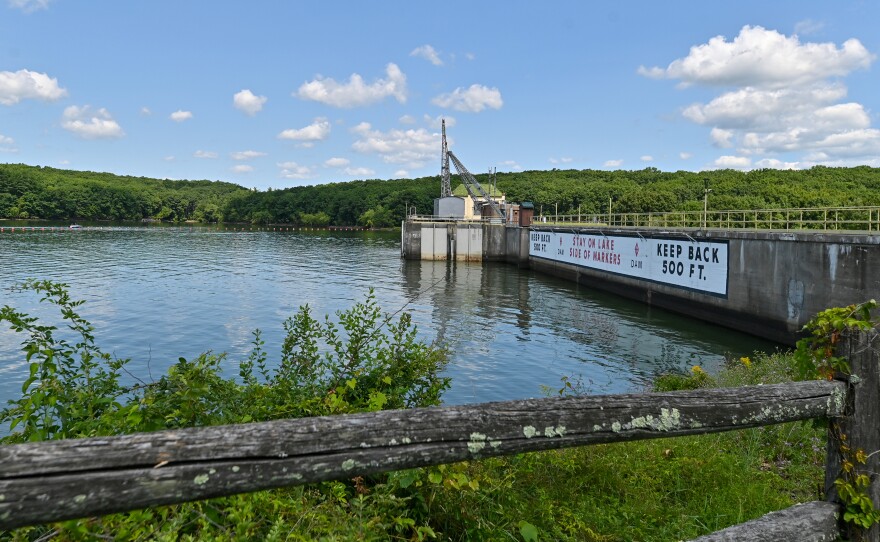
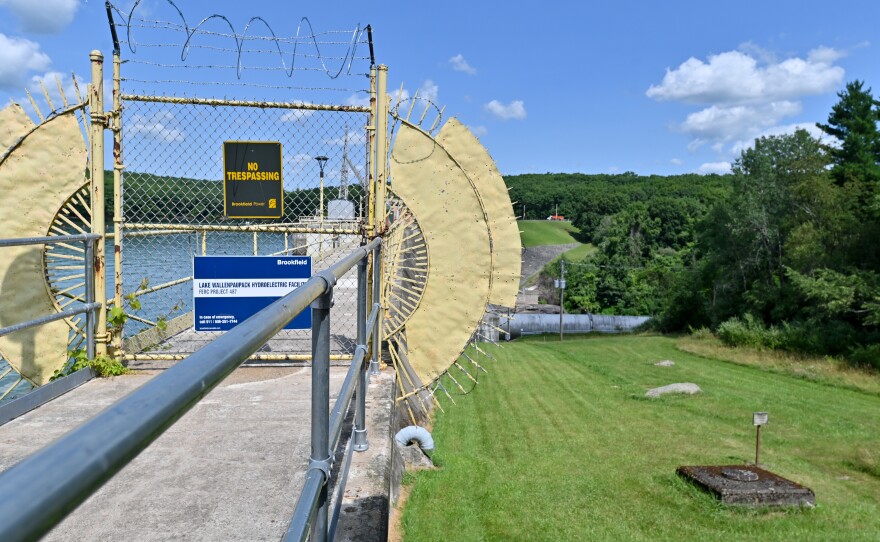
Despite all the aquatic recreation and vacation opportunities, it still serves as a reservoir to create hydroelectric energy for 40,000 homes. Brookfield Renewable North America is the present-day owner and operator of the Wallenpaupack Hydroelectric Facility.
The process to make electricity and the infrastructure remains relatively the same as it did in the 1920s, said Amy Burnett, director, stakeholder relations for the company.
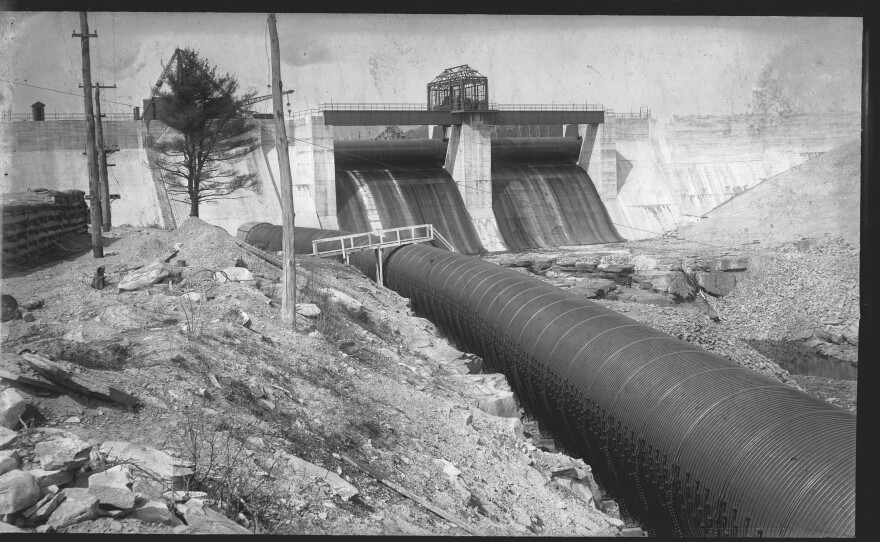
Brookfield pulls water from the reservoir. It flows through a 3.5-mile pipeline into a holding tank.

From there, the water goes into generating units. It spins, creates electricity, and is discharged into the Lackawaxen River, Burnett said.
The power goes into the PJM market, which provides energy to 13 states and Washington, D.C., she said. At its peak, the Wallenpaupack Hydroelectric Facility can generate about 40 to 44 megawatts of power.
Electric economy
Beyond the power created, Lake Wallenpaupack generates major economic opportunities for the region.
Chris Barrett is CEO of the Pocono Mountain Visitors Bureau. He said 50% of the people who visit the lake are from New York and 25% are from Philadelphia.
"And they leave behind $7.2 billion in economic benefit for the region,” he said.
Pike County Commissioner Matthew Osterberg said Lake Wallenpaupack is more than a lake.
"It’s an economic engine, a recreational treasure, and a defining part of our region's identity. It supports local businesses, tourism, jobs, and the quality of life that makes Pike County and our neighboring communities such special places to live and visit,” Osterberg said.
Herzog added that over time the lake began to support ecosystems, migrating birds, amphibians, and other species
"It also serves as a buffer for the watershed, and provides flood mitigation,” she said.
A 'treasured destination'
The historical society spent three years creating a history book about the lake to commemorate the 100th anniversary.
Engles said it starts at the Ice Age and details the significant impact the indigenous peoples had on the region, the early pioneers who farmed the valley and the immigrants who built boarding houses and ultimately resorts.

Friday’s ceremony also looked ahead to the lake’s next 100 years.
"Over the past century, Lake Wallenpaupack has grown into a treasured destination for recreation and tourism. It has helped shape the economy and identify and the identity of the Northern Pocono Mountains, attracting visitors from near and far, and creating memories that have been passed down from one generation to the next," Gillette said. "And while the lake continues to serve its original purpose of generating power, its greatest impact may be the connections it has created among people and communities.”
To mark the milestone, a multi-day community event was held. Opportunities to celebrate today include:
- 11 a.m. to 7 p.m.: Wallenpaupack Scenic Boat Tour & Boat Rentals, 2487 US-6, Hawley. For tickets, visit https://wallenpaupackboattour.com/
- Noon to 2 p.m.: Sunday Brunch and live entertainment from Travis Rocco, Wallenpaupack Brewing Company, 73 Welwood Ave., Hawley
- Noon to 3 p.m.: Ice Cream Social sponsored by the Wallenpaupack Historical Society, Williams House, 103 Manor Woods Court, Paupack
- 5 p.m. to 9 p.m.: Blues, Brews and BBQ, Glass Wine Bar, Hawley; $5 cover charge.
