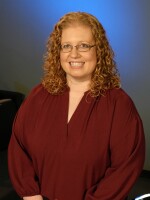
Elizabeth Miller lost her father at 6 and turned her grief into working for justice and peace.
Sean O'Shea watched the terror unfold from his classroom, feeling inspired to join the military and later guarding Saddam Hussein as part of the U.S. War on Terrorism.

Mark Volk served as a U.S. Army colonel at the Pentagon. He saved lives as fire raged.
Across Northeast and Central Pennsylvania, memories from Sept. 11, 2001 still feel raw. Families of commuters feared the worst. Schools dismissed early. People hung flags on porches and came together to pray.
Nearly 3,000 people died at the World Trade Center, Pentagon, and a field in Shanksville, as hijackers carried out the worst acts of terrorism ever on American soil. Many who died that day had connections to the region.
Twenty-five years later, lessons and grief continue. Below are stories from three people whose lives changed forever that day.
A firefighter's daughter stands for justice
Elizabeth Miller grieves for her father. She grieves for justice. She grieves for peace.
She was only 6 years old when her dad didn’t come home.

Douglas Miller worked as a New York City firefighter, commuting the two hours from Port Jervis, New York. While home, he served as chief of the Mill Rift Fire Department, across the Delaware River in Pike County, Pennsylvania. He loved being a firefighter while also raising his three young daughters.
He worked the sunny Tuesday morning when planes hit the World Trade Center. As part of the elite Rescue 5 from Staten Island, he responded to the scene, racing to evacuate people from the South Tower. Rescue 5 lost 11 members that day. Miller was 34.
Twenty-five years later, his eldest daughter’s grief has taken her from Ground Zero to Guantanamo Bay, from studying Middle Eastern history to learning about the formation and radicalization of al-Qaeda. She now works for Peaceful Tomorrows, an organization founded by family members of those killed on Sept. 11 who have united to turn grief into action for peace.
“I was processing some of my grief through education, and I was figuring out why 9/11 happened,” said Elizabeth Miller, now 31. “All these studies I think really helped me to understand that it was the few, not the many.”
She sat in her living room on a recent rainy morning, her 7-year-old Labrador retriever at her side. She’s been nesting, preparing for the birth of her first child early next year. A picture of her father sits nearby.
“When I give birth, and I know that my dad will never get to meet my kid, that's going to rock me,” she said. “It makes me very sad to think about.”
Devastating news
Douglas Miller was strict when it came to safety. He practiced fire drills out the windows with his daughters, but also loved to sing in the kitchen.
Elizabeth and her sisters would take turns sitting with their father in his recliner, which she describes as a “hideous” shade of blue. They watched “Cast Away” and “Ghostbusters” together.

The girls called their mom the “paparazzi” because she would follow them around with a video camera, capturing moments they would later cherish.
Though he worked on Staten Island, volunteered at the fire station in Mill Rift, and often helped family and friends, Elizabeth never felt his absence.
That would soon change.
Laurie Miller was doing laundry when she learned about the attacks. She waited to hear from her husband, but he never called.
The Millers lived four blocks from where Elizabeth lives now. A local firefighter and police officer came to the house to let Laurie know her husband was unaccounted for. She waited a few days to tell their girls.
Elizabeth, Rachel and Katie were 6, 5 and 3. That Friday, their mom told them their daddy was in heaven.
“I can literally put my body back there, which is, I think, so weird again because I was only 6,” Elizabeth said. “When something so traumatic like that happens, I don't think age is a factor. I think it lives with you no matter what age you are.”
Bravery and strength
Laurie Miller faced life as a widow with three young children. The family moved into a remodeled Cape Cod across the river in Matamoras.
The girls enrolled in the Delaware Valley School District. They each played sports, though one voice was always missing from the sidelines at a basketball game or the bleachers at softball.
Meanwhile, their mother modeled bravery, strength and compassion.
“We had such a positive childhood, despite this terrible tragedy and trauma,” Elizabeth said. “She raised us to be happy girls, and to choose happiness, even when it's the harder choice.”
Advocating for peace
Elizabeth wrote her first letter to George W. Bush at age 11, asking him to bring the troops home from Afghanistan and the Middle East. She had classmates sign the letter. Deaths due to war didn’t help her heal.
“There are little girls in Iraq who lost their dad because of the actions of the United States, and I don't like to make my loss exceptional because I'm not the only person who's ever lost a parent in this world,” she said. “Everybody has experienced loss, grief, trauma, and it just makes me sad that I think that we're continuing some of these cycles of violence and we're not learning.”
As she got older, she began to study terrorism and foreign policy. She enrolled at Bloomsburg University, studying history, along with Middle Eastern studies and Arabic.
She wrote a paper and talked to journalist Peter Bergen, who had met Osama bin Laden. She lived with a family in Morocco, where she immersed herself in the culture and history.
“I think that if you don't experience life or culture outside of your comfort zone, you can be inclined to feel some type of way about it,” she said. “It just takes like sometimes five minutes to try to experience something or understand something a little different than you're used to. Nine times out of 10 you're going to find the beauty in it.”
Elizabeth then pursued her master’s degree in Middle Eastern studies from the City University of New York, while working as an exhibition research coordinator at the 9/11 Memorial Museum.
During a prison literature class, she read “Guantanamo Diary” by Mohamedou Ould Slahi, who had been held at the military detention center in Cuba for 14 years without charges.
Her interest strengthened, and she had the chance to attend a pre-trial hearing at Guantanamo Bay in September 2021. She went as Peaceful Tomorrows' representative. Since then, she’s been back five more times, including for proceedings of Khalid Sheikh Mohammed, the alleged mastermind of the 9/11 attacks. His trial is scheduled to begin in June 2028.
“We're 9/11 family members, but we're not going to stand for injustice,” she said. “We're not going to stand for human rights abuses. We believe in the rule of law and obtaining justice, but in a way that is done correctly.”
Miller’s critiques of U.S. actions and opposition to war sometimes evoke confusion or anger, especially as the daughter of a firefighter killed on Sept. 11.
“That doesn't mean that I'm opposed to supporting our troops and having a deep, deep respect for military members, but I'm very opposed to foreign wars,” she said. “I think the issue is that we send our military men and women, who go over without any context or understanding of the geopolitical background and international politics… We just throw them over there, and we're like, 'Good luck.'"
Making a difference
In 25 years, Miller has transformed from a little girl who lost her dad, to a 31-year-old woman who advocates for justice and wants to make a difference in her community.
She spent two years on Port Jervis Common Council, and in 2023 lost her bid for mayor by 40 votes.
Her views on justice and human rights have also garnered her national attention. Last month, she defended New York City Mayor Zohran Mamdani's inclusion in this year's remembrance ceremony.
CBS will feature her in the program “Daughters of 9/11,” airing at 9 p.m. on Sept. 11. The show focuses on Miller and Jessica Trant, another daughter of a victim, in their decades-long journeys through grief and seeking justice.

Back in Port Jervis, Miller looks out the window on the dreary day. She’s 1,500 miles from Guantanamo, 70 miles from New York City and four blocks from where she learned her father would never come home.
Her grief does not define her, but has given her strength. As she prepares to become a parent herself, her dad is never far from her mind.
“It's terrible that we don't have my dad because nobody can replace him, take his place, be the same person that he would have been,” she said. “But there have been so many people who have filled in, and I'm really grateful for that as well. We're in no shortage of love, and that's a pretty good life.”
Teenager from Scranton guards brutal dictator

The history class at Bishop Hannan High School sat in silence, watching the horrors of Sept. 11 unfold on television.
Sean O’Shea was a 17-year-old junior. He had never considered enlisting in the military, but that day changed him.
"There was sadness, but there was also a sense of duty," he said. “I just felt like, ‘I’m not going to sit on the sidelines for this one.’”
He needed his parents to sign his enlistment papers for the Pennsylvania Army National Guard. His mom was OK with it, since she thought her son could use some discipline. His dad was more hesitant but eventually came around.
Soon, the teenager from Minooka — the largely Irish neighborhood in Scranton’s South Side — would be spending hours each day with Saddam Hussein, the brutal dictator responsible for killing thousands.
Unexpected assignment
The United States invaded Iraq in March 2003, just a couple of months before O’Shea graduated from high school. The U.S. government claimed Iraq had weapons of mass destruction and that removing Hussein from power was key to stopping terrorism like the kind on Sept. 11.
O’Shea’s unit from Scranton joined soldiers from all over the region, including Bloomsburg, Berwick, Hazleton and McAdoo. They trained at Fort Indiantown Gap, then at Fort Dix. In early 2004, the unit deployed to the Middle East, first landing at Camp Virginia in the Kuwait desert.
“It's hot, it's miserable. We're training out in the heat,” O'Shea said. “Still no idea what we were doing. Living in the middle of the desert in these tents.”

After a few weeks in Kuwait, O’Shea went to Baghdad to provide perimeter security for a high-value detainee prison called Camp Cropper. Prisoners included Hussein’s regime — and the dictator, captured in December 2003.
The FBI interviewed members of O’Shea’s platoon for a special assignment: providing around-the-clock security outside Hussein’s prison cell.
“I was one of the ones that was chosen for that duty... Looking back at it now, I'm kind of like, ‘Holy crap!’ I can't believe I did that,” he said.
In the soldier's words: Time with Saddam Hussein
Hussein came into power through death and turbulence.
At Camp Cropper, Hussein was a “clean freak” who routinely wiped down his cell. He wore a long, tunic-like garment the soldiers referred to as his “man-dress.”
He liked Cheetos, but he liked Doritos even more. He despised Froot Loops.
He enjoyed feeding the birds during the two hours he spent outside daily. He would pray and write and talk to the guards, including O’Shea, in perfect English.
“He would talk about religion. He told stories about how he took over power, how he failed the first time. He showed me where he got shot in the knee. He said he came back with the tank the second time,” O’Shea said. “He would make himself out to be this great person. He cared for his people and all this stuff, which we all know is just absolutely untrue.”
The FBI instructed the soldiers to call Hussein by the name “Victor” — and to not tell anyone back home about their assignment. O’Shea couldn’t tell his parents, or his older brother, that he was “hanging out with a dictator.”
The soldiers had to make sure the prisoner was comfortable, so that when the FBI interrogated him, he might be more relaxed. Hussein, in turn, treated the soldiers kindly — with the hope of getting an extra bag of Doritos.
Every day for 10 months, O’Shea learned about Hussein’s life. O’Shea saw the prisoner get emotional only once, when he learned his grandson died in the same raid that killed his sons.
Hussein offered advice on women that O’Shea is too bashful — and respectful — to share now. The dictator's family could send him items, including cigars.
Hussein would say, "O’Shea, grab a cigar. Grab yourself one too,” O'Shea recalled.
It still seems surreal to smoke a cigar with a man responsible for killing thousands of people.
“If you spend that much time with somebody, you're going to start to develop a relationship, and you don't want to risk forgetting the monster that he actually was,” O’Shea said. “So we would watch different things, and take a step back, and take a look just to remind yourself of, ‘Hey, this guy is a monster. Period.”
Looking back
Hussein wanted to show O’Shea the beauty of Iraq one day.
“He thought until the day that he was hung, he thought he was going to be back in power at some point,” O’Shea said.
After 10 months, the soldier returned to Scranton. He later learned from the troops who replaced him that Hussein was upset O’Shea never said goodbye.
“It's insane. He was one of the worst human beings to ever live,” O'Shea said. “It's our generation's Hitler, basically, right?”
As O’Shea settled back into life stateside, the United States’ War on Terror expanded. The U.S. government never found weapons of mass destruction in Iraq, and eventually captured the members of the Islamic terrorist group al-Qaeda responsible for the attacks on Sept. 11.
Hussein was executed by hanging on Dec. 30, 2006, after being convicted of crimes against humanity by the Iraqi High Tribunal.
Meanwhile, O’Shea married his high school sweetheart, raised four children and made a career out of the National Guard. He retired two years ago, after 22 years of service. Now 42, he works for the Pennsylvania Department of Military and Veterans Affairs, assisting veterans at state nursing homes.
Twenty-five years ago, O’Shea watched the world change from his seat in high school history class. He changed, too.
“There's really not a day that goes by that I don't think about my time in Iraq or, you know, my time with Saddam Hussein. It's like I can't remember what I did two hours ago, but I can close my eyes and I could see everything, clear as day,” O’Shea said. “It helped me grow up quickly. It made me aware that I am capable of handling a big responsibility at a young age.”
Future college president saves lives

Mark Volk still thinks about the door that wouldn’t budge.
The U.S. Army colonel worked in the Pentagon, overseeing personnel programs around the world. On the morning of Sept. 11, 2001, his staff gathered around a television, watching CNN as smoke billowed from the North Tower of the World Trade Center. After United Airlines Flight 175 crashed into the South Tower, someone in the office questioned whether the Pentagon could be a target.
Thirty-four minutes later, it was.
The headquarters of the Department of Defense shook. A large explosion threw everyone to the floor. The windows imploded as a fireball fueled by an act of terrorism burned.
Hijackers had crashed American Airlines Flight 77 into the western facade of the Pentagon, between Corridors 4 and 5. The plane penetrated three of the Pentagon’s five concentric rings. Volk’s office was in the D-ring, the second from the outside.
He made sure everyone from his office evacuated, then he grabbed a fire extinguisher and headed for the E-ring, toward the worst of the damage.

“I felt no fear,” he said. “It was just like, ‘OK, I have a job to do. I need to try and find anybody who's out here.’”
He and another man led people through the smoke and to safety. They tried to kick a door open on the E-ring, but it wouldn’t move. A second explosion sent the rescuers for cover. The door stayed closed.
“I later found that there were two people in that office. I know they were dead… The office outer wall was breached by the tail (of the plane), and fuel rushed in, and they were burned to death immediately,” Volk said. “But I have that guilt that I left two people on the battlefield. That always comes back, kind of rushes in as I talk my way through this… I still get choked up.”
Never underestimate others
Passengers on Flight 77 died instantly, and 125 civilian and military personnel in the building also lost their lives.

Volk’s actions on Sept. 11 earned him the Soldier’s Medal, the Army’s highest noncombat award for heroism. The Smithsonian Institution displayed the uniform he wore that day.
He retired in 2004 after 26 years in the Army. He and his wife, Lynn, returned home to Northeast Pennsylvania, and he began a second career, this time in higher education.
He accepted a job at Lackawanna College from then-president Ray Angeli. Their two lives intersected for decades. Angeli had been Volk’s ROTC instructor at the University of Scranton and worked in the same Pentagon office about a decade prior to Volk.
Volk later became president of the school, serving in the role from 2012 to his retirement in 2020, overseeing a period of great expansion, record enrollment and the start of the school’s first bachelor’s programs.
He would sometimes talk to students about his experiences that day and what he learned from them. Twenty-five years later, the lessons still shape his life.
“9/11 taught me that we often underestimate people and their abilities," Volk said. "I saw people do things that day that I would have never expected of them."
He will always remember.