

Working in the new garden in front of Common Ground Ministries in Beaver Meadows, co-founder and Pastor Everett Upton searched through dense green foliage to identify herbs and harvest tomatoes, turnips, peppers and eggplants.
The fresh produce collected will be distributed to those in need for free.
Common Ground Ministries, a non-denominational Christian community organization with the motto “Everybody Eats,” has supplied families with groceries since its founding in 2004.
Launched this year, the “Garden of Eating,” is the pantry’s newest initiative to help nourish families in Carbon County and neighboring areas.
“Getting fresh vegetables and fruits and stuff like that is very rare,” Upton said. “And so, in trying to problem solve, what we've decided to do is grow our own.”
In its first year, the garden has already produced hundreds of pounds of locally-grown produce for the approximately 800 families the nonprofit serves, Upton said.
It helps support people with special dietary needs who can’t eat some of the packaged foods the pantry receives.
“The fresh garden is perfect for them,” Upton said. “We give them those herbs and the fresh stuff, a prayer, and they keep it moving. We've had a lot of success stories.”
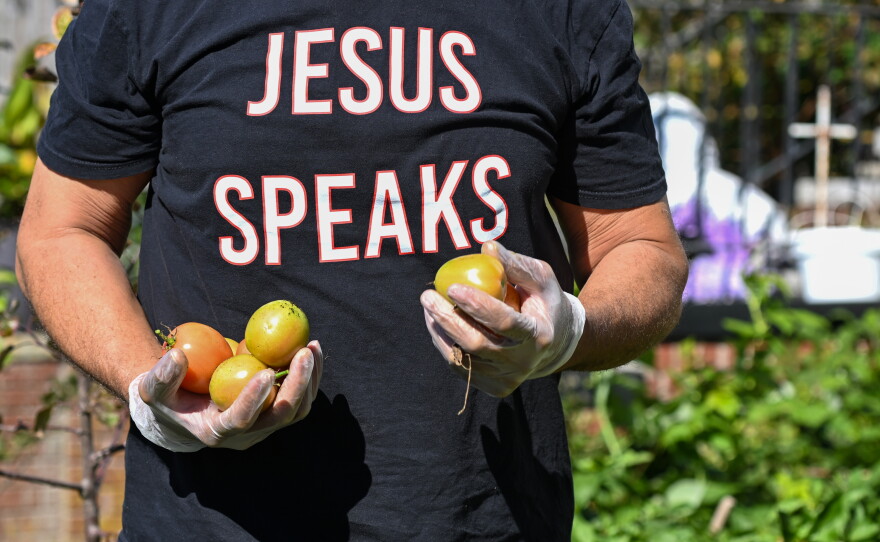
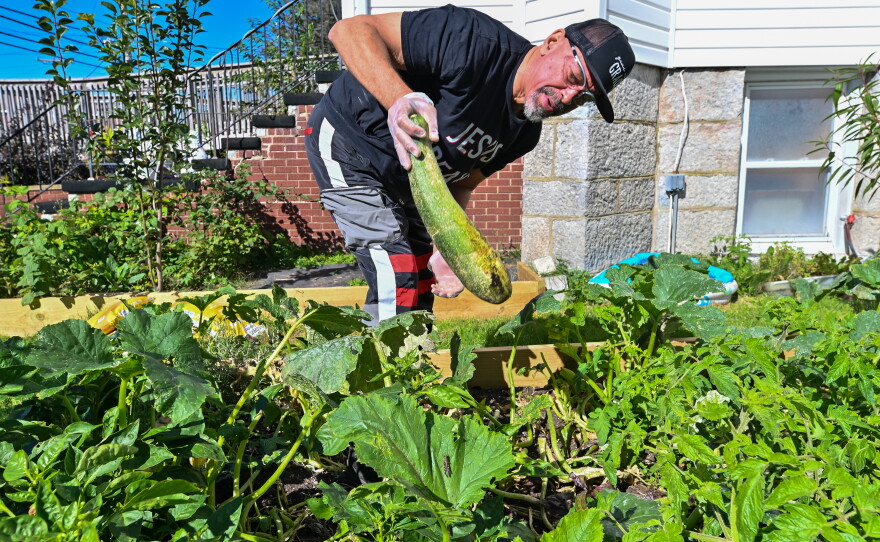
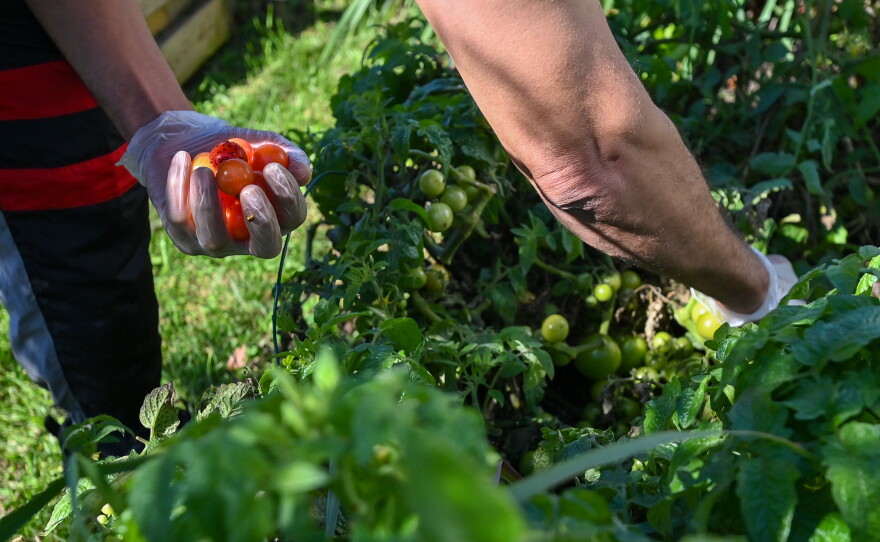
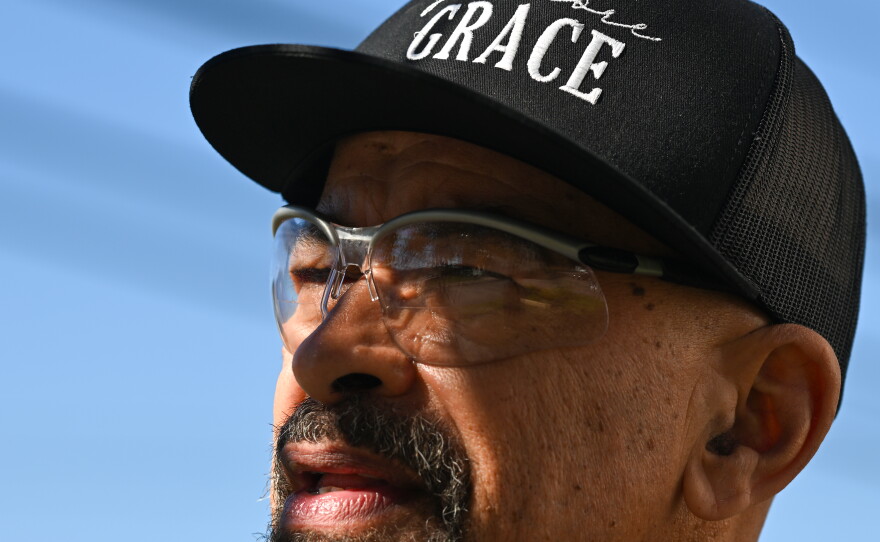
'Garden of Eating'
Common Ground Ministries has supplied families with free starter vegetable plants in recent years. Planting its own garden has allowed the pantry to save money while providing a greater variety of vegetables and fruit and respond to an increased demand for food in the area, as families try to make ends meet amid rising costs.
A bush in front of Common Ground Ministries, which has been located at 121B Berwick St. in Beaver Meadows for the past three years, was cleared to make way for the garden.
Upton said local businesses provided some starter plants and other partners have provided monetary support. He credited David Hartung, a teacher and community garden movement volunteer, with helping start it by contributing money, soil and knowledge.

Hartung, who grew up on a farm in Millville and later studied agricultural techniques, said he proposed the idea of a garden at Common Ground Ministries after hearing Upton's donations were getting lower each year.
"Food security, I think, should be a top priority for communities," he said. "So we started the garden, and it's just been a huge success."
The garden includes tomatoes, tomatillos, peppers, turnips, carrots, beets, kale, lettuce, squash, eggplant, berries, herbs and even bok choy, mixed together across six beds, as well as fruit trees, including apple, pear and peach.
Upton said his wife Sherry, a co-founder of Common Ground Ministries, has a “green thumb,” but he is still learning best practices with time. Life lessons learned in the garden — like planting, composting, food preparation and farming skills — are shared with young volunteers.
“It teaches them patience,” Upton said, noting the youth group plants seeds, waits weeks for an exciting sprout and then waits even longer for plants to produce fruit. “These are all lessons that, from a ministerial perspective, you can teach.”
Hartung, who volunteers mostly with Common Ground Ministries and in the Kensington section of Philadelphia, believes garden education is the most effective form of learning, as it is interdisciplinary, accommodates multiple intelligences and teaches social skills. It is also a form of project-based learning, which he said is highly regarded but not always accessible.
“In my practice of teaching, it became very apparent that gardening was such a great way to not only help health outcomes and financial outcomes for communities, but also just holistic health and learning outcomes for young people when they do experiential learning," he said.
Experimental learning is the process of learning by doing.
“Because it’s an experiential learning space, there are just so many ways to participate and… feel rewarded for one’s unique ability," he said.
Upton said it's also a meaningful way for seniors, who he finds commonly have vast gardening knowledge, to give back to the community. Volunteers, young and old, may find working in the garden supports their overall well-being.
“It's kind of hard to be in a garden and be stressed because you're dealing with nature,” Upton said. “We're getting vitamin D. We're getting fresh air. We're moving around … It's a win-win for everybody.”

Common Ground Ministries' services
Part of the motivation for starting the garden was to serve as a model. Upton hopes to help other organizations or churches start gardens.
“What they could do is contact us, and we’d show them exactly what we did and whatever we could do to help them get started,” he said. “I would just encourage people to give it a shot.”
Hartung also said he would like to help expand community garden access, specifically in Wilkes-Barre, and noted he has 50 fruit trees available for donation to churches and nonprofits, with free installation over the next few weeks or in the spring. He can be reached @churchgardens on Instagram.
"Most people, no matter how much space they have in their community, can grow fertile gardens... with little difficulty," Hartung said, noting gardens have low start-up costs.
Longer-term goals for Common Ground Ministries include expanding its programming to establish a daycare, STEM lab and other after-school programs to meet area needs. The organization already offers community events, Bible studies and youth programming.

The pantry operates most days each week with varying normal hours from the community center, the former St. Mary's Church on Route 93 in Beaver Meadows. The nonprofit received $500,000 from the American Rescue Plan Act in 2023, which allowed them to purchase the building. The building allows the center to respond to food emergencies at any time.
In addition to the garden, food at the pantry comes from local grocery stores and farms. They buy food that is soon to expire at a discount and distribute it within a day. Common Ground Ministries recovers 100,000 pounds of food annually, according to the organization website.
Curbside pickup is the primary food distribution method but Common Ground Ministries also delivers if someone truly needs it. They also hold a monthly drive-thru distribution in Monroe County.
Proof of income is not required, and services are for people of every faith and background.
Visit commongroundministriespa.org or call or text 570-801-2699 to inquire about food pickups or establishing a garden.

