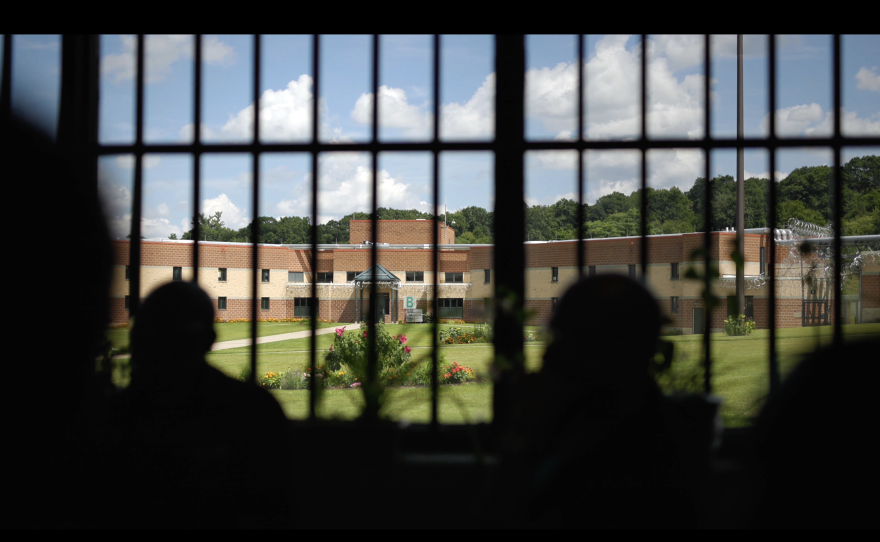
Outside, the sun shines bright on immaculate green lawns and clusters of colorful flowers.
Inside, the men gathered around a table at one end of the dim, cool classroom fold their hands or look over their notes while waiting to speak.
It's an August afternoon. Puffy white clouds fill the skies. Those facing the window look out onto the carefully manicured campus through iron bars.

KEYSTONE EDITION
PA PRISONS:
CHANGE FROM WITHIN
● Watch on-air debut Monday, Nov. 2 at 7 p.m. on WVIA TV.
● Watch later on the WVIA News YouTube page.
A WVIA panel led by Julie Sidoni and Roger DuPuis will talk with SCI Coal Township Superintendent Thomas McGinley, retired Bucknell University professor Carl Milofsky and Pike County District Attorney Ray Tonkin about programs at SCI Coal Twp. in Northumberland County designed to help inmates build skills and benefit the wider community, as well as external discussions about sentencing and victims’ rights.
"If we're gonna be here, I just want everybody to know that we are giving back," Kevin said quietly.
Kevin is director of ways and means for the Lifeline Association, one of two inmate-run philanthropic groups at SCI (State Correctional Institution) Coal Township. He is responsible for sales.
"We do care about the communities, not just the surrounding communities, but all communities," he added. "We understand that the mistakes we made have consequences, but we also understand that redemption is a part of this road too."
The medium-security state prison for men, located in Northumberland County, houses over 2,000 inmates.
Lifeline and another group, TriumpH, raise money by selling specialty goods to inmates in the prison's commissary.
Group members buy the items at wholesale prices using money they earn from job assignments within the prison and funds sent from family members. The money they raise is donated to community organizations around the region and beyond.
"Lifeline is for men that are serving long-term sentences or life sentences, and it provides an opportunity to do better," Kevin said.
TriumpH accepts participants regardless of sentence, SCI Coal Township Superintendent Thomas McGinley said.
The programs may not be unique in Pennsylvania's SCI system, but everyone consulted for this story acknowledged that what Coal Township is doing stands out for the extent of its philanthropy.
McGinley and his staff accepted WVIA News' request to visit the prison to meet Kevin and other members of the Lifeline Association, and to videotape our interviews about the program.
Those interviews can be seen in the companion Keystone Edition broadcast.
The interviews had to follow three basic state correctional system regulations: No faces, no last names, no discussion about individuals' crimes or crime victims.
Some of the men interviewed may never be released, but others will.
McGinley and others see the programs as key to improving their lives inside the facility — and for those who may someday leave, once they're outside.
"They promote personal growth. That was the biggest thing — to just feel like they have accomplished something every day," McGinley said.
Carl Milofsky, an emeritus Bucknell University sociology professor who has led Inside-Out Prison Exchange Programs to bring college students and older adults into the prison to learn alongside inmates, agreed.
"Some fraction of these guys are going to get out. You'd really like people to come out with skills, knowledge and a positive attitude toward humanity and community — so they want to help people, rather than causing problems for the community," Milofsky said.

'I want my society to be a forgiving society'
TriumpH (Teamwork, Respect, Integrity, Unity, Morals, Pride, and Honesty) started at SCI Coal Township in 1995. Lifeline began in 2016, under McGinley's tenure as superintendent.
It reflects his views on corrections and humanity.
"I believe Nelson Mandela said, 'society is indicative of your prisons.' Just take a walk in, and you'll see what your society is like," he said. "I want my society to be a forgiving society that's interested in redeeming people."
For McGinley, a coal region native from a law enforcement family, corrections work wasn't his initial career goal.
After graduating from Penn State, he was eyeing an opportunity with the New Jersey State Police. Then his grandmother, who "meant the world to me," became ill.
"So I wanted to stick around for her, and I remember declining that opportunity," he recalled.
There was an opening at SCI Coal Township, "down the road." McGinley's brother, a Pennsylvania state trooper, was skeptical.
"Well, why on earth would you want to work in a prison?" McGinley recalled him saying.
"The first time I came up here, corrections had a negative connotation, as everybody knows. Driving up here for my interview, I see the razor wire, kind of got a little knot in my stomach, and his words resonated with me," McGinley said of his brother.
But he followed through, got the job, and started as a corrections activities specialist at SCI Coal Township in 1997.
"It was the best decision I ever made," he said.
"When I first got in here, I realized pretty quickly inmates are people too," McGinley said. "You know, individuals who made a mistake, who obviously were here to pay the price for that mistake."
McGinley's professional journey later took him to SCI Muncy, a women's prison in Lycoming County, where he was named classification and program manager in 2012.
Two things about his time at Muncy left a deep impression.
First, he developed a sense of how many people who had run-ins with the law were dealing with mental health issues.
"Seventy-eight percent of women up there were on psychotropic medications," McGinley said.
The other observation was less traumatic but equally significant.
"The first time I'm walking into Muncy, I see an inmate catching a child coming down a sliding board in their visiting area. I never thought I would see anything like that in a correctional facility," he said.
"It kind of opened up my eyes a little bit, and I decided that I needed to expand my thought process related to corrections, and I'm glad I did," he said.
McGinley returned to Coal Township in 2016 as superintendent.
"I had my first meeting with my administration, and during the course of that meeting, I relayed to them that going forward, I wanted every inmate in this facility treated as if it was my own son incarcerated here," he said. "I quickly turned it on them and said, 'And you should be doing the same as if it was your son incarcerated here.'"
"We've never lost the standard of rules and structure that we have here for the inmates, but we've certainly changed the way we go about that standard in dealing with the structure and the rules," he said.
Lifeline started at SCI Coal Township that year, where inmates were interested in establishing the program and reached out to the administration.
They found McGinley receptive.
"I encountered a lifers' organization at Muncy. That's something that I was not familiar with at all," he said. "I thought it would be great for these gentlemen to have that opportunity as well."

Who can participate?
Lifeline is open to inmates serving sentences of 10 years to life.
An estimated 600 to 700 inmates out of roughly 2,200 in the prison participate in the two philanthropic programs.
Following the facility's rules is essential.
"They have to be an inmate who is somebody to be emulated within the facility by other inmates," McGinley said.
"They're all doing things the right way within the institution in order to belong to these organizations. So it's not just anyone can belong to the organization. You have to earn that opportunity," he said.
Sometimes infractions will result in removal from the programs, though McGinley said it's a minimal number.
"They realize that their choices have removed themselves," he said.
Victim impact sensitivity
McGinley said sensitivity to the victims of inmates' crimes also is essential.
"We have reached out to victim organizations to come in and have conversations with our gentlemen. They have done that openly and willingly," he said.
"They have realized that individuals they are speaking to are not the same individuals that came into prison. They have grown tremendously," he said.
"We also have victim impact programs where we have inmates participate in victim impact groups and listen to individuals who've been affected by crime and what that crime has done to them and their family," he said.
"One of the things I never want to lose sight of — and these gentlemen don't lose sight of — is the impact on the victims and the individuals associated with their crime, because there's no such thing as a victimless crime," McGinley said.
"With that said, they also realize that victims of their crime are members of their own family who have to now deal with their situation — the incarceration, the kids left behind, things of that nature," McGinley said.

Pike County District Attorney Ray Tonkin participated in WVIA's Keystone Edition roundtable discussion about the SCI Coal Township programs and broader sentencing issues, including consideration of how the programs benefit society as a whole.
"What I would say is that for the vast majority of prisoners, they will probably be released at some point in their life. Just hearing about these programs, it really seems to me to be developing those individuals to return to society in a positive manner," he said.
"It's giving them some purpose," Tonkin added. "It's recognizing that they can have a purpose in their life for service to someone else while also understanding that the reason that they are there is because they have victimized and hurt — sometimes severely — another individual."
But again, some of those participating in the program have committed crimes so serious they may never get out, short of commutation or re-sentencing.
Why, then, should they participate?
"It's the feeling of philanthropy, helping others," McGinley said. "Something that a lot of inmates have done, generally, is take over the years instead of give."
"They lead a good life within the confines of the state correctional facility, and they hope that obviously it will be a fruitful one if society should give them a second chance," he said.
Tonkin agreed, adding that such programs also could be helpful in preventing inmates from re-offending after release.
"Anything that can give these individuals skills and work on their mental ability to learn that they can still serve others, and it is not all about themselves ... in my view programs like this would be able to lower a recidivism rate because it's really teaching them that they can have a purpose in life for others," Tonkin said, in addition to practical skills and controlling their emotions.
Safety within the prison is another consideration.

"Our vision was to have each individual in this facility, and whether that was inmate or staff — but specifically the inmates, basically have a purpose to start the day ... and feel safe during the course of it," McGinley said.
"Safety is our mission for staff and inmates. Number one, without safety, you can't do anything else. And then to have fulfillment at the end of it," he said.
And it's not only Lifeline and TriumpH that contribute to a safer environment, McGinley said.
Take, for example, the prison's horticulture programs, which beautify the grounds and raise flowers for use outside its walls.
Recently, SCI Coal Township donated 80 vases of flowers to local nursing homes, and that's something which happens regularly, D Block Unit Manager Kathryn Stracco said.
"We changed the scope of what a facility should look like," McGinley said.
"And there's a reason for that — because people need to have that feel good approach. Individuals, everyone has self worth, and they have promoted self worth throughout the facility," he said. "So when you promote self worth and feel people feel better about themselves, generally safety follows that."

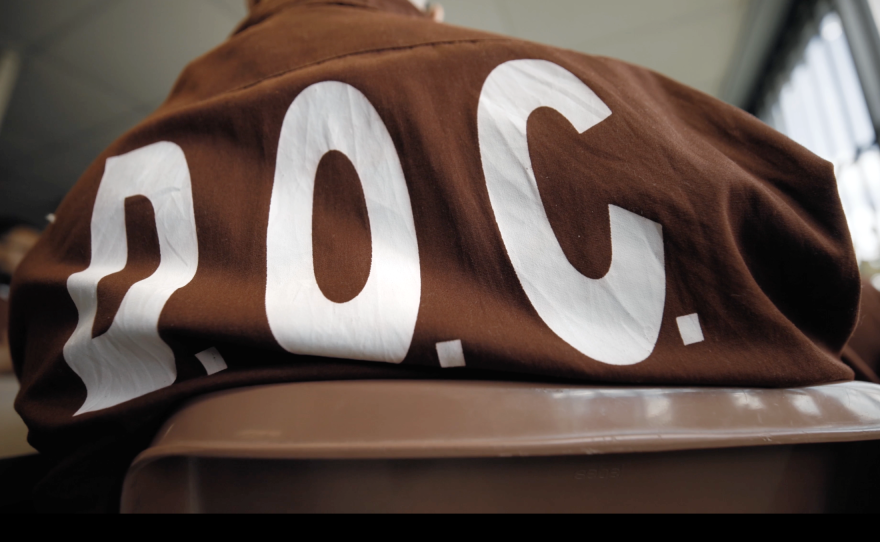
'Band of brothers'
The men who participate in the programs, including the Lifeline board members who spoke with WVIA, span generations.
Gathered around the table during the interview were men in their 20s and men who had been incarcerated for decades.
"The group of men, the band of brothers," Kevin called them.
"Each man has their own characteristics and personality, but overall, we're a good group of guys. We all have strong personalities and strong willpower."
Kevin said he has been incarcerated for 35 years.
The group's current president, Evan, has been at SCI Coal Township for six years and a member of Lifeline for much of that time.
"I oversee, you know, the inner workings of the organization," Evan said. "I may come up with ideas, but really it's a collective thing. Everybody has their duties. I just happen to hold the title as president. But really, everybody here is the president."
They have different roles — sales, as Kevin mentioned, but also marketing, publishing a newsletter, financial planning, recordkeeping and reaching out to potential donation recipients.
They acknowledged, as McGinley and Milofsky did, that the skills could be vital if and when they leave the prison system.
"Reentry is something that's huge to us. So you know, giving guys skills that they can use out there is something that is on the top of the line for us," said Kenneth, the group's director of constitutional bylaws.
What skills?
"Fundraising, event planning, organizing, proper forms of conflict resolution, you know, negotiation proposals, you know, I mean, things like that," he said.
But there are deeper purposes.
"I think my main reason for getting involved with Lifeline, I just believe it was in my DNA," Evan said.
"My father was a public servant for his entire life, so when I had the opportunity to be a part of something much larger than me, I jumped at it," he said.
"I want my legacy to be more than about being someone that has taken from the community, but more so about a person who gives," Evan said.

Democracy and consensus
Phillip, the group's current treasurer, explained that the board members are elected to two-year terms by the membership.
"It's the men who put us in these positions," he said. "Most of the men on membership know who we are and the work we've all put in."
What they sell — and who receives the donations — is likewise determined by group discussion and wishes.
The items sold in the commissary have included sneakers and other clothing, baked goods — Tastykakes seemed to be a favorite mentioned several times — and other items not normally available.
"We try to do a consensus of what the men in the general population want, because at the end of the day, we represent them," Kevin said. "If it fits into the vendors that we're allowed to purchase from, then we try to choose from that list of vendors and items to sell to the men."
Like any organization, it can take work to come to agreement.
"Well, just like with a family, families disagree sometimes," said Anthony, the group's senior advisor. "We agree most of the time."
"The reality is we are family, right? We spend more time here with each other than we spend with our family [in] society," he said.
Anthony, who has been at SCI Coal Township since 2018, has been with Lifeline for eight years.
"I've been at other institutions, and I've been involved with different organizations. So when I got into this organization here at Lifeline, I thought it would be kind of the same," Anthony said.
"But in reality, there's more hands-on of giving back to society, right? It's a breath of fresh air to be able to step up and take it to the next level and give back to society," he said, "and actually try to be part of the solution, where we once were part of the problem."

Who benefits?
The programs have donated to a range of organizations.
"We wanted them to uplift communities through philanthropy, and they have donated hundreds of thousands of dollars to incredible charities out there, and to people who really need the money, from Special Olympics to St. Joseph Center to local school districts," McGinley said.
As WVIA reported in 2024, TriumpH and LifeLine had donated nearly $200,000 to over 50 nonprofit organizations in Pennsylvania and nationwide just in the four years since 2020.
WVIA has been among those recipients, though the donation was not dedicated to any specific program or department.
As this article was being prepared McGinley added another recipient to the list: The organizations are now sponsoring a youth basketball team in the Shamokin Girls Youth Basketball League.
Choosing recipients is a matter for the group — and again, there is a board member who is in charge of initiating the process.
Currently that's Sean, the Lifeline board's director of outreach.
"I usually send a letter to them introducing to them who Lifeline is and our intent on perhaps doing something with them," Sean said.
"Sometimes I'm vague in the letter because it's just the introduction. Sometimes I don't even mention the donation. It's just informing them about what we do and who we are," he said.
Newspapers are a vital source of leads.
"The newspaper is the Google in here, right? [Evan] comes to me on a regular basis with a newspaper article, and he'll say, 'Read this,' and then an hour later, he'll come with another newspaper article. So then, by the end of the day, I've got three different newspaper articles about three different individuals and organizations," Sean said.
Not all potential recipients respond.
"But when we do get responses, and then we follow up, and then we wind up donating and bringing them in, and it's just fulfilling," Sean said.
Sometimes they meet the recipients, sometimes not.
Evan described meeting a woman who the group helped purchase a special van for her disabled grandson.
"She came in here, and she wanted to actually meet us in person, so we got a chance to sit down, talk with her, talk with her grandson, and some other individuals from his family," Evan said.
Then there was a Williamsport group that provides clothing and shoes for people in need.
"That is very important because we know without the basic essentials, we know that some people do things out of desperation, and that's how many of us landed in these situations," Evan said.
"That's not to justify or minimize our actions, but we know what not having can do to an individual," he said. "So if we can provide that little thing of substance for somebody, we would love to do that."
'That's a miraculous story'
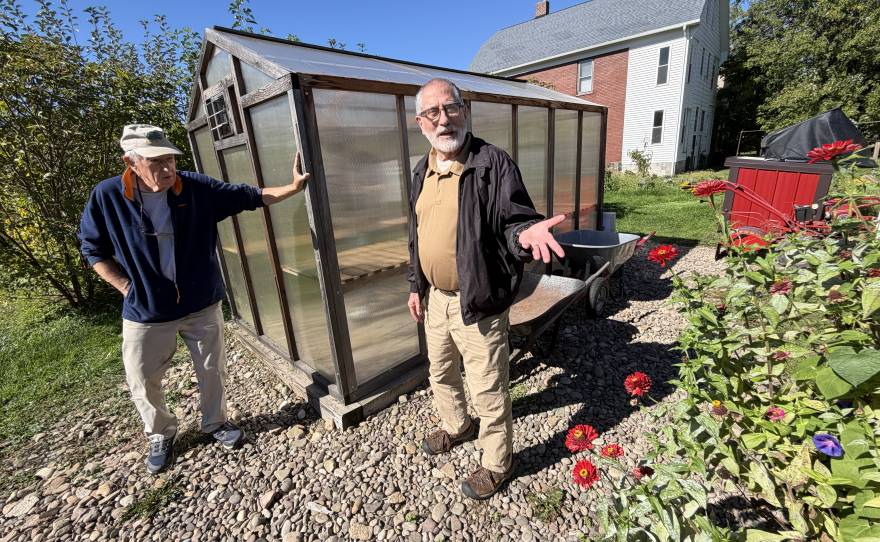
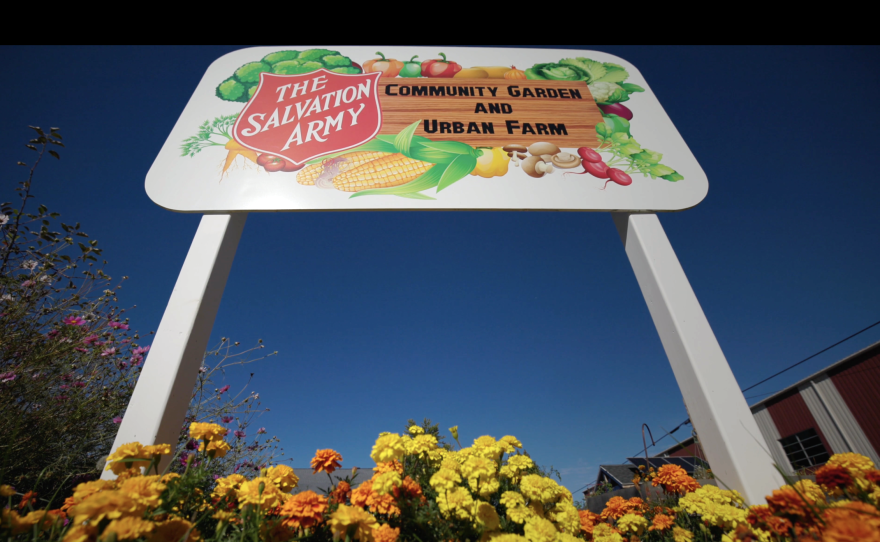
The Salvation Army's community garden and urban farm are tucked into a residential neighborhood off Park Avenue in Williamsport.
It's one of the beneficiaries of Lifeline Association and TriumpH fundraising.
Started in 2015, the garden has three aims according to volunteer and master gardener Sid Furst: Provide raised beds for people and groups to use to grow what they want, to have other areas for gardening and farming education, and to make vegetables available to the community.
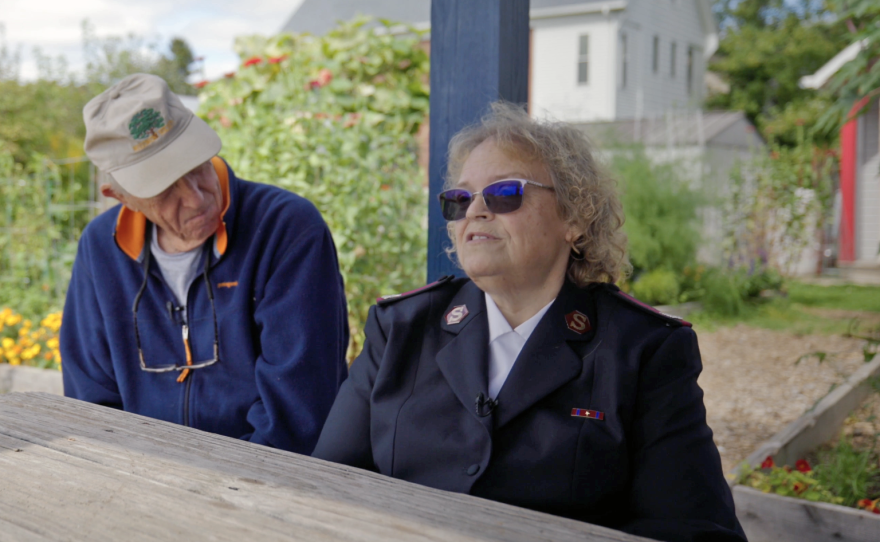
Volunteers grow thousands of pounds of fresh produce each year to help combat food insecurity in the area, said Major Sheryl Hershey, Williamsport Salvation Army corps officer and pastor.
"We are here to serve others through the love of Jesus Christ," Hershey said.
That service includes a food pantry, as well as the garden.
"The amounts of vegetables that go out of this garden is amazing," Hershey said.
During the harvesting season, the produce is set out on a picnic table for anyone in need to take, no questions asked.
"We come out, we love it, manage it, water it, weed it, pick it, and we put it on this table every day, and it's gone every day," Furst said.
"People are walking from houses over to get the vegetables for their families, for their children," Hershey said.
"The need to feed people in Lycoming County, the Williamsport area ... is exponential," Furst added, saying hundreds of people, if not thousands, rely on the garden.
The land is owned by medical organization UPMC, which allows the group to use it "for a very reasonable land agreement," Furst said.
The farm and garden have expanded from 8,000 to more than 40,000 square feet as the volunteers seek to meet that need, "increasingly trying to do it in the spring, fall and summer, so that we can make food available to people in need every day," Furst said.
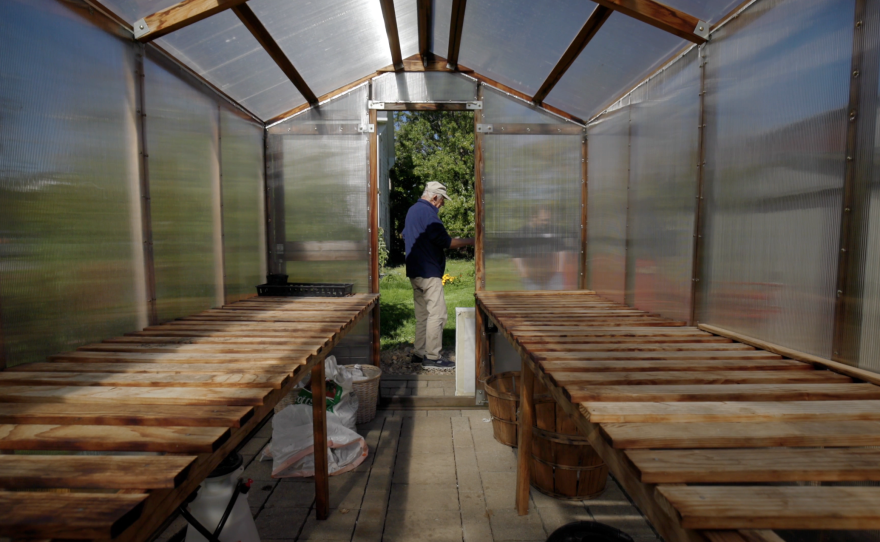
That's where a new greenhouse comes in.
It will allow volunteers to extend their growing season. And it exists thanks to a $4,000 donation from SCI Coal Township inmates.
"That's a miraculous story," Furst said. "This is a testimonial to the community impact of what they can do."
"We can grow things from seed. We can extend our growing season, but it's done a heck of a lot more than that," he said.
"Because of the publicity of that happening here, our funding has increased substantially. Our volunteer ... community awareness is unbelievable," Furst said. "So those fellows there can't underestimate the value of their charitable giving."
Milofsky, who is a friend of Furst, pointed out what it takes to achieve that.
"You understand these guys, if they have the best job in prison, they're making 55 cents an hour," he said.
"The inmates took it upon themselves to do this," Hershey said. "For them to get together and raise $4,000 is an amazing feat, and it shows that they're interested in the communities that are around them."

'They made me feel instantly at ease'
That interest is also shared with members of the community who enter the prison as part of the Inside-Out programs coordinated by Milofsky and Bucknell University.
Northumberland County resident Barbara Spaventa signed up for the class about three years ago through the Bucknell Institute for Lifelong Learning, which offers educational and intellectual opportunities for adult learners.
"I had never been in a penitentiary before of any sort, so it was quite an eye opener to come in and be able to meet all the guys and see all the good work that their two programs are doing," Spaventa said.
"I was quite nervous the first time I went in — mainly due to all the security protocols. It's quite an experience if you've never been through that before," she said. "But when I met the guys they made me feel instantly, you know, at ease."
Class members read and discuss articles and talk with inmates about their daily lives inside SCI Coal Township, including participation in Lifeline and TriumpH.

"And in my opinion, the guys in our class have shown redemption in so many different ways," Spaventa said. "They have taught all of us in the class that none of us are without fault, and we can all do better in life, and they encourage that."
Danville resident Mary Alice King is another member of the Inside-Out participant, who also lobbies for prison reform.
"I've never been around individuals so absolutely respectful, so attentive, so bright," King said of the inmates she has met.
WVIA asked King what she would say to those who point out that the inmates committed crimes and belong in prison.
"Do you believe a human being can transform him or herself and become a different person to evolve to change?" she asked. "Do you believe in second chances? Do you believe in redemption? Do you believe in forgiveness?"
"Not everyone in prison should have a second chance and be returned to the community, and the guys in the group are the first to say that," King said. "You know, we don't want a lot of people in here in our home community."
"But the men that I am associated with in this group ... would be a tremendous asset to their community," she said. "I mean, look what they're doing from inside the prison. Can you imagine what they would do on the outside?"
King had mentioned to Lifeline members that she volunteers for her local Ronald McDonald House, which provides a home away from home for families with seriously ill or injured children.
"They're always interested in doing something every year to do with pediatric cancer, and I mentioned that I volunteer there," King said.
"And so when I went in to volunteer at the Ronald McDonald House on Wednesday, they showed me a $7,000 check from these guys that's earmarked for Camp Dost, a camp for kids who have cancer," she said.
"I just was kind of floored with $7,000 that these guys came up with for this."

Replicating Coal's programs
Noah Barth is prison monitoring director for the Pennsylvania Prison Society, which assists people in prison and promotes accountability and transparency in state and county correctional facilities.
Barth said TriumpH and Lifeline are examples of what are sometimes called Resident Betterment Organizations, or RBOs.
"I think Lifeline and similar organizations are wonderful," Barth said.
"I know that the membership of them take a lot of pride and sense of purpose from their participation. Frequently these groups have dozens, if not hundreds, of members, and it gives people inside another way to find a sense of purpose while they're incarcerated," he added.
Barth is familiar with what's being done at SCI Coal Township, which he has visited.
"I would say broadly speaking that men we met with at Coal — and not just in Lifeline, broadly speaking — were fairly positive about the way the institution was run," Barth said.
"People know who Tom McGinley is, which is a good sign, right? He gets out on the blocks, he talks to people, he makes it his business to understand what's happening in the prison, which is not always the case," Barth said.
"In our experience, Tom McGinley is an excellent superintendent. He shows an active interest in how his institution is run and how it can be improved, not just in terms of the safety and security imperative, but also how he can ensure that the prison is meeting the needs of the men in his custody," Barth said.
Barth also said that, to his knowledge, there are currently 10 state prisons with similar organizations, and three more that are developing.
McGinley said he also has been asked about the programs by other administrators from around the state.

"There's a lot of superintendents that have reached out to me about certain things we do from our horticulture program to our art program to our [philanthropic] organizations," McGinley said.
"I believe they're probably the most philanthropic organizations within a multi-county radius, and that says something," he said.
The men in the programs acknowledge that the support from McGinley enables them to accomplish what they do.
"The administration that allows us to fulfill our dreams, fulfill our obligations to society, and as well as the general population," Kevin said.
"We want to thank Superintendent McGinley and his staff and his administration, because without them, this wouldn't be possible," he said.
He also had a message for the community at large.
"Don't judge us by 30 seconds of 35 years ago," Kevin said. "Judge us by who we are now."