

As a solar array on Susquehanna University’s campus converts sunlight into energy, various species of spiders are part of a new ecosystem forming beneath the panels.
"It's really thinking differently about solar arrays, not just as a single function, but how do we get multiple uses out of it? What are the consequences of those uses? And can we maximize kind of conservation and energy generation,” said Charles B. Degenstein professor of biology Matt Persons.
Persons spent the summer alongside two students studying the arachnids’ habitat on the more than 14-acre solar array that provides 30% of the university's electricity. They are also working to identify the spider species that call Pennsylvania home.
“There are over 4,000 species of spiders in the United States, but we don’t really know how many there are in Pennsylvania,” Persons said. “The last survey that was done in the state was in 1942, so we’re hoping to add to the data currently held by the State Museum of Pennsylvania.”
Persons said a lot of land in the United States is being converted into solar farms and facilities. He said Pennsylvania is behind in solar conversion and solar research compared to other states, especially those out west.
“But a big question is, can you use this land for things other than just solar?” he said.
Spiders and solar
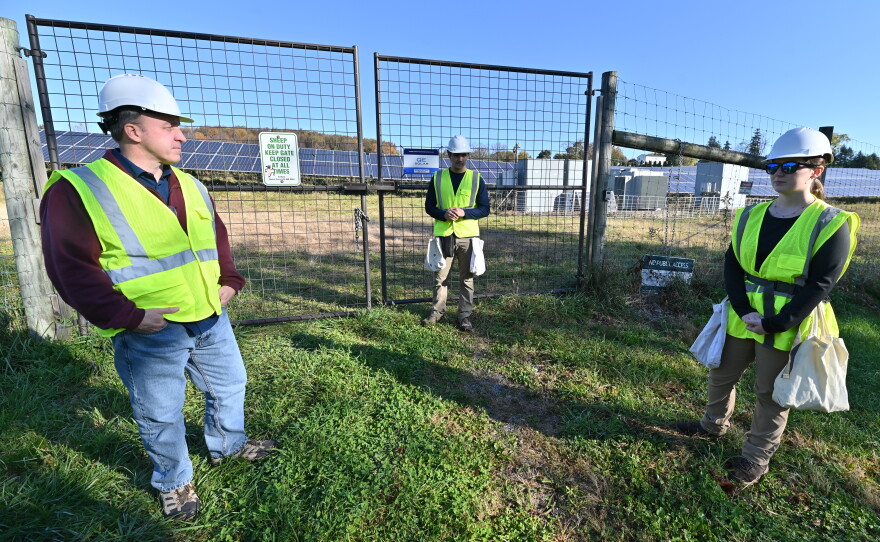
Susquehanna University's 12,000 solar panels were installed in 2018. Persons said at the time, it was one of the biggest solar arrays to power a university.
The panels are locked behind a gate. Part of that security is to keep a herd of sheep inside the array.
"They keep all of the vegetation down so that we don't have to get in here with mowers, which would be really hard to do,” Amanda O’Rourke said. She’s the university’s Public Relations Manager.
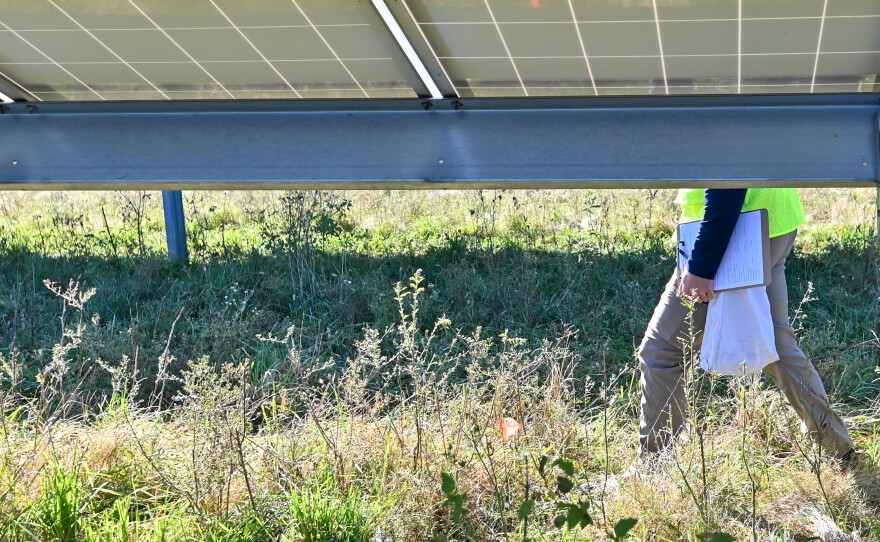
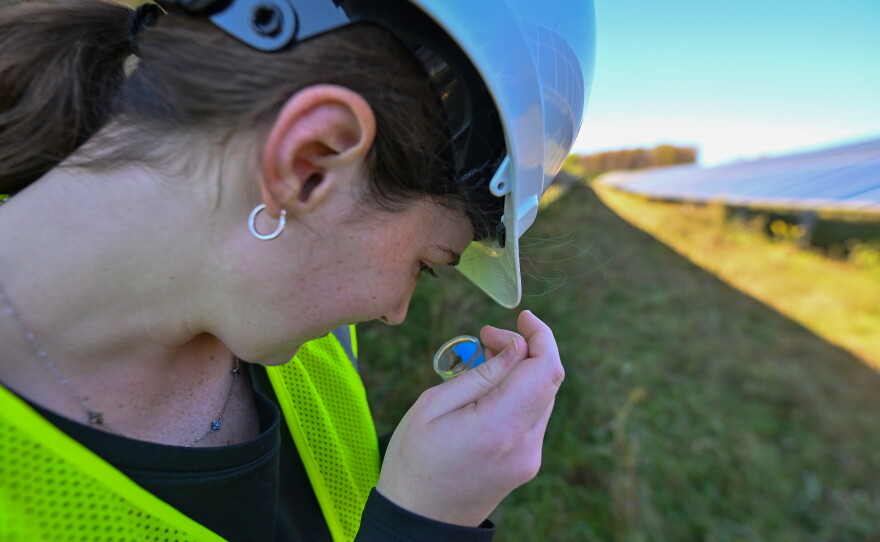
The students, Kaylee Rathbone and Andrew Pisano, both seniors, wear hardhats and yellow safety vests while working amongst the panels. Attached to their waste are two canvas bags. Empty but labeled vials are in one bag.
Rathbone and Pisano work in different plots about five panels wide.
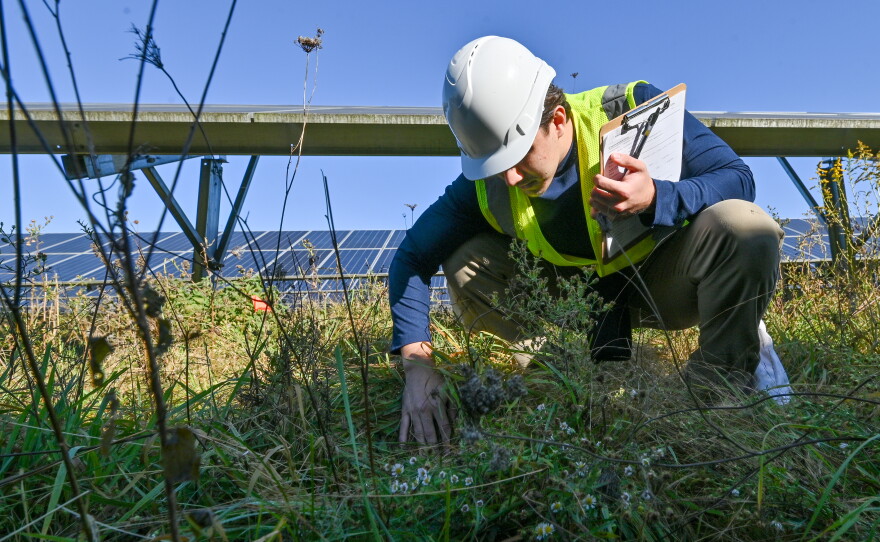
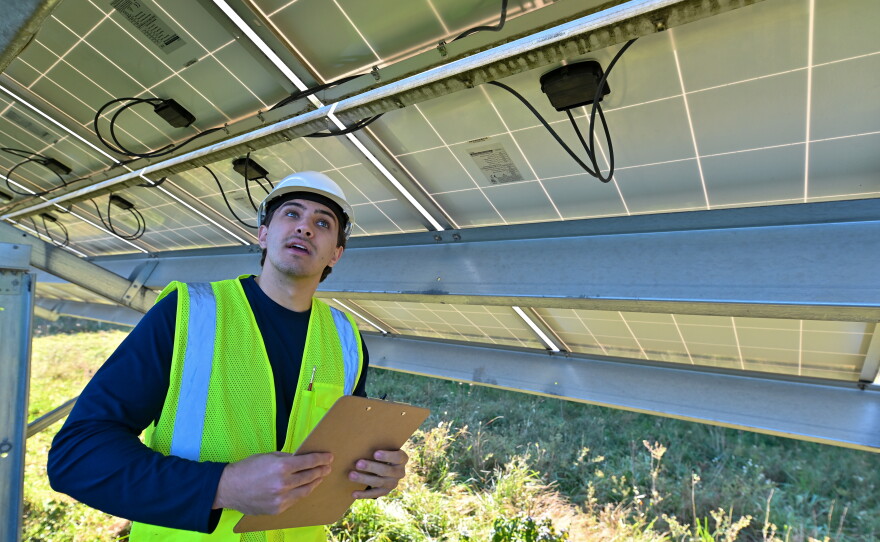
They look under, on top of, and along the panels and their infrastructure and throughout the vegetation on the ground for spiders. Sometimes they have to get on their hands and knees to search. The students also use a sweep net, which they swing throughout the vegetation, which in some areas is knee-high.
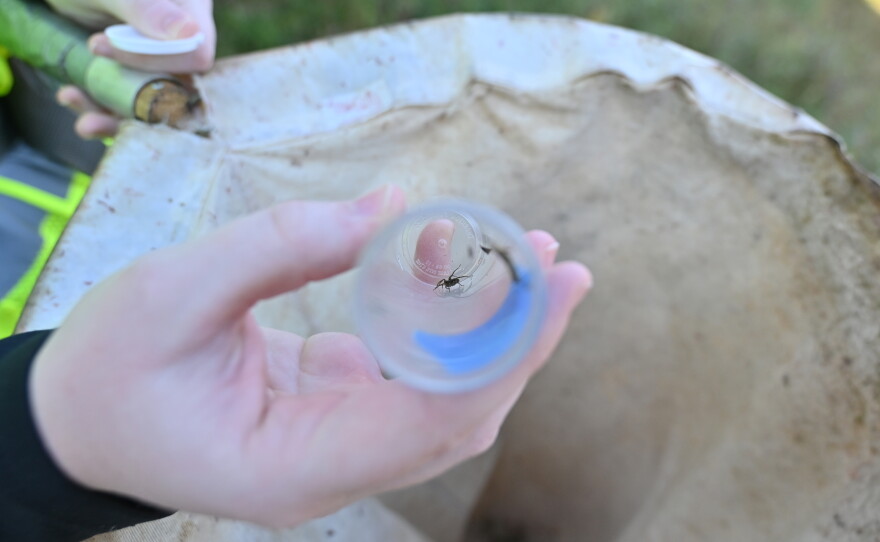
A keen eye is needed to distinguish between a piece of dirt and a tiny black spider.
Once they find a spider, the arachnid is put into a vial and the second canvas bag on their waists is taken back to the lab.

The crew went out every two weeks to sample spider populations.
They found that in the solar array, around 250,000 spiders of one species per acre are living there. And that those spiders eat about one million insects per week.
They compared the spiders to the university’s forest, goldenrod and corn and soy fields. They found that while there are more spiders in a forest, there is more diversity of spiders under the solar panels.
"I'd say the biggest thing that we found is that the spider community is different in solar arrays, at least this solar array, compared to the immediate habitats around. So it's not just spiders coming in, wandering in from other places, but it's a solar array-specific spider community,” Persons said.

'Opportunity for ecological systems'
The panels are on an old farm that the university bought in 2005.
"I put in a proposal to convert it to a field station, or at least to use it for ecology research, environmental research,” Persons said. “So we have a lot of environment-related programs here, and this is our laboratory in essence.”
What the professor and the students also discovered is that the panels create a pasture environment with large blocks of shade that resembles a forest’s understory.
"And so then the question is: Is this more like a forest? Is it more like an urban area? Is it more like a hay field, or is it none of those things?” he said.
So far, their research found it’s the latter.
Another question they’re asking is, "Can you use this land for things other than just solar?” Persons said.
"I also think another important part of this is thinking differently about a solar farm. That it isn't just these, you know, human-made constructs that are in here, but there's opportunity for ecological systems to persist in there,” he said.
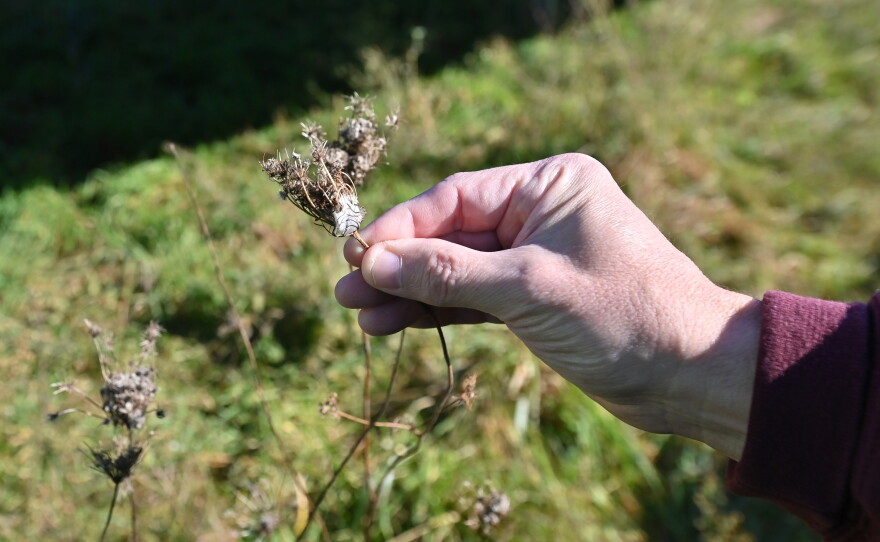
For example, he said wildflowers could be planted beneath the panels to help maintain insect populations.
In the lab
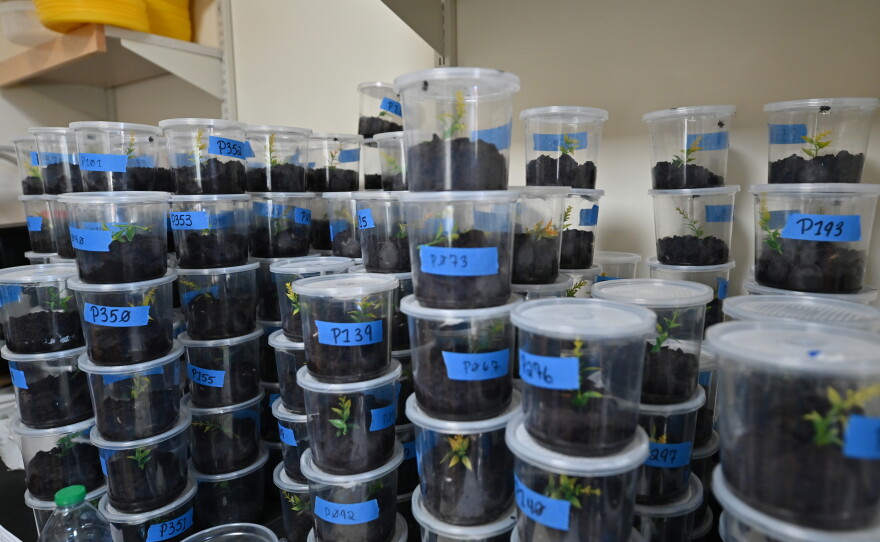
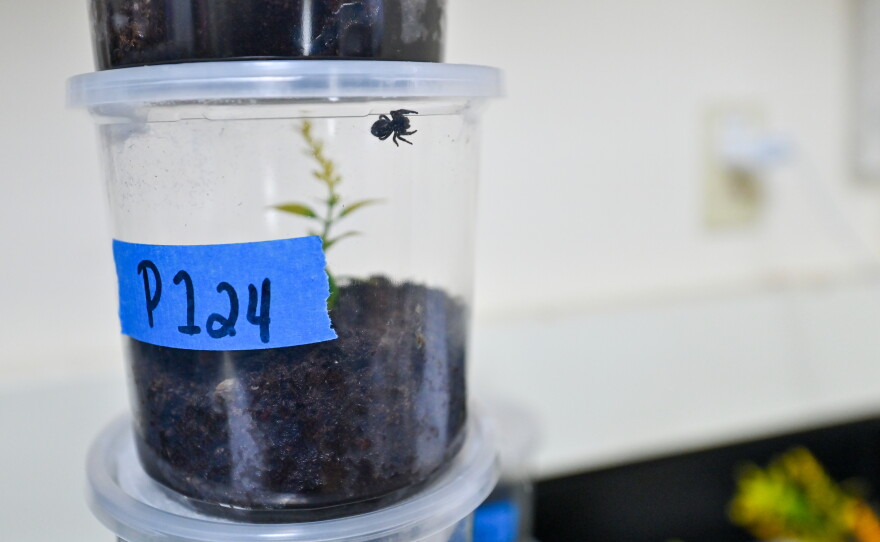
Rathborn and Pisano catalogue the spiders and also take some out of the field and into the lab.
Rathborn, a biomedical sciences major from Mannington Twp., New Jersey, plans to become a veterinarian.
She is studying how glufosinate, a herbicide for plants and weeds, is affecting spiders. She said the herbicide is becoming more prevalent and replacing other commonly used chemicals.
She is still collecting data but found that the highest recommended dosage of glufosinate kills the spiders.
She’s also testing to see if the chemical stunts the spiders’ growth.
"What's interesting is that it's not an insecticide. It's an herbicide meant to kill plants," Rathborn said.
Pisano is an ecology major from Malvern. He plans to get a Ph.D. and become a professor and continue to do research.
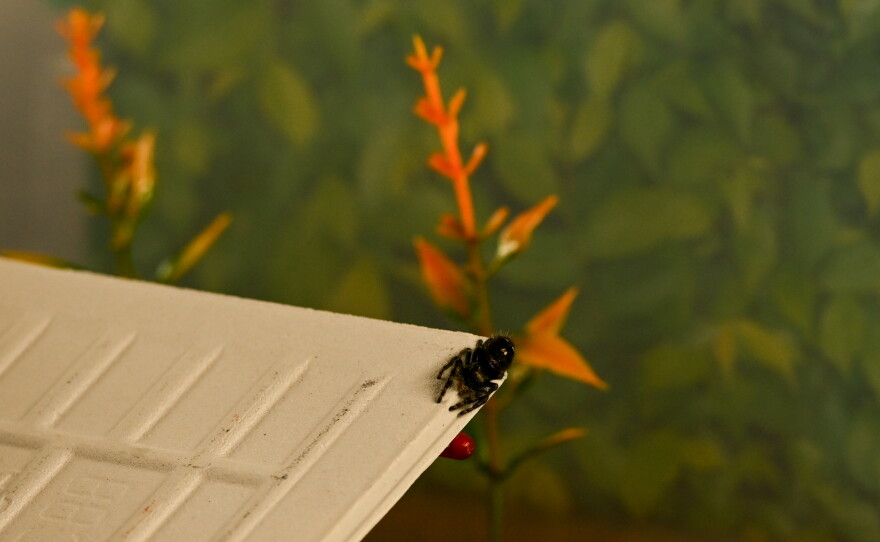
He's studying spider calisthenics.
In a shallow pan of water, Pisano set up a ramp with two small orange fake trees within an inch of the ramp.
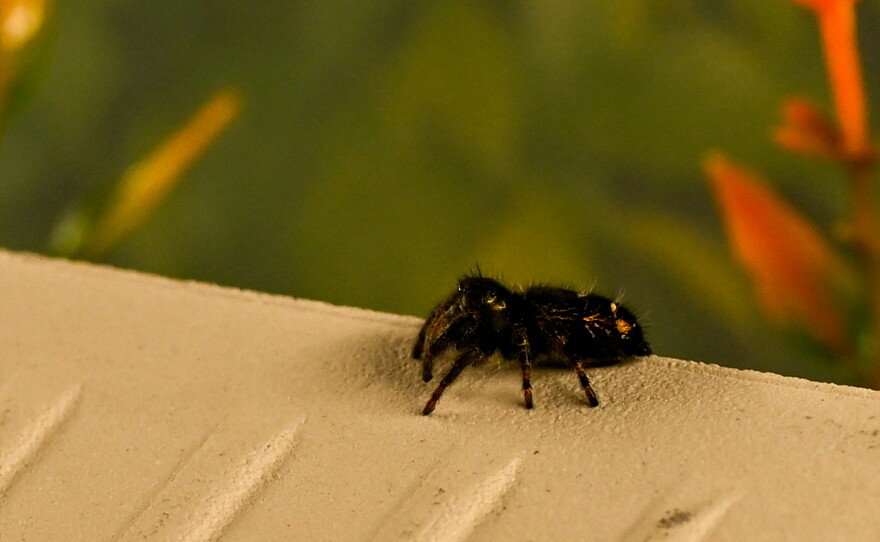
When his bold jumping spiders jump, they leave a trail of silk.
"That's evidence that a spider successfully made the jump. And so then I'll put a second spider in with the silk, and see if they're more likely to jump. It's like if my friend jumped and made it, can I do it?" he said.
Pisano said jumping spiders are his favorite and that there are more species of that spider than there are mammals.
"They have really good vision, really high visual acuity … they're really small, which makes them really interesting,” he said. And they're also extremely smart. And so studying them for cognition, because a lot of times invertebrates, small species like spiders, they're overlooked.”
In the spring, Pisano plans to put his spiders in the lab back in the solar field.

‘There’s a spider for you’
Persons, an arachnologist, said that ultimately spiders are understudied.
He said they’re important ecologically. They eat insects and often are used for biocontrol in agricultural systems.
Properties in spider venom have different neurological effects. Spider silk is the strongest natural material known.
"They've been trying to copy this stuff, trying to figure out how to make, you know, bulletproof vests out of it, and how to incorporate some of the properties of it," he said. "So we are only beginning to understand what some of their functions are in natural systems, and those are changing.”
Pisano said most people see a spider, maybe in their kitchen, and their first reaction is to squish it.
"They're really diverse, over 130 different families. They're different in the way they act, the way they behave, the way they catch prey, and so … anything you would want to learn, there's a spider for you,” he said.
