Allied Services has been marking “Rehab Week” for a half century – longer, even, than the nation itself.
What started as a company-wide picnic for staff, patients, residents and families in 1976 became the inspiration for an annual September commemoration, now known as National Rehabilitation Awareness Week.
This year, Allied marked Rehab Week as it was approaching another milestone: More than 30,000 steps taken by patients on its new machine, the Rise&Walk rehabilitation station, at Allied Services Wilkes-Barre Rehab Hospital.
“Rehab week just allows us to highlight the dedicated people that we have here day in and day out, helping patients achieve their goals and their milestones," said Jennifer Lutkowski, the director of rehabilitation at the hospital.
"Whether it's just something small, like a basic activity of daily living, or climbing 24 steps, or getting back into a big rig, that is just an opportunity for all of us to just highlight each other and get recognition for something that we all do here 24/7,” Lutkowski said.
Lackawanna County-based Allied provides rehabilitation, skilled nursing, behavioral health, home care services and more.
Rise&Walk
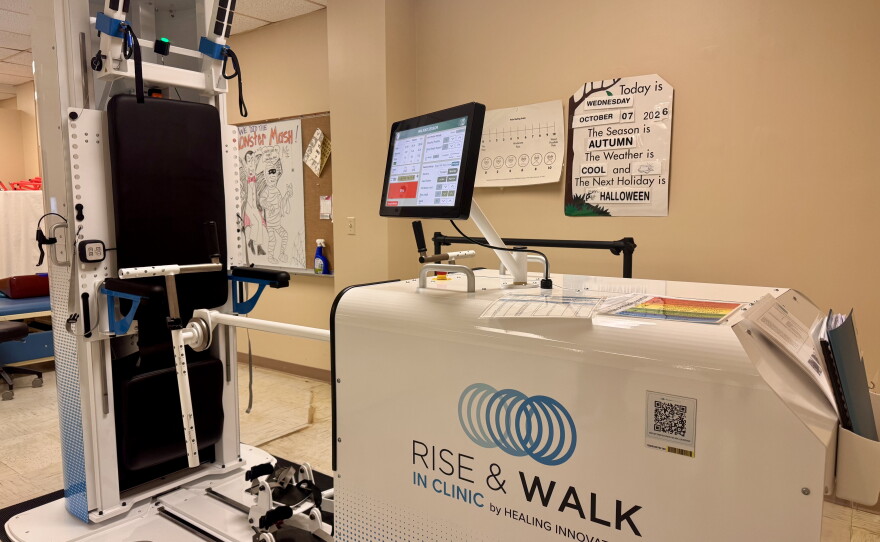
The Rise&Walk, developed by Healing Innovations is a 3-in-1 neurorehabilitative piece of equipment that Allied started using towards the end of this summer. The machine features seated, supported standing and walking modes.
“When patients do suffer a neurological event, sometimes the connections between the brain and the body are affected, and your body has to find other ways to readjust and to get those pathways working again,” Lutkowski said. “If you think about it like a roadblock, you have to find different detours, different avenues, so your body is able to do that through a repetitive motion or repetitive movement.”
About 17 patients have used the machine so far, taking about 33,000 steps in total. The machine helps therapists to target parts of the body that need to build back strength.
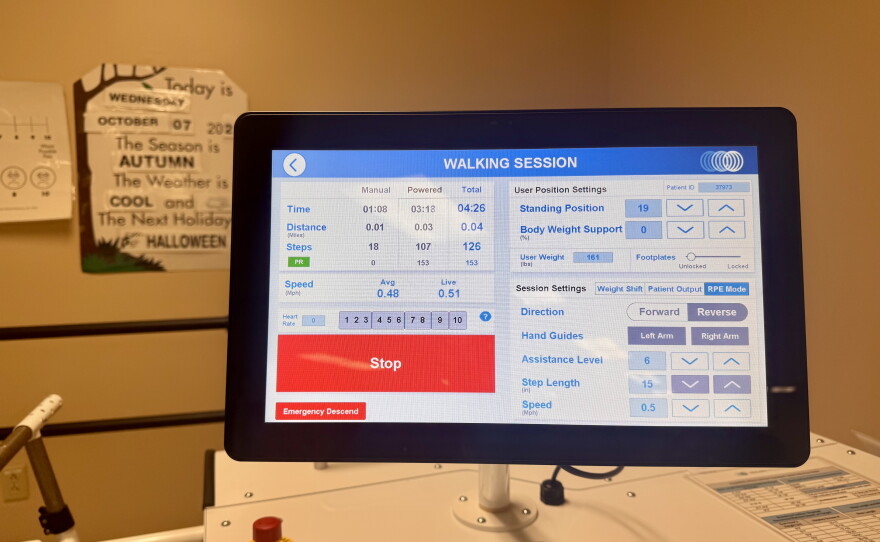
“They actually have sensors in the footplates now, so people know how much they weigh. Especially if you have somebody with a stroke, oftentimes the weakness is all down one side of their body, so they might put all their weight onto their strong side, or all their weight might be falling onto the weak side,” said Ashlynn Fitzgerald, a physical therapist at Allied’s Wilkes-Barre Rehab Hospital.
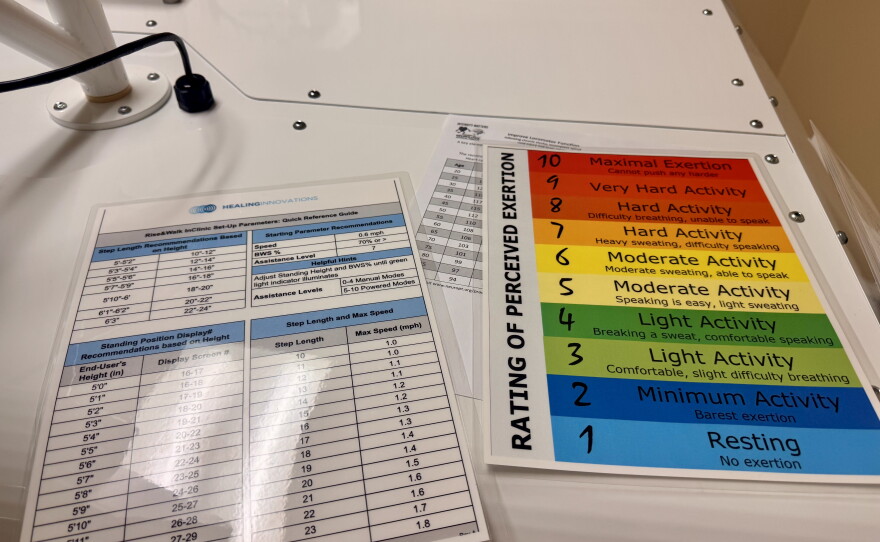
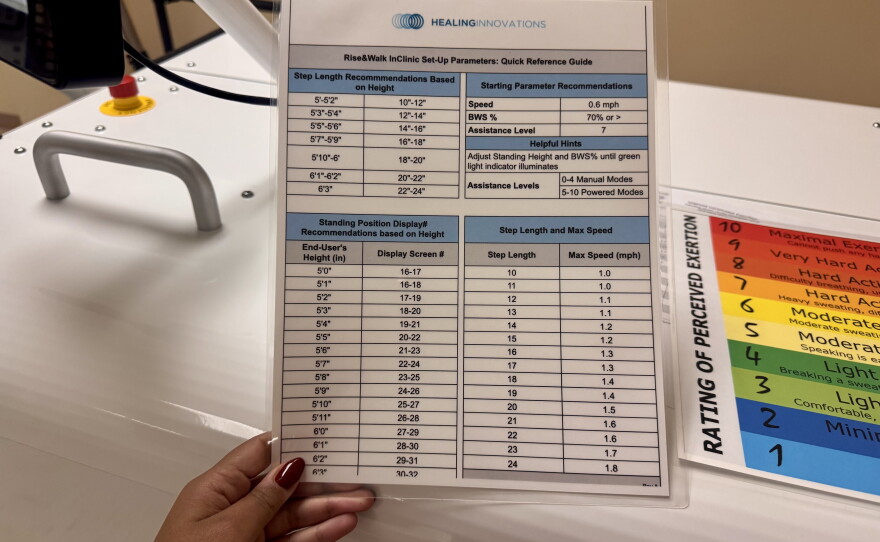
The Rise&Walk provides 10 different levels of assistance based on a patient’s ability and can offer a challenge to patients that need less assistance. There’s also arm bars that allow patients to move as if on an elliptical workout machine. And, it can go in reverse. Allied purchased a pediatric component to the machine so it can adjust for younger patients.
“Pretty much every person that we have put on here, when they come off of the machine, if their gait speed or their walking speed isn't improving, the quality of their walking is at least improving in some aspect,” Fitzgerald said.
“We get some people who can't move a leg on their own or they can't stand up on their own, and then they're coming off this machine and they're standing more upright. They're moving their walkers themselves. They're moving their legs themselves again. We're seeing a lot of that kind of translation, they get off the machine and then things are rebooted and working a little better,” she continued.
Importance of tech in physical therapy
The physical therapists notice hesitation in some of their neuro patients during rehab. The Rise&Walk provides a sense of security with the harness that alternate physical therapy methods might not.

“We want to get them walking as early and as often as we can. Sometimes the extent of a neurological injury can prevent us from getting them walking over ground and really getting repetition. Having a safe environment to get a ton of repetitions that someone may not have the opportunity to get over ground really pushes people,” Fitzgerald said.
Allied therapists appreciate having the technology to supplement their work, adding that they don’t believe there are any other similar machines operating yet in the region.
“There's a lot of research out there now in the therapy world that high-intensity gait, which is that quick-moving continuously, has shown to have a lot of great results … That's a big component of this piece of equipment. I think it really has been kind of a driving force behind us getting it and the importance of having newer pieces of technology that focus on those types of things,” Lutkowski said.
Fitzgerald and her fellow physical therapists see patients get faster results, and a confidence boost, when they use the Rise&Walk.
“It's indescribable, honestly, how well it worked. We're always looking for new tools in the toolbox and as clinicians we even have our limits. When you're physically having to help somebody move, and you go maybe 30 feet, and then you watch them come out of this machine, and you don't have to move their legs anymore, and they're going 50 feet or more. Like the first time it happened, I had chills, honestly, because I did not believe it at first. It means a lot to be able to provide new opportunities for these patients,” she said.

ABOUT NATIONAL REHABILITATION AWARENESS WEEK
● In 1976, Allied Services organized what would become Rehabilitation Week as a company-wide picnic for staff, patients, residents and families.
● Through continued advocacy by Allied Services leadership and the formation of the National Rehabilitation Awareness Foundation, the movement gained broader recognition.
● President Bill Clinton in 1993 issued a presidential proclamation that would designate the third week in September each year as National Rehabilitation Week.
● In 1996, Allied Services acted as the national sponsor of Rehab Week when it coincided with the Paralympic Games in Atlanta.
Sources: Allied Services, staff research