

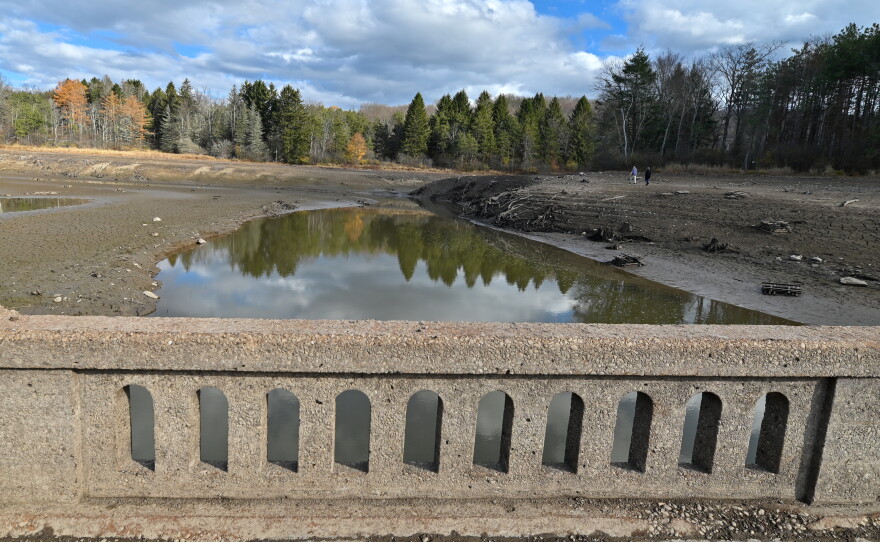
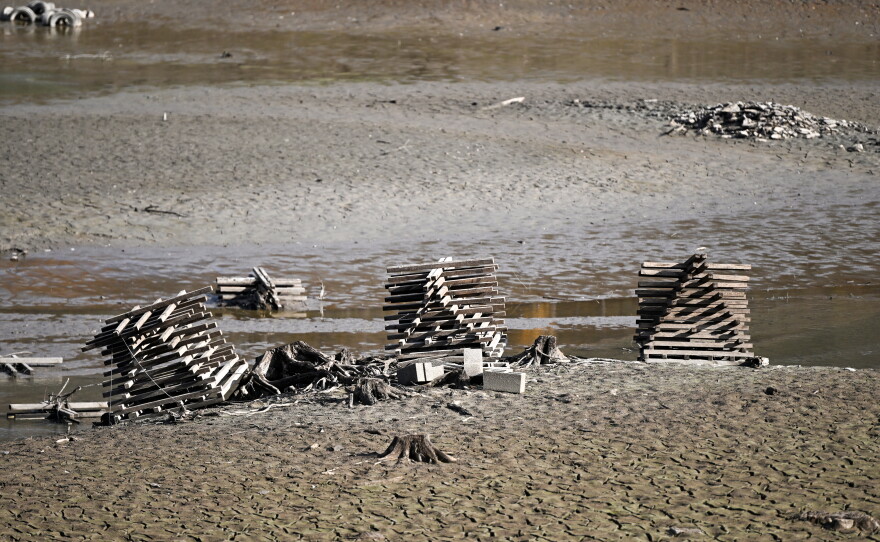
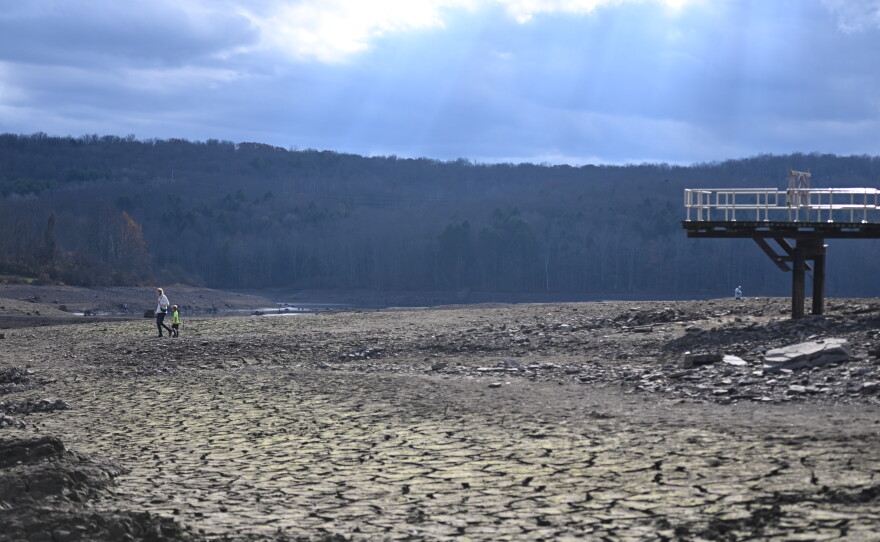
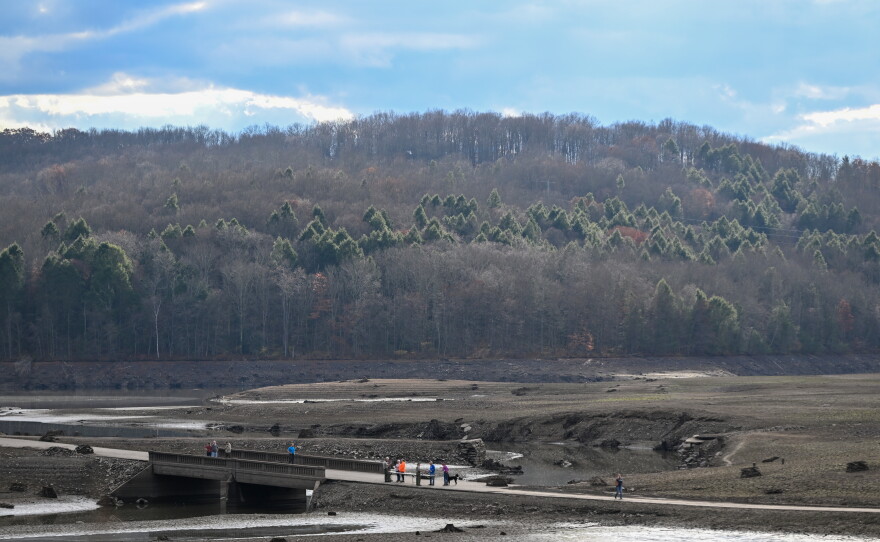
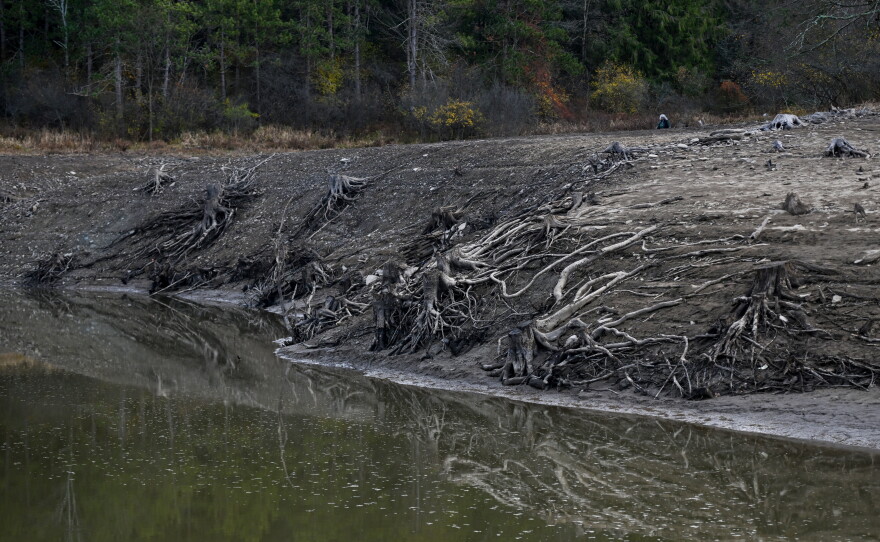
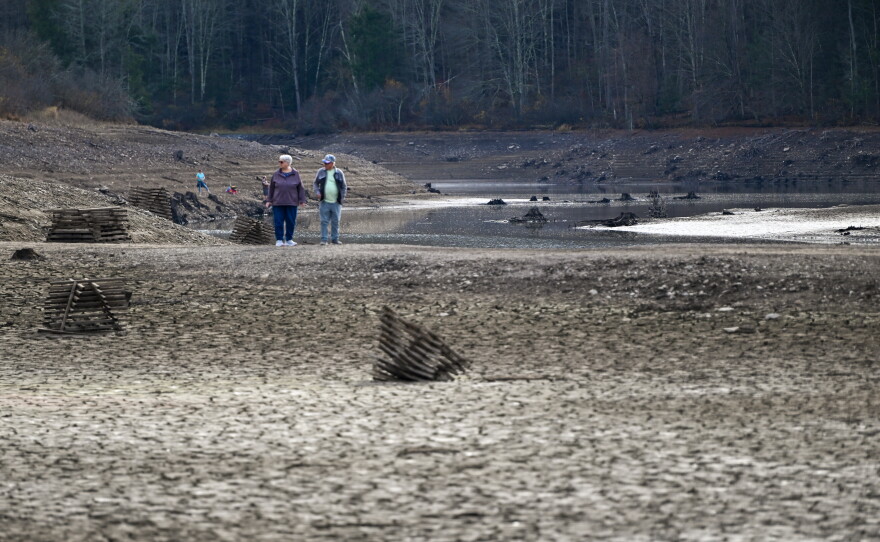
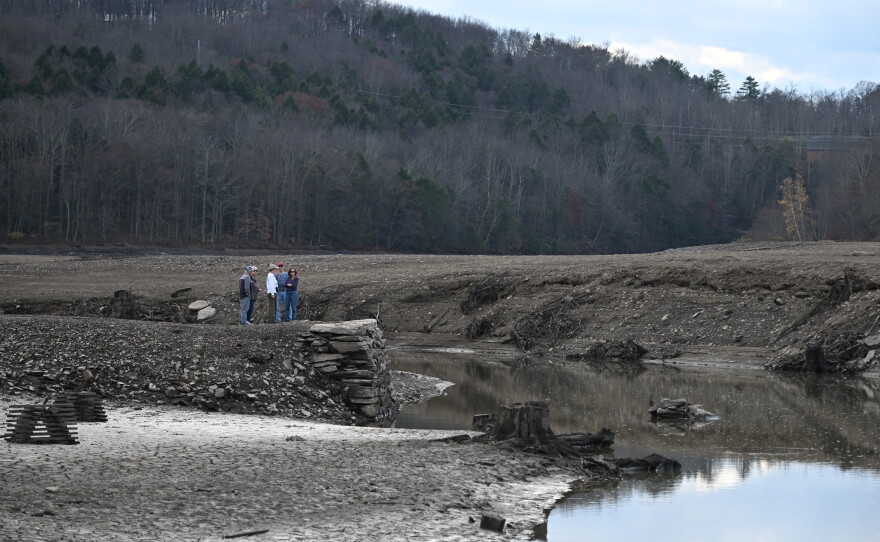
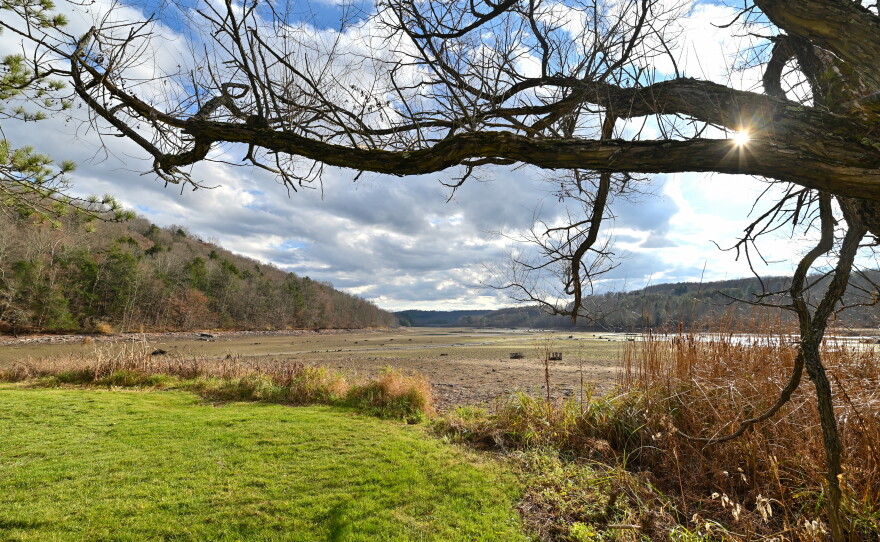
The emptied lake at Lackawanna State Park exposes more than just cracks in the lake bed, wooden fish cribs and tree stumps preserved by the water.
For park rangers, it’s revealing a history flooded for years by the man-made lake.
"People were living here and working here and farming here, and we can have the opportunity ... to at least take a mental step back to kind of get a sense of what things would have looked like and how things were happening in the area,” said Tony DeSantis, Environmental Education Specialist at the park.
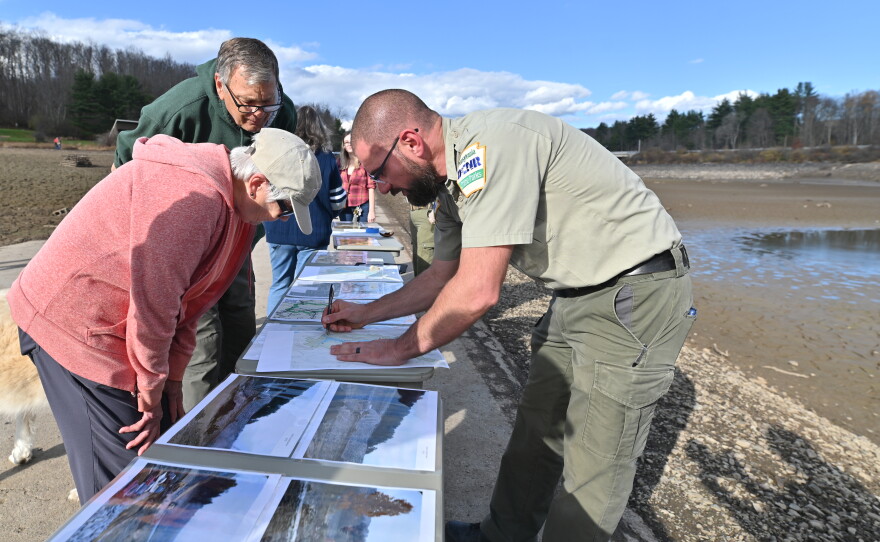
DeSantis was standing on the now-exposed original concrete Route 407 bridge. Near him, on top of plastic folding tables, were maps, old newspaper clippings and photos from the park and the dam’s construction in the early 1970s.
For two days, the rangers encouraged visitors to the park in Benton and North Abington townships to stop on the bridge and learn more about the families and farmland that were there before the land in Lackawanna County was purchased by the state. They also asked for their stories about the area before the park.
In early September, the Pennsylvania Department of Conservation and Natural Resources (DCNR) began emptying the park's 198-acre lake to repair and replace components of the aging dam. The 69‑foot-high, 350‑foot‑long embankment dams the South Branch of Tunkhannock Creek to create Lackawanna Lake.
"If we were full, there'd be about 15 feet of water over our head right now,” Lee Dillon, park manager, said. He was standing on the Route 407 bridge.
The drawdown has increased visitation to the park. The number of visitors is up for both September and October, Dillon said.
"It's a Friday afternoon, and people are here, right? You don't see that often in a park during the fall when most people are working or in school. It's usually quieter,” DeSantis added on a sunny Nov. 6.
Railroad reservoir to park
In October 1971, floodgates were closed to fill the lake, according to newspaper reports from the time.
Lackawanna State Park officially opened on June 10, 1972.
"Imagine this is all farmland essentially. People are basically dairy farming, small farms, but you have people living here and working here. You had schools, churches," DeSantis said.
From 1897 to 1910, DeSantis said there was a fair on the grounds of the park. The park’s campground — which is closed until early 2028 — is on Fairground Hill.
"It drew in thousands of people over four days. About 3,000 people a day during some of those years," he said.
Then in 1913, the Delaware, Lackawanna & Western Railroad Company (DL&W) and the City of Scranton got into a dispute over water prices, DeSantis said.
"Steam locomotives need water and coal, and you need to get it at a reasonable price,” he said.
In North Abington Twp., the railroad planned to dam the south branch of the Tunkhannock Creek and build its own reservoir. They purchased 13 farms and about 600 acres.
"The City of Scranton changed their mind and lowered their fees, so the reservoir was never built,” said Mary Fetter, the park’s resource ranger.
Fetter said the railroad leased the land back to the farmers and used part of it as a recreational area for their employees.
Then the Moffat Coal Company bought the land for the same purposes for their employees.
In the 1960s, the state began a program to put a park within 25 miles of every Pennsylvanian.
"They [the state] found this section that had already had the beginning planning for a dam, the permitting for building a dam. So they bought this off of Moffat's, the original 600+ acres. Then they bought 23 more farms to expand the area," Fetter said.

'Variables still in place'
The history presentation provided more knowledge to the park rangers and the community.
Fetter said a man showed her the field, now part of the park, where he and his friends would drive junk cars.
Another man came looking for information about the house his mother was born in.
The park rangers were all encouraged by the interest in the history and the lake.
And for now, visitors can continue to explore the drained lake.
Dillon urged caution, however. Two people already stuck were rescued from the muddy bottom.
"You can sink very easily and become very stuck very quickly,” he said.
Construction on the dam is expected to be wrapped up by January, Dillon said. Then begins the process of refilling millions of gallons of water back into the 198-acre lake, which relies entirely on precipitation.
"If we have a cold, dry winter and a dry early spring, it's going to take a little bit longer than if we have a very good snowpack and a very wet late January, early February," he said. "So there's a lot of variables still in place.”
