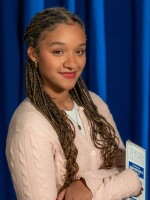
Tenor Health Foundation CEO Radha Savitala had a chance to publicly thank federal officials Thursday for their support as her company took over a Northeast Pennsylvania health system earlier this month.
She also acknowledged much work lies ahead.
U.S. Rep. Rob Bresnahan and Centers for Medicare and Medicaid Services Administrator Mehmet Oz toured Regional Hospital of Scranton before a press conference at Moses Taylor Hospital.
Tenor Health Foundation purchased Wilkes-Barre General Hospital and Regional Hospital of Scranton and Moses Taylor Hospital in Scranton from Tennessee-based Community Health Systems earlier this month. The two Scranton hospitals operate under one license.
The event led to questions not just about the local hospitals, but about how Trump administration policies will affect healthcare here and around the country — and especially in rural areas.
'We are building that capital plan together'
Savitala said she’s grateful for the support of the federal government as Tenor continues its transition.
“We are building that capital plan together,” Savitala said. “It's an investment in the cath [cardiac catheterization] lab, a lot of investment in the IV pumps. But physical infrastructure is important. We've got a large footprint, so there's a lot that we need to do, and we're working with administration to be able to come up with that capital plan and then take it back to these wonderful gentlemen. I think the best way that we can do that is increase our services and be more responsible with how we get reimbursed, so that we can build that pool of money to invest back into the hospitals.”
The federal officials and local health leaders gathered for a closed-to-the-press roundtable conversation ahead of the afternoon's press conference.
Federal efforts to bolster health care
Oz touted the Rural Health Transformation Program, which will give $50 billion to the states to support rural health over five years. Pennsylvania was awarded $193 million in this first year.
“This is a life rope,” Oz said. “It's an opportunity to get back into the game, and that money could be used here wisely.”
He sees many areas of opportunity for states to spend the money.
“Some of these uses could be training more folks, making sure that you have telemedicine hookups, that you have big hub hospitals, the major metropolitan areas adopting taking care of smaller institutions, so they can pass it along and provide better care, maternity care, ICU care, cancer care, all the things that should be present in Northeast Pennsylvania should be readily available,” Oz said.
Oz also announced a new way that the federal government will support rural health.
“I'd like to announce that we have a $20 million fund of money that came from Civil Monetary Penalties against nursing homes, mistakes they made that they had to pay fines on we took that money, we got every governor in the country to match it, and that money is going to be doled out to support nurses who've been educated and are living in rural areas around the country, ideally in nursing homes, but we'll be able to pay back their debts,” he said.
Medicaid changes on the horizon
Trump signed his ‘One Big Beautiful Bill Act’ into law on the Fourth of July, cementing major changes to Medicaid, the joint federal and state program that provides health insurance to 78 million Americans including nearly 3 million Pennsylvanians.
Those covered by the program include those with disabilities, low-income families and older adults.
The Medicaid changes implement work requirements, with exemptions for certain groups including pregnant people, individuals with disabilities and caregivers. There will also be more frequent eligibility checks. Most changes will go into effect on Jan. 1, 2027.
KFF Health News found that over 10 years, federal Medicaid spending is expected to be reduced by $911 billion. The changes are estimated to increase the number of uninsured Americans by 7.5 million by 2034.
Oz said he’s not concerned about the changes impacting the state.
“We're optimistic that Pennsylvania would do well, especially with the Rural Health Transformation fund, there will not be meaningful changes for Pennsylvania because of the way the Pennsylvania tax system was created with these provider taxes,” he said.
Cognetti responds
While Oz and Bresnahan visited in their official capacities, and not for a campaign event, the issues they discussed are already coloring this year’s midterm elections, in which Scranton Mayor Paige Cognetti is seeking the Democratic nomination for Bresnahan’s 8th District seat.
It is expected to be one of the nation’s most closely watched House races in 2026 as Democrats look to eliminate Republicans’ narrow majority and reclaim control of the chamber.
Cognetti took aim at Thursday's visit, in particular Bresnahan’s vote in favor of the One Big Beautiful Bill Act.
"I said this the last time Dr. Oz came to town and I’ll say it again now: No matter who parachutes into our community to appear alongside Rob, nothing can change the fact that he voted for deep and damaging cuts that are hurting our community while he looked out for his own bottom line," Cognetti said.
Bresnahan: Focused on supporting Tenor
Bresnahan, who voted in favor of Trump’s budget plan, said he’s focused on supporting Tenor.
“On behalf of the community, thank you to Tenor for taking this initiative, not being concerned about some of the proposed changes that may be coming down the pipeline, but for believing in Northeastern Pennsylvania,” Bresnahan said.
Savitala wants to reassure the community that the health system is here to stay in Scranton and Wilkes-Barre.
“We are here to invest in our employees, in our providers, but also the physical plant, and recruit and retain the staff to be able to provide the services. So confidence from the community is important, and they need to know that we are here to make it a success,” she said.